

What Is the Subaru Outback?
The Subaru Outback is a midsize crossover wagon designed around comfort, practicality, all-weather capability, and long-distance travel. It has become one of Subaru’s best-known models and is particularly popular with drivers who want a vehicle that can handle daily driving as well as outdoor adventures.
The Outback combines a relatively high driving position with generous interior space. Its design sits somewhere between a traditional wagon and an SUV, which gives it a distinctive character.
How Is the Outback Used?
The Outback works well for:
Family transportation
Road trips
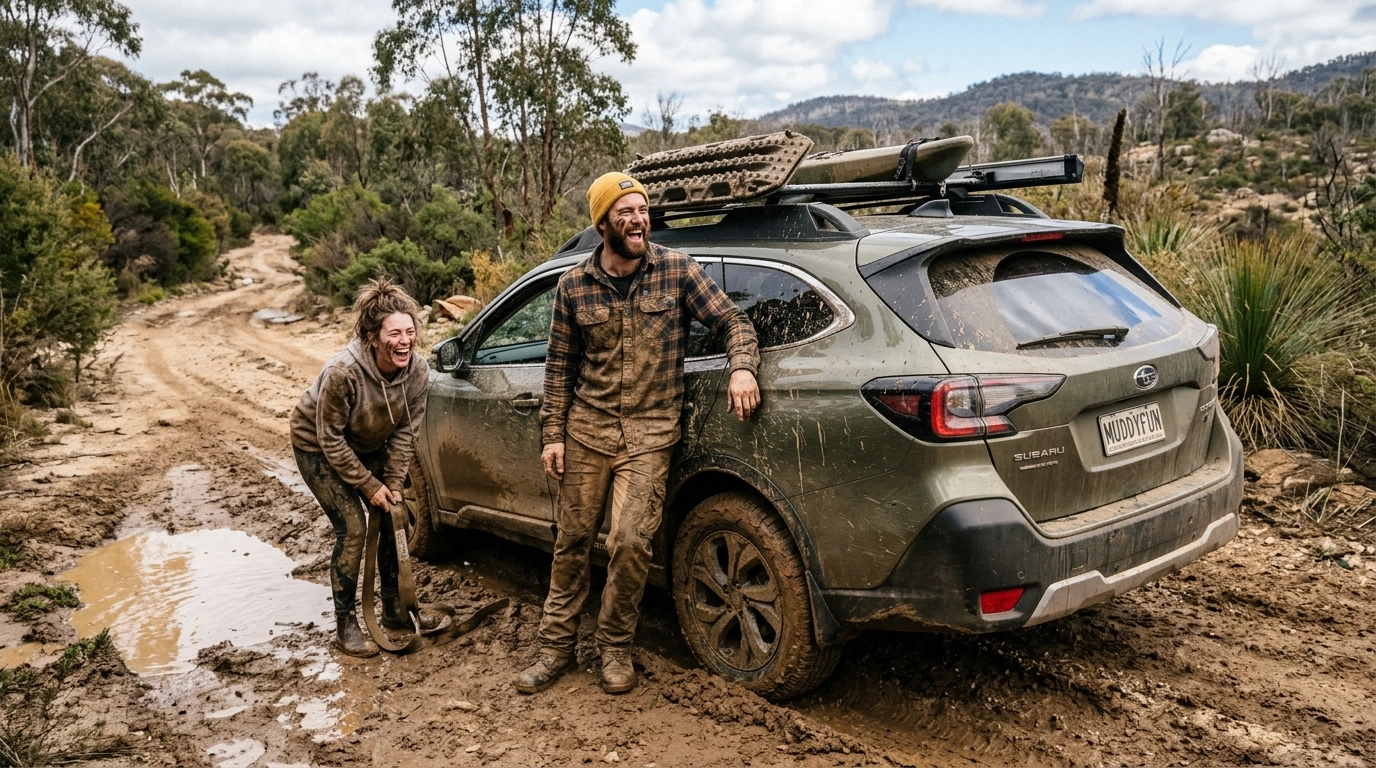
Camping
Hiking and outdoor activities
Snowy or wet conditions
Carrying larger amounts of luggage
Everyday commuting
Its larger cabin makes it particularly useful when passengers and cargo are regular priorities.
Outback Size and Practicality
The Outback is significantly larger than the Crosstrek. That extra size translates into more passenger space and greater cargo capacity.
This can make a noticeable difference when you’re traveling with several people, bringing sports equipment, packing camping gear, or taking a long road trip.
The Outback also offers a larger overall footprint, so drivers should expect it to feel less nimble than the smaller Crosstrek in crowded city streets and tight parking spaces.
A Short History of the Outback
The Subaru Outback has been part of Subaru’s lineup since the 1990s. Its combination of wagon practicality, raised ground clearance, and all-wheel-drive capability helped establish the model as an alternative to conventional SUVs.
Over successive generations, Subaru has developed the Outback into a more spacious and technologically equipped vehicle while maintaining its outdoors-oriented identity.
What Is the Subaru Crosstrek?
The Subaru Crosstrek is a smaller crossover designed to combine everyday efficiency with light off-road and outdoor capability.
It is positioned below the Outback in size and is particularly appealing to drivers who want an adventurous vehicle without moving into a larger SUV.
The Crosstrek’s compact dimensions make it easier to maneuver around cities and parking lots while still providing useful ground clearance and standard all-wheel drive.
How Is the Crosstrek Used?
The Crosstrek is well suited for:
Daily commuting
City driving
Small families
Weekend trips
Hiking and camping
Snowy roads
Light off-road driving
Drivers who prefer smaller vehicles
Its smaller footprint can be a major advantage if you frequently drive through congested areas.
Crosstrek Size and Practicality
The Crosstrek offers useful passenger and cargo space for its class, but it cannot match the Outback’s overall room.
For a couple or small family, however, its interior can be more than sufficient.
The smaller dimensions also make the Crosstrek easier to park and maneuver, particularly in urban environments.
A Short History of the Crosstrek
The Crosstrek evolved from Subaru’s compact crossover lineup and became known for combining the practicality of a hatchback with the higher ride height and capability expected from a crossover.
It has developed into one of Subaru’s most recognizable smaller vehicles.
Outback or Crosstrek: Key Differences
When comparing Outback or Crosstrek, the most important differences are size, interior space, cargo capacity, driving feel, and intended use.
1. Overall Size
The Outback is the larger vehicle.
The Crosstrek is shorter and narrower, making it easier to maneuver.
Winner for spaciousness: Outback.
Winner for maneuverability: Crosstrek.
2. Interior Space
The Outback offers more room for passengers, especially when carrying adults in both rows.
The Crosstrek is comfortable but has a more compact cabin.
Winner: Outback.
3. Cargo Space
If you frequently carry luggage, camping equipment, bicycles, or large shopping loads, the Outback’s larger cargo area provides an advantage.
The Crosstrek remains practical but has less overall capacity.
Winner: Outback.
4. City Driving
The Crosstrek’s smaller footprint can make it easier to navigate crowded streets and tight parking spaces.
The Outback’s larger body requires more space.
Winner: Crosstrek.
5. Road Trips
Both can handle road trips well, but the Outback’s additional passenger and cargo room gives it an advantage for long-distance travel.
Winner: Outback.
6. Fuel Economy
Fuel economy varies by model year, engine, drivetrain, trim, and driving conditions.
Because the Crosstrek is smaller and lighter, it can offer an efficiency advantage depending on the specific configuration.
Winner: Crosstrek in many configurations.
7. Off-Road Capability
Both vehicles are designed with outdoor use in mind and come with Subaru’s all-wheel-drive system.
However, capability varies by trim and equipment. Buyers should compare ground clearance, tires, drive modes, and other off-road-oriented features rather than assuming every version performs identically.
Winner: Depends on the trim and terrain.
8. Comfort
The Outback’s larger cabin and longer body generally make it the more comfortable choice for families and long-distance travel.
Winner: Outback.
9. Parking and Maneuverability
The Crosstrek is easier to fit into smaller parking spaces and can feel more agile in tight environments.
Winner: Crosstrek.
Outback vs Crosstrek Comparison Table
| Feature | Subaru Outback | Subaru Crosstrek |
|---|---|---|
| Vehicle size | Larger | Smaller |
| Interior space | More spacious | More compact |
| Cargo capacity | Greater | Lower |
| City maneuverability | Good | Excellent |
| Parking | More difficult | Easier |
| Road trips | Excellent | Very good |
| Family use | Excellent | Good |
| Outdoor activities | Excellent | Excellent |
| Fuel economy | Depends on engine | Often more efficient |
| Driving feel | Larger and more substantial | Smaller and more agile |
| Best for | Families and long trips | Commuters and active individuals |
Real-Life Conversation Examples
Conversation 1: City Driver
Emma: “I mostly drive around the city and have trouble finding parking.”
Liam: “Then I’d look closely at the Crosstrek.”
Emma: “Because it’s smaller?”
Liam: “Exactly. Its compact size can make city driving easier.”
🎯 Lesson: The Crosstrek is a strong choice for drivers who prioritize maneuverability.
Conversation 2: Family Road Trip
Sarah: “We travel with two kids and lots of luggage.”
James: “The Outback might make more sense.”
Sarah: “Even though it’s bigger?”
James: “That’s exactly why. You’ll appreciate the extra passenger and cargo room.”
🎯 Lesson: The Outback is better suited to families that regularly carry people and gear.
Conversation 3: Outdoor Adventures
Mike: “I want something for hiking and camping.”
Anna: “Either can work.”
Mike: “So which one should I get?”
Anna: “Think about how much gear you carry. If you need more room, choose the Outback.”
🎯 Lesson: Both support an outdoor lifestyle, but the Outback offers more space.
Conversation 4: First Subaru
Tom: “I want a Subaru, but I don’t want something too big.”
Lisa: “The Crosstrek is probably worth considering.”
Tom: “That’s what I was thinking.”
🎯 Lesson: The Crosstrek is a better fit for buyers who want Subaru capability in a smaller package.
When to Choose Outback vs Crosstrek
The best choice between Outback or Crosstrek depends on how you actually use your vehicle.
Choose the Outback If:
You need more cargo space.
You regularly carry several passengers.
You take frequent road trips.
You camp or travel with bulky equipment.
You want a more spacious cabin.
You prefer a larger vehicle.
You want extra versatility for family use.
Choose the Crosstrek If:
You primarily drive in the city.
You prefer a smaller vehicle.
Easy parking is important.
You want good everyday practicality without a large footprint.
You have a small household.
You enjoy weekend outdoor activities.
You want a vehicle that feels easier to maneuver.
A Simple Memory Trick
Remember:
Outback = more room.
Crosstrek = more compact.
If your biggest concern is space, start with the Outback.
If your biggest concern is size and maneuverability, start with the Crosstrek.
Outback or Crosstrek for Families
For families, the Outback generally has the advantage because of its larger interior and cargo area.
Parents may appreciate the extra room for:
Strollers
School bags
Groceries
Sports equipment
Luggage
Camping equipment
The Crosstrek can still work very well for a small family, especially if most driving happens around town.
The deciding factor is often not whether the Crosstrek is practical—it is—but whether its available space will remain sufficient as your family’s needs change.
Outback or Crosstrek for Outdoor Adventures
Both Subaru models have strong connections to outdoor lifestyles.
The Crosstrek can be especially appealing if you want a smaller vehicle for getting to hiking trails, campsites, and recreational areas.
The Outback makes more sense when outdoor adventures involve more people and more equipment.
For example, if you’re packing tents, coolers, sleeping bags, bicycles, and several passengers, the Outback’s additional capacity can become very useful.
For solo adventures or couples who travel light, the Crosstrek may provide all the space you need.
Outback or Crosstrek for Snow
Both vehicles benefit from Subaru’s standard all-wheel-drive approach, but all-wheel drive is not a substitute for appropriate tires and careful driving.
In snowy conditions, tires can make a major difference. Winter or severe-snow-rated all-season tires may provide substantially different traction depending on conditions.
The Outback’s larger size does not automatically make it better in every winter situation, and the Crosstrek’s smaller size does not make it incapable.
Instead, compare the specific model, tires, ground clearance, and driving conditions.
Outback or Crosstrek for Fuel Economy
Fuel economy can vary significantly depending on the model year and engine configuration, so there is no single number that applies to every Outback or Crosstrek.
In general, the Crosstrek’s smaller size can give it an efficiency advantage.
However, your actual fuel consumption will also depend on:
Engine
Trim
Driving style
Highway vs city driving
Weather
Tire choice
Vehicle load
If fuel costs are one of your biggest concerns, compare the official fuel-economy ratings for the exact model years and trims you’re considering.
Outback or Crosstrek for Long Road Trips
The Outback has a natural advantage for long-distance travel.
Its larger cabin gives passengers more room, while its cargo area provides additional space for luggage and travel equipment.
The Crosstrek can certainly handle road trips, particularly for couples or smaller groups.
However, if you frequently take trips with several passengers and a full load of luggage, the Outback’s additional space can make the journey more comfortable.
Which Subaru Is Easier to Drive?
The answer depends on where you drive.
The Crosstrek can feel easier in crowded urban environments because it is smaller and easier to place on narrow streets.
The Outback can feel more substantial and stable on long highway journeys, while its larger dimensions may require more attention when parking or maneuvering through tight spaces.
So the question is not simply which one is easier.
It’s:
Easier where?
For city streets and parking lots, the Crosstrek has an advantage.
For long highway journeys and carrying passengers, the Outback’s larger format can be preferable.
Which One Has More Cargo Space?
The Outback is the clear choice if cargo capacity is a priority.
Its larger body allows it to accommodate more gear than the Crosstrek.
This matters if you regularly carry:
Camping equipment
Large groceries
Pet supplies
Sports equipment
Luggage
Outdoor gear
The Crosstrek’s cargo area is still useful for everyday life, but it is aimed more toward compact practicality than maximum carrying capacity.
Fun Facts About the Outback and Crosstrek
1. The Outback Helped Define the Raised-Wagon Concept
The Outback became well known for combining wagon-like practicality with increased ground clearance and all-wheel-drive capability. This helped establish a vehicle formula that later became common across the automotive industry.
2. The Crosstrek Targets a Different Size Class
Although both models appeal to outdoor-oriented drivers, the Crosstrek is positioned as the smaller option. Its compact dimensions make it particularly attractive to people who want adventure capability without moving into a larger crossover.
Outback or Crosstrek: Which One Should You Choose?
If you’re still deciding between Outback or Crosstrek, start with your daily priorities.
Choose the Outback if you need more room, frequently travel with passengers, take long road trips, or carry a lot of equipment.
Choose the Crosstrek if you want a smaller Subaru that’s easier to maneuver, easier to park, and practical enough for commuting and weekend adventures.
Neither vehicle is automatically better for everyone. The Outback is the more spacious and road-trip-friendly choice, while the Crosstrek offers a more compact and maneuverable package.
The smartest choice is the one that matches your actual lifestyle rather than simply choosing the larger or more popular model.