

What Is Contrave?
Contrave is a prescription medication containing two active ingredients: naltrexone hydrochloride and bupropion hydrochloride. It is approved as an addition to reduced-calorie eating and increased physical activity for chronic weight management in adults with obesity or adults who are overweight and have at least one weight-related condition.
How Contrave Works
Contrave combines two medicines that affect different pathways involved in appetite and food intake.
Naltrexone is an opioid antagonist, while bupropion is an aminoketone antidepressant. Together, they influence brain pathways associated with appetite regulation and reward-related eating.
Contrave is supplied as extended-release tablets containing 8 mg of naltrexone hydrochloride and 90 mg of bupropion hydrochloride per tablet. The dose is gradually increased during the first several weeks rather than starting immediately at the full maintenance dose.
Who Is Contrave Intended For?
According to its U.S. prescribing information, Contrave is indicated for adults with an initial BMI of:
- 30 kg/m² or greater, or
- 27 kg/m² or greater with at least one weight-related condition, such as hypertension, type 2 diabetes, or dyslipidemia.
It is intended to be used alongside lifestyle changes rather than as a replacement for diet and physical activity.
Important Contrave Restrictions
Contrave is not appropriate for everyone. Its contraindications include uncontrolled hypertension, seizure disorders, certain eating disorders, chronic opioid use, use of other bupropion-containing medicines, and certain MAOI-related situations.
Because naltrexone blocks opioid receptors, people taking opioids need particular medical guidance before considering Contrave.
What Is Qsymia?
Qsymia is another prescription medication for chronic weight management. It combines phentermine and extended-release topiramate. It is used with a reduced-calorie diet and increased physical activity.
How Qsymia Works
The two ingredients in Qsymia work through different mechanisms.
Phentermine is a sympathomimetic amine that suppresses appetite, while topiramate is a medication that affects several neurological pathways and can reduce appetite and food intake.
Qsymia is taken once daily in the morning, and its prescribing information recommends avoiding evening administration because of the possibility of insomnia.
Who Is Qsymia Intended For?
Qsymia is approved for:
- Adults with obesity
- Adults who are overweight and have at least one weight-related comorbidity
- Pediatric patients aged 12 years and older with obesity, under the applicable labeling criteria.
For adults, the medication is used together with reduced-calorie eating and increased physical activity.
Important Qsymia Restrictions
Qsymia has several important contraindications. These include pregnancy, glaucoma, hyperthyroidism, certain MAOI use, and hypersensitivity to its ingredients.
Pregnancy is especially important because Qsymia can cause fetal harm. The current prescribing information recommends pregnancy testing before treatment and monthly during therapy for patients who can become pregnant.
Contrave or Qsymia: Key Differences
The most important difference between Contrave or Qsymia is their active ingredients and mechanisms of action.
- Contrave: naltrexone + bupropion
- Qsymia: phentermine + extended-release topiramate
- Contrave is available as an extended-release tablet.
- Qsymia is available as an extended-release capsule.
- Both are intended to accompany diet and increased physical activity.
- Both are approved for chronic weight management in eligible adults.
- Qsymia also has an FDA-approved indication for certain adolescents aged 12 and older with obesity.
- Contrave should not be used by people taking chronic opioids.
- Qsymia is contraindicated during pregnancy.
- Contrave has important seizure and blood-pressure-related restrictions.
- Qsymia can cause cognitive, mood, sleep, metabolic, and eye-related adverse effects that require attention.
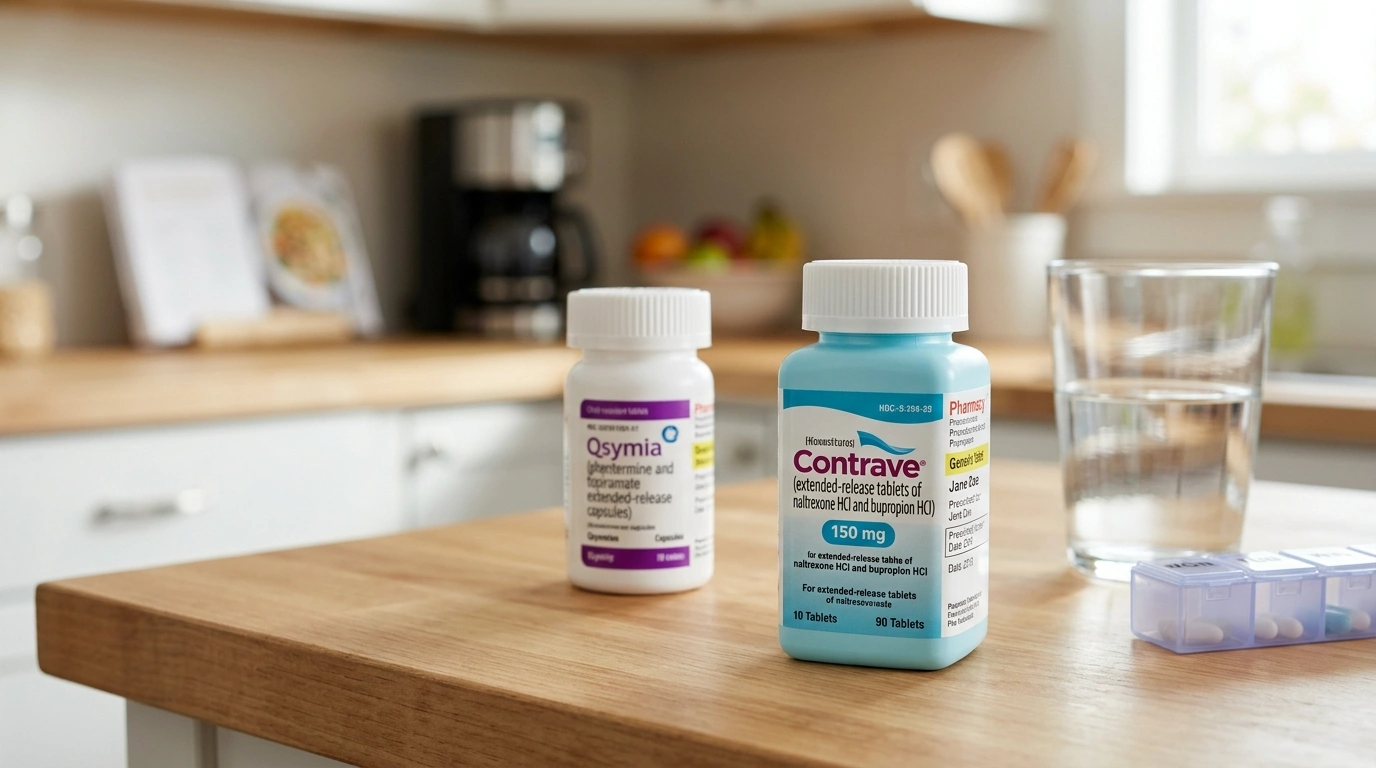
Contrave or Qsymia Comparison Table
| Feature | Contrave | Qsymia |
|---|---|---|
| Active ingredients | Naltrexone + bupropion | Phentermine + topiramate ER |
| Form | Extended-release tablet | Extended-release capsule |
| Main use | Chronic weight management | Chronic weight management |
| Adult eligibility | Obesity or overweight with a weight-related condition | Obesity or overweight with a weight-related condition |
| Pediatric indication | Not established/not recommended | Approved for certain patients 12+ with obesity |
| Opioid use concern | Major concern | Not the defining restriction |
| Pregnancy | Weight loss during pregnancy is unsafe; discontinue if pregnancy occurs | Contraindicated |
| Seizure concern | Important contraindication | Important warning/withdrawal consideration |
| Blood pressure | Can increase blood pressure and heart rate | Can increase heart rate |
| Common issues | Nausea, constipation, headache, vomiting, dry mouth | Tingling, dizziness, altered taste, insomnia, constipation, dry mouth |
Contrave or Qsymia for Weight Loss
Both medicines can produce clinically meaningful weight loss in appropriate patients, but results vary considerably from person to person.
It is not accurate to say that one medication is universally “better” for everyone. Clinical response depends on factors such as baseline weight, adherence, diet, physical activity, other medications, medical conditions, and how well the individual tolerates treatment.
Qsymia’s prescribing information uses specific weight-loss milestones to determine whether treatment should be continued or adjusted. For adults, if the required weight-loss response is not achieved after specified treatment periods, the prescribing information recommends dose adjustment or discontinuation.
Contrave likewise has specific treatment and response considerations in its prescribing information.
Which One May Be More Appropriate?
Rather than choosing solely based on expected weight loss, a clinician will typically consider the whole medical picture.
For example, someone taking opioids has a major reason to avoid Contrave, while someone who is pregnant or could become pregnant without reliable contraception has a major reason to avoid Qsymia.
Side Effects of Contrave
Contrave can cause side effects, and some may be significant.
Common Considerations
The medication’s prescribing information identifies adverse effects such as:
- Nausea
- Constipation
- Headache
- Vomiting
- Dizziness
- Dry mouth
- Increased blood pressure
- Increased heart rate
Contrave also carries a boxed warning related to suicidal thoughts and behaviors associated with its bupropion component.
Important Safety Concerns
Contrave can increase seizure risk and is contraindicated in people with seizure disorders. It is also contraindicated in certain eating disorders and during chronic opioid use.
These restrictions are important reasons not to start or stop Contrave without medical supervision.
Side Effects of Qsymia
Qsymia also has a range of possible adverse effects.
Common Considerations
The FDA prescribing information lists common adult adverse reactions including:
- Tingling sensations
- Dizziness
- Altered taste
- Insomnia
- Constipation
- Dry mouth
Important Safety Concerns
Qsymia has warnings involving mood changes, suicidal thoughts, cognitive impairment, metabolic acidosis, kidney function, and eye problems, among others.
The medication must also be discontinued carefully at certain higher doses because abrupt discontinuation can increase seizure risk.
Real-Life Conversation Examples
Conversation 1: Comparing the Ingredients
Sam: “Are Contrave and Qsymia basically the same medicine?”
Maya: “No. Contrave contains naltrexone and bupropion, while Qsymia contains phentermine and topiramate.”
🎯 Lesson: The two medications use completely different combinations of active ingredients.
Conversation 2: Opioid Use
Alex: “I’m taking an opioid pain medicine. Could I take Contrave?”
Dr. Lee: “That needs to be discussed with your prescriber. Chronic opioid use is a contraindication to Contrave.”
🎯 Lesson: Opioid use is a particularly important consideration when evaluating Contrave.
Conversation 3: Pregnancy
Sara: “Is Qsymia safe during pregnancy?”
Nina: “No. Qsymia is contraindicated during pregnancy because of fetal risk.”
🎯 Lesson: Pregnancy is a major safety issue with Qsymia.
Conversation 4: Choosing Between Them
Tom: “Which one should I take for weight loss?”
Doctor: “That depends on your medical history, other medications, risks, and how you respond to treatment.”
🎯 Lesson: There is no single best option for every person.
When to Use Contrave or Qsymia
The phrase “use Contrave or Qsymia” should not mean choosing one independently. Both are prescription medications that require assessment by a qualified healthcare professional.
Contrave May Need Special Consideration If:
- You use opioid medicines.
- You have a seizure disorder.
- You have uncontrolled high blood pressure.
- You take another bupropion-containing medication.
- You have a history of certain eating disorders.
- You take medications that may interact with bupropion or naltrexone.
Qsymia May Need Special Consideration If:
- You are pregnant or may become pregnant.
- You have glaucoma.
- You have hyperthyroidism.
- You have certain kidney or metabolic problems.
- You have a history of mood or cognitive problems.
- You take medicines that could interact with its ingredients.
Easy Memory Trick
Think of the ingredients:
Contrave = naltrexone + bupropion
Qsymia = phentermine + topiramate
For the bigger decision, remember that medical history matters more than brand preference.
US vs UK Notes
The names Contrave and Qsymia are primarily associated with their U.S. regulatory and prescribing context. Medication availability, approved indications, brand names, and prescribing rules can differ between countries.
Therefore, someone outside the United States should not assume that the FDA labeling automatically represents the rules in their country.
Always check the local prescribing information and speak with a local healthcare professional before using either medicine.