
What Is Paint?
Paint is a surface coating made from pigments, binders, liquids, and other ingredients. When applied and dried, it creates a layer over the material underneath.
Meaning and Usage
Paint is used on many surfaces, including:
- Wood
- Metal
- Drywall
- Plaster
- Masonry
- Doors
- Furniture
- Trim
- Exterior siding
Its biggest advantage is its ability to provide solid color and surface coverage.
If you want to completely change a brown wooden cabinet into white, blue, green, or another color, paint is usually the more suitable option.
How Paint Works
Unlike stain, paint generally sits on top of the surface and forms a protective film.
The pigments provide color, while the binder helps the coating adhere and form a continuous layer after drying.
Depending on the product, paint can provide different finishes, including:
- Matte
- Eggshell
- Satin
- Semi-gloss
- Gloss
Example Sentences
- “We decided to paint the bedroom walls.”
- “She painted the wooden cabinet white.”
- “The exterior door needs another coat of paint.”
- “Paint can completely cover the original surface.”
When Paint Is Useful
Paint is especially useful when you want to:
- Hide surface imperfections
- Change the color dramatically
- Create a uniform appearance
- Match a specific interior design
- Protect certain surfaces
- Refresh old furniture or walls
Short History and Usage Note
Paint has been used for thousands of years. Early humans created pigments from minerals, charcoal, plants, and other natural materials. Modern paints became increasingly sophisticated as manufacturers developed synthetic pigments, binders, and specialized formulations.
Today, different paints are designed for specific environments, such as kitchens, bathrooms, exterior walls, metal surfaces, and high-traffic areas.
What Is Stain?
Stain is a finish designed to color or enhance porous materials, especially wood. Rather than completely covering the surface like most paint, stain generally allows the natural grain and texture to remain visible.
Meaning and Usage
Wood stain is commonly used on:
- Decks
- Fences
- Wooden furniture
- Cabinets
- Doors
- Flooring
- Outdoor structures
The purpose is often to enhance the natural character of the wood rather than hide it.
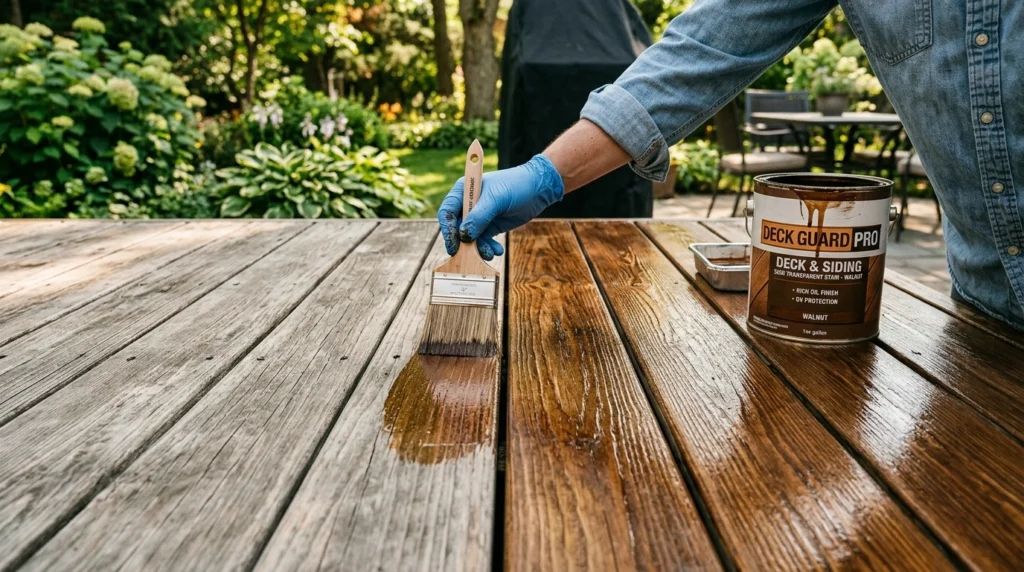
For example, a transparent or semi-transparent brown stain can make a wooden deck look richer while allowing the wood grain to show.
How Stain Works
Stain penetrates into porous wood to varying degrees, depending on the product and type of wood.
Unlike a thick paint film, many stains allow the underlying grain to remain visible.
Stains can be:
- Transparent
- Semi-transparent
- Semi-solid
- Solid
The more opaque the stain, the less natural wood appearance you’ll typically see.
Example Sentences
- “We stained the deck a darker brown.”
- “The stain brings out the wood grain.”
- “She chose a natural stain for the dining table.”
- “The fence needs another coat of stain.”
Short History and Usage Note
Wood stains have long been used to alter and protect the appearance of timber. Traditional formulations often relied on natural oils, pigments, and other materials, while modern products may use water-based or oil-based formulations.
Today, stains are available in many colors and levels of opacity, giving homeowners more control over both appearance and protection.
Paint or Stain: Key Differences
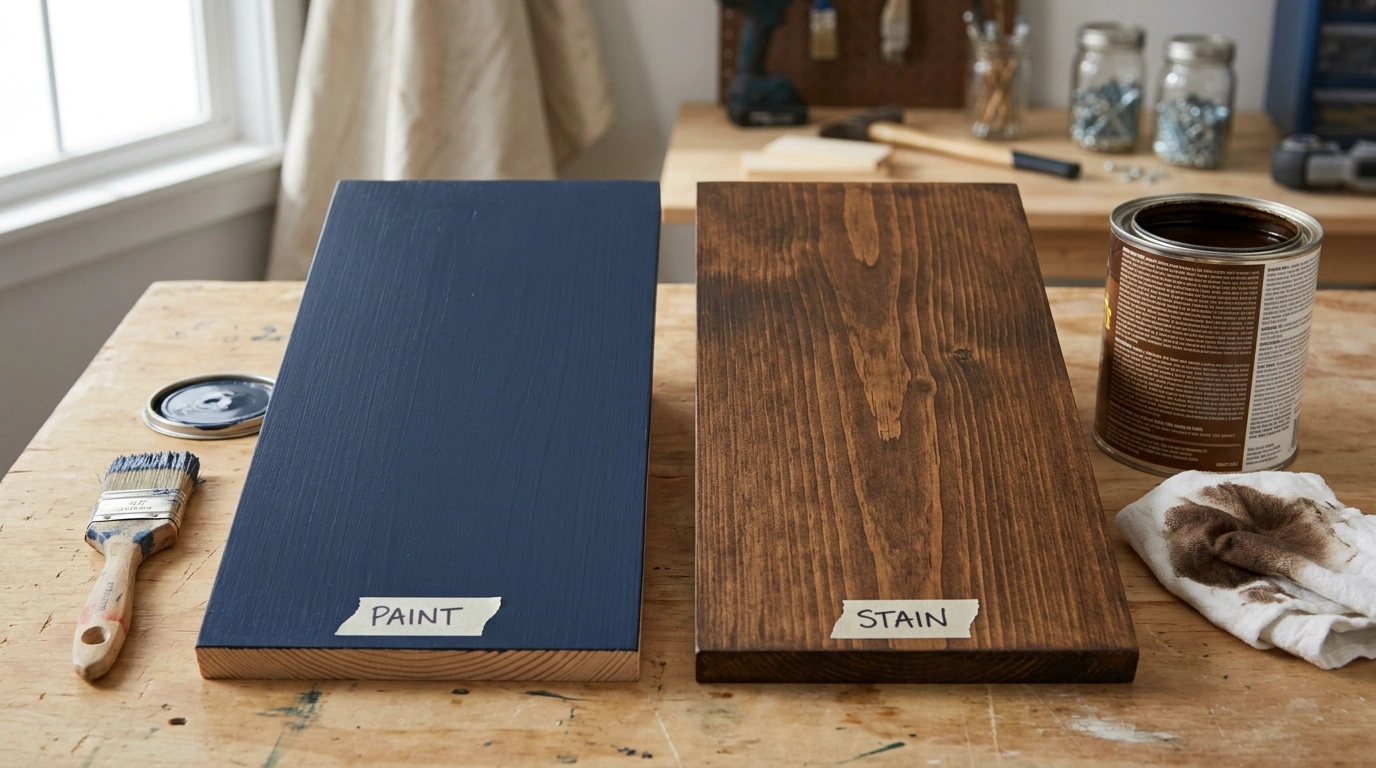
The most important difference between paint or stain is how each product interacts with the surface.
- Paint generally forms a coating over the surface.
- Stain generally penetrates porous materials such as wood.
- Paint can completely hide the natural grain.
- Stain usually allows some or most of the wood grain to remain visible.
- Paint offers a wider range of solid colors.
- Stain is particularly suited to enhancing natural wood.
- Painted surfaces can often hide minor imperfections.
- Stain usually highlights the existing texture and grain.
- Paint may peel or chip when its film fails.
- Some stains can fade or wear and may need reapplication.
- Stain is primarily associated with porous surfaces, especially wood.
- Paint can be formulated for many different materials.
Paint or Stain Comparison Table
| Feature | Paint | Stain |
|---|---|---|
| Main purpose | Cover and color a surface | Color and enhance porous material |
| Wood grain | Usually hidden | Usually visible |
| Color options | Very broad | Broad but wood-focused |
| Surface coverage | High | Low to high depending on type |
| Best known use | Walls, furniture, trim, many surfaces | Decks, fences, wood furniture |
| Application | Brush, roller, spray | Brush, pad, sprayer, other methods |
| Maintenance | May require scraping/repainting | May require cleaning and re-staining |
| Appearance | Solid, uniform | Natural or semi-transparent |
| Hides imperfections | Generally better | Generally highlights them |
| Common substrate | Wood, drywall, metal, masonry | Primarily wood |
Paint or Stain for Wood
Wood is where the decision between paint or stain becomes especially important.
Choose Paint for Wood When:
- You want a bold or solid color.
- The wood has visible imperfections.
- You want to completely change the appearance.
- You are matching existing painted surfaces.
- You want a uniform finish.
Paint can turn ordinary or heavily weathered wood into a clean-looking surface.
However, proper preparation is critical. Wood should generally be clean, dry, and appropriately prepared before painting.
Choose Stain for Wood When:
- You like natural wood grain.
- You want to deepen or change the wood’s color.
- You are finishing a deck or fence.
- The wood has an attractive natural pattern.
- You want a more natural-looking finish.
Stain is particularly attractive on species with interesting grain patterns.
Paint or Stain for Outdoor Projects
Outdoor wood faces moisture, sunlight, temperature changes, and everyday wear, so the finish needs to match the environment.
Outdoor Paint
Exterior paint can provide a strong visual transformation and may create a protective film over properly prepared wood.
It is useful when you want a solid color on siding, trim, furniture, or other outdoor structures.
Outdoor Stain
Exterior stain is commonly used for:
- Decks
- Fences
- Porches
- Pergolas
- Outdoor furniture
Transparent and semi-transparent stains are popular when homeowners want to protect and enhance wood while preserving its natural appearance.
Which Is Better Outdoors?
Neither is automatically better.
If your priority is solid color and coverage, paint may be the better choice.
If your priority is wood grain and a natural appearance, stain may be more appropriate.
The specific product matters just as much as the category. Always follow the manufacturer’s instructions for surface preparation and application.
Paint or Stain for Furniture
Furniture can look completely different depending on which finish you choose.
Paint Furniture When:
- You want a modern color.
- The furniture has mismatched wood.
- You want to hide repairs or imperfections.
- You’re creating a bold design.
- You want a uniform appearance.
A painted dresser, table, or cabinet can take on an entirely new personality.
Stain Furniture When:
- The wood grain is attractive.
- You want a classic appearance.
- You want to enhance the natural color.
- The furniture is made from quality solid wood.
- You prefer a natural-looking finish.
For valuable or antique furniture, careful preparation is particularly important because aggressive sanding or unsuitable products can permanently affect the piece.
Real-Life Conversation Examples
Conversation 1: A Wooden Table
Alex: “The table has beautiful grain. Should I paint or stain it?”
Maya: “If you want the grain to remain visible, I’d look at stain.”
Alex: “So paint would cover it?”
Maya: “Usually, yes.”
🎯 Lesson: Choose stain when preserving and enhancing natural wood grain is important.
Conversation 2: An Old Fence
Sam: “My fence looks worn and uneven.”
Emma: “Do you want to keep the wood appearance?”
Sam: “Not really. I want a completely different color.”
Emma: “Then exterior paint might make more sense.”
🎯 Lesson: Paint is useful when you want strong color coverage and a more uniform appearance.
Conversation 3: A Deck
Ben: “Should I paint my wooden deck?”
Lucy: “You could, but a deck stain may be worth considering if you want the wood grain to show.”
Ben: “I definitely want it to look natural.”
Lucy: “Then stain is probably the better direction.”
🎯 Lesson: Stain is commonly chosen for decks when a natural wood appearance is desired.
Conversation 4: Furniture Makeover
David: “I want this old cabinet to be bright blue.”
Lena: “Use paint.”
David: “Would stain work?”
Lena: “A conventional wood stain isn’t the best choice if you want an opaque bright-blue finish.”
🎯 Lesson: Paint is generally better for dramatic, solid color changes.
When to Use Paint or Stain
The easiest way to choose paint or stain is to ask one question:
Do you want to cover the surface or enhance it?
Use Paint When You Want:
- Solid color
- Maximum visual change
- Better coverage of imperfections
- A specific decorative color
- A uniform finish
Use Stain When You Want:
- Visible wood grain
- A natural appearance
- Enhanced wood color
- A finish suited to decks and fences
- A less opaque look
Easy Memory Trick
Think:
Paint = cover.
Stain = enhance.
Paint is like giving the surface a new outer layer of color. Stain is more like changing or enriching the color while allowing the material underneath—especially wood—to remain part of the visual design.
Oil-Based vs. Water-Based Options
Both paint and stain can come in different formulations.
Oil-Based Products
Oil-based products are often valued for their penetration, durability, or rich appearance, depending on the specific product.
They can also have stronger odors and may require solvents for cleanup.
Water-Based Products
Water-based products typically dry faster and are often easier to clean up with water.
They can also have lower odor than many traditional oil-based products.
The best formulation depends on the material, location, desired appearance, and manufacturer’s recommendations.
US vs. UK Notes
The terms paint and stain are widely understood in both American and British English.
However, wood stain is the more specific term when discussing products designed to color timber while preserving some of its natural appearance.
In everyday conversation, people may use “stain” differently depending on context. For example, a stain can also mean an unwanted mark or discoloration on clothing, carpet, or another surface.
When discussing home improvement, however, “stain” usually refers to a wood-finishing product.