
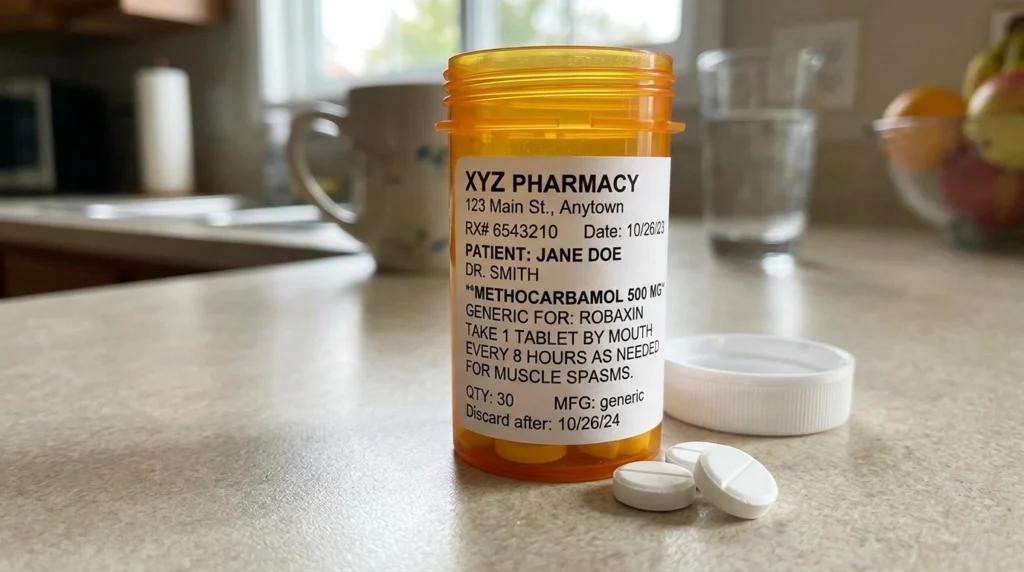
What Is Methocarbamol?
Methocarbamol is a prescription skeletal muscle relaxant used as an adjunct to rest and physical therapy for the relief of discomfort associated with acute, painful musculoskeletal conditions.
How Methocarbamol Works
The precise mechanism of methocarbamol is not completely established. Its muscle-relaxing effects are believed to be related to effects on the central nervous system rather than directly relaxing skeletal muscle fibers.
It is available in oral formulations, and injectable methocarbamol is also available in certain medical settings.
Common Uses
Healthcare professionals may prescribe methocarbamol for conditions involving painful muscle spasms, such as certain acute strains and other musculoskeletal problems.
It does not repair an injured muscle or treat the underlying cause of every type of pain.
Common Side Effects
Possible side effects include:
- Drowsiness
- Dizziness
- Headache
- Blurred vision
- Nausea
- Lightheadedness
Because methocarbamol can affect alertness, people should be cautious about driving or operating machinery until they know how the medication affects them.
Example
A person with an acute, painful back strain may be prescribed methocarbamol as part of a broader treatment plan involving activity modification and physical therapy.
The medication is intended to help manage symptoms rather than replace treatment for the underlying injury.
What Is Flexeril?
Flexeril is a brand name associated with cyclobenzaprine, a centrally acting skeletal muscle relaxant.
In the United States, cyclobenzaprine is also widely available as a generic medication.
How Cyclobenzaprine Works
Cyclobenzaprine acts primarily within the central nervous system. Its exact mechanism is not fully understood, but it is structurally related to tricyclic antidepressants.
Cyclobenzaprine is generally used as an adjunct to rest and physical therapy for the relief of muscle spasm associated with acute, painful musculoskeletal conditions.
Common Uses
Cyclobenzaprine may be prescribed for short-term treatment of painful muscle spasms related to acute musculoskeletal problems.
The FDA labeling states that its use beyond 2 or 3 weeks is not recommended because adequate evidence of effectiveness for longer-term use is lacking.
Common Side Effects
Common adverse effects of cyclobenzaprine include:
- Drowsiness
- Dry mouth
- Dizziness
- Fatigue
- Headache
- Constipation
Because it can cause significant drowsiness, combining it with alcohol or other central nervous system depressants can increase impairment.
Methocarbamol or Flexeril: Key Differences
The most important difference between methocarbamol or Flexeril is their active ingredient.
- Methocarbamol contains methocarbamol.
- Flexeril contains cyclobenzaprine.
- Both are centrally acting skeletal muscle relaxants.
- Both are generally used for acute, painful musculoskeletal conditions.
- Both can cause drowsiness and dizziness.
- Cyclobenzaprine has prominent anticholinergic effects, including dry mouth.
- Cyclobenzaprine has important interactions with serotonergic medications and MAO inhibitors.
- Methocarbamol can also cause central nervous system depression and impairment.
- Neither medication should be assumed to be safer or more effective for everyone.
- Treatment decisions depend on the individual’s symptoms, medical history, other medicines, and risk factors.
Methocarbamol or Flexeril Comparison Table
| Feature | Methocarbamol | Flexeril (Cyclobenzaprine) |
|---|---|---|
| Drug class | Skeletal muscle relaxant | Skeletal muscle relaxant |
| Active ingredient | Methocarbamol | Cyclobenzaprine |
| Main use | Acute painful musculoskeletal conditions | Acute painful musculoskeletal conditions |
| Common effect | Muscle relaxation with CNS effects | Muscle relaxation with CNS effects |
| Drowsiness | Possible | Common |
| Dizziness | Possible | Possible |
| Dry mouth | Possible | Common |
| Duration of use | Generally short-term for acute conditions | Usually limited to 2–3 weeks |
| Alcohol concern | Can increase impairment | Can increase impairment |
| Generic available | Yes | Yes |
| Brand name | Robaxin and others | Flexeril |
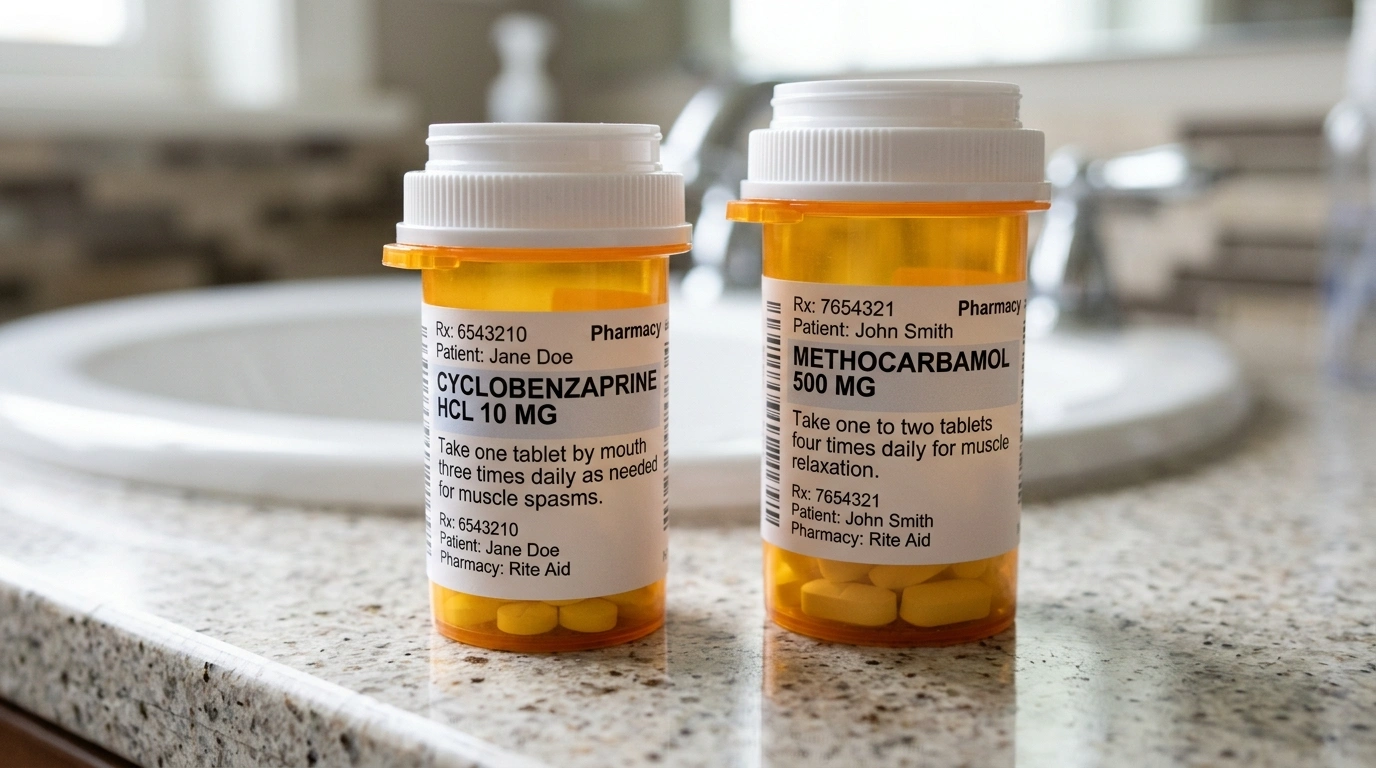
Methocarbamol or Flexeril for Muscle Spasms
Both medications may be used for acute muscle spasms, but the response can vary from one person to another.
There is no simple rule that says methocarbamol is always better than cyclobenzaprine—or the reverse.
The choice may depend on factors such as:
- The cause of the muscle spasm
- Other medications you take
- Your age
- Other health conditions
- Your sensitivity to sedation
- Whether you need to drive or work with machinery
- How long treatment is expected to last
- Previous response to muscle relaxants
A healthcare professional may consider these factors before selecting methocarbamol or Flexeril.
Side Effects and Safety
Methocarbamol Safety
Methocarbamol can cause drowsiness, dizziness, and impaired coordination. Combining it with alcohol or other substances that depress the central nervous system can increase these effects.
Older adults may be particularly vulnerable to medication-related dizziness or sedation, which can increase fall risk.
Anyone taking methocarbamol should follow the prescribed dose and avoid activities requiring full alertness until they know their individual response.
Cyclobenzaprine Safety
Cyclobenzaprine can cause drowsiness, dry mouth, dizziness, and fatigue.
Its prescribing information also warns about important drug interactions. Cyclobenzaprine should not be used with MAO inhibitors or within 14 days of stopping them because of the risk of potentially serious reactions.
Cyclobenzaprine is also structurally related to tricyclic antidepressants and can have anticholinergic effects.
Drug Interactions
Medication interactions are an important part of the methocarbamol or Flexeril decision.
Methocarbamol
Methocarbamol can have additive sedative effects when combined with:
- Alcohol
- Opioids
- Sedative medications
- Certain sleep medicines
- Other central nervous system depressants
Always tell your healthcare professional about all prescription medicines, over-the-counter products, and supplements you use.
Cyclobenzaprine
Cyclobenzaprine has additional interaction concerns because of its pharmacological similarity to tricyclic antidepressants.
Particular caution is needed with:
- MAO inhibitors
- Certain antidepressants
- Other serotonergic medicines
- Other sedating medications
- Alcohol
Cyclobenzaprine labeling warns about serotonin syndrome when used with certain serotonergic drugs.
Real-Life Conversation Examples
Conversation 1: Comparing the Medicines
Alex: “Is methocarbamol the same thing as Flexeril?”
Maya: “No. Flexeril is a brand name associated with cyclobenzaprine. Methocarbamol is a different medication.”
🎯 Lesson: The two medicines belong to the same broad category but contain different active ingredients.
Conversation 2: Feeling Sleepy
Sam: “Why am I so sleepy after taking my muscle relaxant?”
Emma: “Both medications can cause drowsiness, so you should be careful with driving and other activities requiring alertness.”
🎯 Lesson: Sedation is an important safety consideration with both medicines.
Conversation 3: Medication Interactions
Ben: “Can I take my antidepressant with cyclobenzaprine?”
Doctor: “That depends on the specific antidepressant. Some combinations can increase the risk of serious interactions.”
🎯 Lesson: Always check potential drug interactions before combining medications.
Conversation 4: Choosing a Medication
David: “Which is stronger, methocarbamol or Flexeril?”
Doctor: “There isn’t a universal answer. The best option depends on your symptoms, health history, and how you respond.”
🎯 Lesson: A higher perceived strength does not automatically make one medication better for every person.
When to Use Methocarbamol or Flexeril
Neither medication should be chosen simply because someone else had a good experience with it.
Methocarbamol May Be Considered When:
- A clinician diagnoses an acute painful musculoskeletal condition.
- Muscle spasm is contributing to discomfort.
- A centrally acting muscle relaxant is considered appropriate.
- Your other medications and medical history make it a reasonable option.
Cyclobenzaprine May Be Considered When:
- Acute painful muscle spasm is present.
- A clinician believes its benefits outweigh its risks.
- There are no contraindications or problematic interactions.
- Short-term treatment is appropriate.
Easy Memory Trick
Think:
Methocarbamol = its own generic muscle relaxant.
Flexeril = cyclobenzaprine.
The easiest way to avoid confusion is to remember that Flexeril is a brand name, while cyclobenzaprine is its active ingredient.
Which One Is Better?
There is no single winner in the methocarbamol or Flexeril comparison.
Clinical decisions are individualized. One person may tolerate methocarbamol better, while another may respond differently to cyclobenzaprine. Side-effect profiles, interactions, age, medical conditions, and treatment duration can all influence the decision.
It is also important to remember that muscle relaxants are generally intended to complement other approaches rather than replace treatment such as appropriate activity, physical therapy, or addressing the underlying cause of pain.
If a muscle spasm is severe, persistent, recurrent, or accompanied by weakness, numbness, fever, trauma, or other concerning symptoms, medical evaluation is important rather than simply switching between muscle relaxants.
US vs. UK Notes
Flexeril is primarily recognized as a U.S. brand name for cyclobenzaprine. The availability of cyclobenzaprine and specific brand names can differ between countries.
Methocarbamol is also marketed under different brand names internationally, and regulatory approvals and prescribing practices vary.
Therefore, people outside the United States should check their local medication information rather than assuming that U.S. brand names or prescribing rules apply everywhere.