
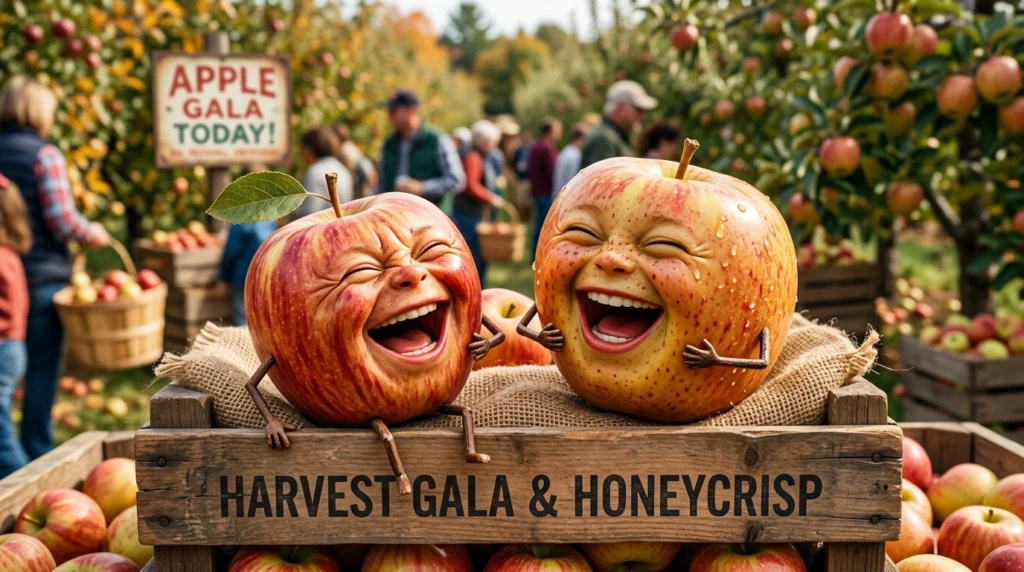
What Is Gala?
Gala is a popular apple variety known for its sweet flavor, crisp flesh, attractive red-and-yellow skin, and pleasant aroma. It originated from a cross involving Golden Delicious and Kidd’s Orange Red and was developed in New Zealand.
Gala apples became commercially important because they combine attractive appearance with a sweet, approachable flavor that appeals to many people.
What Does Gala Taste Like?
Gala apples are generally:
Sweet
Mildly aromatic
Lightly floral
Crisp
Juicy
Low to moderate in tartness
Their sweetness makes them particularly popular as a fresh snack. Compared with more tart varieties, Gala tends to taste gentle and easy to eat.
Gala Texture
A fresh Gala apple usually has a crisp but relatively tender bite. It does not generally provide the explosive crunch associated with Honeycrisp.
The flesh is juicy and pleasant, although texture can vary with storage time and growing conditions.
Gala Appearance
Gala apples typically have:
Red-orange stripes
Yellow or cream-colored areas
Small to medium size
A rounded or slightly elongated shape
The exact color pattern varies depending on the strain and growing conditions.
How Gala Is Used
Gala is particularly good for:
Fresh snacking
Fruit salads
Lunch boxes
Cheese boards
Smoothies
Applesauce
Light baking
Its naturally sweet flavor means it can be eaten without adding much else.
Short History of Gala
Gala was developed in New Zealand in the 1930s through breeding work involving Golden Delicious and Kidd’s Orange Red. It later became commercially popular in many countries.
Over time, different Gala strains were developed to improve color, size, and other characteristics.
What Is Honeycrisp?
Honeycrisp is an apple variety developed through a breeding program at the University of Minnesota. It was introduced commercially in the early 1990s and became famous for its distinctive explosive crispness and juicy texture.
The variety was developed from a complex breeding background, with Keepsake and MN1627 among its documented parentage.
What Does Honeycrisp Taste Like?
Honeycrisp is generally known for a combination of:
Sweetness
Noticeable acidity
Juiciness
Mild honey-like flavor
Fresh, bright character
The balance between sweetness and tartness is one reason Honeycrisp is so popular.
Honeycrisp Texture
Texture is arguably the apple’s biggest selling point.
A good Honeycrisp delivers a very crisp, crunchy bite. Its cells tend to break in a way that creates the characteristic snapping sensation many people associate with the variety.
This makes Honeycrisp especially satisfying when eaten fresh.
Honeycrisp Appearance
Honeycrisp apples can have:
Red or pink skin
Yellow or green background
Small speckles
Medium to large size
A somewhat rounded shape
The exact appearance can vary depending on growing region and maturity.
How Honeycrisp Is Used
Honeycrisp works especially well for:
Fresh snacking
Salads
Cheese boards
Sliced fruit
Lunches
Fresh apple desserts
Some baking applications
Because of its strong fresh texture and balanced flavor, many people prefer eating Honeycrisp raw.
Short History of Honeycrisp
Honeycrisp was developed by the University of Minnesota and released commercially in the early 1990s. It became particularly successful because consumers responded strongly to its unique crispness.
Its popularity eventually helped make it one of the best-known modern apple varieties.
Gala or Honeycrisp: Key Differences
The biggest difference between Gala or Honeycrisp is the balance between sweetness, acidity, and texture.
Key Differences
Gala is usually sweeter and milder.
Honeycrisp usually has a stronger sweet-tart balance.
Gala has a crisp texture but is generally less crunchy than Honeycrisp.
Honeycrisp is famous for its exceptionally crisp bite.
Gala is often smaller and lighter in texture.
Honeycrisp is frequently larger and very juicy.
Gala is usually more affordable in many markets.
Honeycrisp can be more expensive because of its popularity and production characteristics.
Gala is versatile for snacking and everyday use.
Honeycrisp is especially prized for fresh eating.
Gala or Honeycrisp Comparison Table
| Feature | Gala | Honeycrisp |
|---|---|---|
| Flavor | Sweet, mild, floral | Sweet-tart, juicy, refreshing |
| Texture | Crisp and tender | Exceptionally crisp |
| Juiciness | Juicy | Very juicy |
| Tartness | Lower | More noticeable |
| Skin | Red-yellow striped | Red/yellow or red-green |
| Typical size | Small to medium | Medium to large |
| Best for | Snacking, salads, light cooking | Snacking, salads, fresh eating |
| Baking | Good for some recipes | Good, but often preferred raw |
| Crunch | Moderate | Very high |
| Price | Often more affordable | Often more expensive |
Real-Life Conversation Examples
Dialogue 1: Choosing a Snack
Emma: Should I buy Gala or Honeycrisp?
Liam: Do you want something mild and sweet or really crunchy?
Emma: Definitely crunchy.
Liam: Then I’d go with Honeycrisp.
🎯 Lesson: Honeycrisp is usually the better choice when maximum crunch is the priority.
Dialogue 2: Comparing Sweetness
Sarah: Is Honeycrisp sweeter than Gala?
Mia: Not necessarily. Gala is often very sweet, while Honeycrisp has more noticeable acidity.
Sarah: So Honeycrisp can taste more balanced?
Mia: Exactly.
🎯 Lesson: Gala tends to be milder and sweeter, while Honeycrisp often combines sweetness with tartness.
Dialogue 3: Making a Salad
Noah: Which apple should we put in the salad?
Olivia: Honeycrisp would be great if you want crunch.
Noah: What about Gala?
Olivia: Gala works too if you prefer a softer, sweeter flavor.
🎯 Lesson: Both work in salads, but Honeycrisp adds a particularly crisp texture.
Dialogue 4: Shopping on a Budget
James: Honeycrisp is expensive today.
Daniel: Try Gala instead.
James: Will it still be good for snacking?
Daniel: Absolutely. Gala is sweet, crisp, and usually more budget-friendly.
🎯 Lesson: Gala can be a practical choice when you want a sweet everyday apple at a lower price.
When to Use Gala or Honeycrisp
Choosing between Gala or Honeycrisp depends on what you want from your apple.
Choose Gala If You Prefer:
Mild sweetness
Lower tartness
A softer crisp texture
Easy everyday snacking
A generally affordable variety
Lunch-box apples
Fruit salads
Light cooking
Gala is a good all-purpose option for people who enjoy sweet apples without a strong acidic bite.
Choose Honeycrisp If You Prefer:
Maximum crunch
Very juicy apples
Sweet-tart flavor
A refreshing bite
Fresh snacking
Crisp salads
Cheese pairings
Honeycrisp is particularly appealing if texture is just as important to you as flavor.
A Simple Memory Trick
Remember:
Gala = gentle and sweet.
Honeycrisp = honey-like sweetness + big crunch.
If you want an apple that is easygoing and sweet, think Gala. If you want a dramatic crunch with sweet-tart flavor, think Honeycrisp.
Gala or Honeycrisp for Baking
Both apples can be used for cooking, but neither is always the first choice for every baking recipe.
Gala can work well in recipes where you want natural sweetness and a relatively mild apple flavor. It can be useful in applesauce, muffins, quick breads, and some baked desserts.
Honeycrisp can also be baked, and its sweet-tart flavor can add complexity to desserts. However, many people prefer to eat it fresh because its crisp texture is one of its biggest advantages.
For pies and recipes where the apple needs to maintain structure, the best choice depends on the specific recipe and desired texture. Some bakers prefer firmer, more tart varieties for traditional apple pie.
Gala or Honeycrisp for Salads
Both varieties are excellent in fresh salads.
Gala contributes:
Sweetness
Mild apple flavor
Juiciness
A gentle crunch
Honeycrisp contributes:
Strong crunch
Sweet-tart flavor
Juiciness
A refreshing contrast to savory ingredients
Honeycrisp can be particularly good with cheese, nuts, leafy greens, and tangy dressings.
Gala works well when you want the apple to provide sweetness without dominating the rest of the ingredients.
Gala or Honeycrisp: Which Is Sweeter?
Gala is often perceived as sweeter, especially because it tends to have lower acidity.
Honeycrisp can also be very sweet, but its acidity creates a stronger contrast. As a result, Honeycrisp may taste more refreshing or tangy even when its sugar level is high.
Ripeness, growing conditions, storage, and individual taste also influence how sweet an apple seems.
So if your definition of sweetness means low tartness and gentle flavor, Gala may win. If you enjoy sweetness combined with acidity, Honeycrisp may be more satisfying.
Gala or Honeycrisp: Which Is Crunchier?
Honeycrisp is the clear winner for crunch.
Its signature texture is one of the main reasons the variety became so popular. A fresh Honeycrisp can produce a loud, crisp snap when bitten.
Gala is also crisp when fresh, but its texture is generally less explosive.
If your top priority is a satisfying crunchy bite, Honeycrisp is usually the better choice.
Gala or Honeycrisp: Which Is Better for Kids?
Both can be excellent choices for children because they are naturally sweet and easy to eat.
Gala may appeal to children who prefer mild sweetness and less tartness.
Honeycrisp may be especially appealing to kids who enjoy crunchy foods.
The best option depends on personal taste. Cutting apples into manageable slices can also make them easier to serve.
Gala or Honeycrisp: Storage and Freshness
Both apples can keep well under appropriate storage conditions, but freshness has a major impact on texture.
Honeycrisp’s famous crunch is especially noticeable when the apple is fresh and properly stored. Gala can also remain enjoyable for an extended period, although its texture may soften over time.
For the best eating experience:
Keep apples refrigerated when appropriate.
Avoid bruised fruit.
Store apples away from foods that easily absorb odors.
Eat particularly crisp varieties while their texture is at its best.
Storage life can vary depending on harvest timing, storage conditions, and the apple’s freshness when purchased.
Fun Facts and History
1. Honeycrisp Was Developed in Minnesota
Honeycrisp was developed through the University of Minnesota’s apple breeding program. Its distinctive texture became one of the characteristics that helped separate it from older apple varieties.
2. Gala Originated in New Zealand
Gala was developed in New Zealand through a cross involving Golden Delicious and Kidd’s Orange Red. It eventually became a major commercial apple variety in many parts of the world.