

What Are Braids?
Braids are hairstyles created by interweaving multiple sections of hair in a structured pattern. A traditional braid usually uses three sections, although many modern braiding techniques use different patterns and methods.
Braids have been used across cultures for centuries and remain popular because they combine practicality with creative styling.
How Braids Work
In a basic three-strand braid, the hair is divided into three sections. These sections are repeatedly crossed over one another to create an interwoven pattern.
Popular types include:
Three-strand braids
French braids
Dutch braids
Fishtail braids
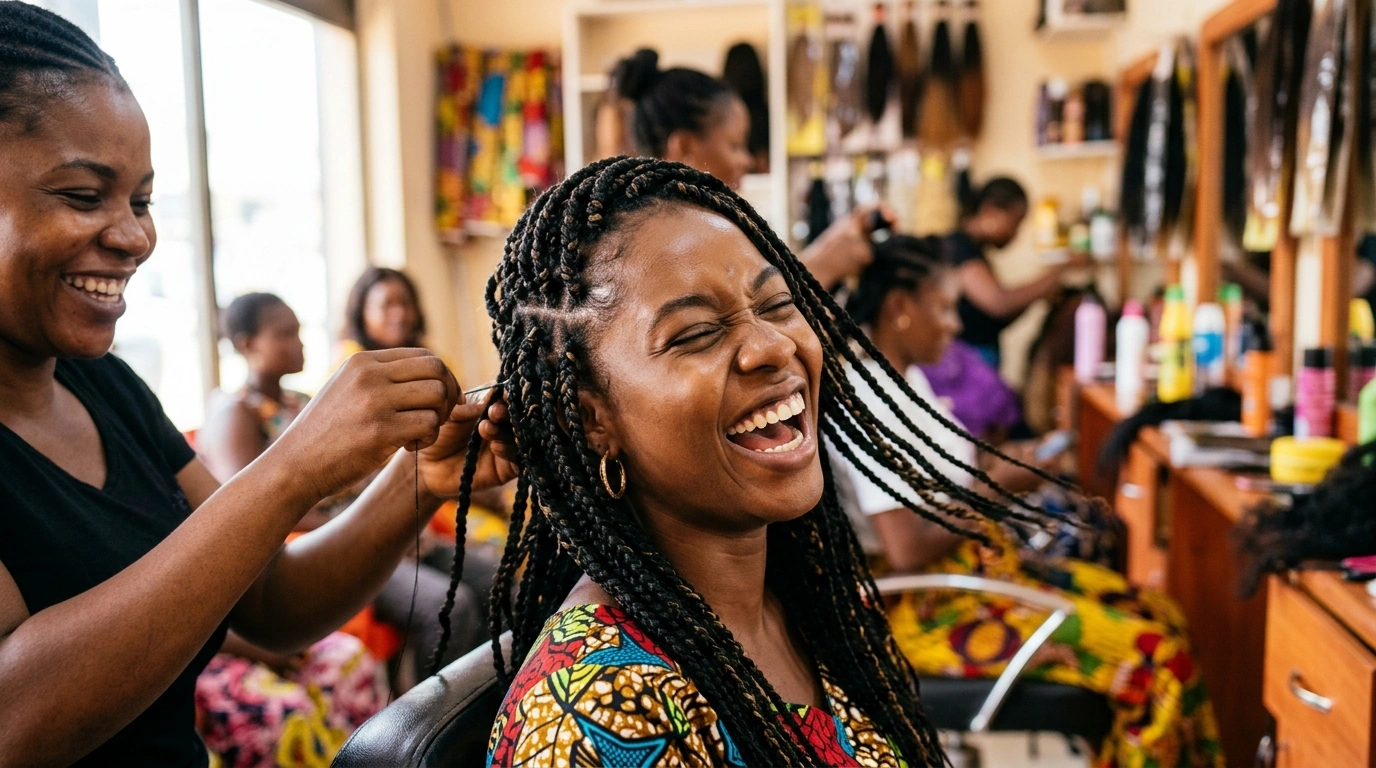
Box braids
Cornrows
Feed-in braids
Knotless braids
Each technique produces a different appearance and can require a different level of styling skill.
Examples of Braids
A basic braid follows a repeated crossing pattern:
Section A → Section B → Section C → repeat
More advanced styles can involve detailed patterns close to the scalp or individual braids created with extensions.
Why People Choose Braids
People often choose braids because they offer:
A structured appearance
Long-lasting styling options
Numerous designs
Reduced daily manipulation
The ability to add extensions
Easy customization
Braids can be adapted to different hair lengths, textures, densities, and personal preferences.
Short History of Braids
Braiding has a long history, with evidence of braided hairstyles appearing in ancient art and archaeological discoveries. Different cultures developed their own techniques and traditions, and some braiding styles continue to carry important cultural meaning today.
What Are Twists?
Twists are hairstyles created by wrapping two sections of hair around each other. Unlike a traditional three-strand braid, a basic twist generally relies on two sections.
Twists can be created using natural hair alone or with extensions.
How Twists Work
The hair is separated into two sections. Each section is rotated and wrapped around the other repeatedly.
The result is often a rope-like appearance.
Common twist styles include:
Two-strand twists
Senegalese twists
Havana twists
Marley twists
Passion twists
Flat twists
Mini twists
Examples of Twists
A basic two-strand twist follows this general pattern:
Section A + Section B → wrap → repeat
The finished style usually has a softer, rope-like appearance compared with a traditional braid.
Why People Choose Twists
Twists can be appealing because they are:
Versatile
Relatively simple in basic form
Easy to customize
Suitable for many natural-hair styles
Available with or without extensions
Available as loose or scalp-based styles
Short History of Twists
Twisting techniques have been used by different communities for generations. Modern twist styles have become especially popular as natural-hair styling options because they can be adapted to different textures, lengths, and desired looks.
Braids or Twists: Key Differences
The biggest difference between braids or twists is the construction method.
Key Differences
Braids generally interweave three or more sections of hair.
Twists generally wrap two sections around each other.
Braids often create a more structured and defined appearance.
Twists commonly have a softer, rope-like appearance.
Both styles can be created with natural hair.
Both styles can incorporate extensions.
Both can reduce daily hair manipulation.
Longevity depends on the specific technique and maintenance routine.
Tight installation can cause unwanted tension with either style.
The best choice depends on your hair goals and styling preferences.
Braids or Twists Comparison Table
| Feature | Braids | Twists |
|---|---|---|
| Basic technique | Interweaving sections | Wrapping sections together |
| Typical sections | Three or more | Usually two |
| Appearance | Structured and defined | Rope-like and softer |
| Styling options | Very extensive | Very extensive |
| Extensions | Yes | Yes |
| Natural hair | Yes | Yes |
| Scalp styles | Yes | Yes |
| Maintenance | Depends on style | Depends on style |
| Longevity | Depends on technique | Depends on technique |
| Beginner options | Available | Available |
| Best for | Structured and intricate looks | Soft and versatile looks |
Real-Life Conversation Examples
Dialogue 1: Choosing a Protective Style
Maya: Should I get braids or twists?
Aisha: What kind of look do you want?
Maya: Something neat but not too complicated.
Aisha: You might like twists. They’re simple and can still look polished.
🎯 Lesson: Twists can be a good option when you prefer a softer style with a relatively simple construction.
Dialogue 2: Looking for Variety
Emma: I want a hairstyle with lots of design options.
Sofia: Braids might give you more choices.
Emma: Like cornrows and box braids?
Sofia: Exactly.
🎯 Lesson: Braids offer a huge range of patterns and techniques.
Dialogue 3: Natural Hair
Nia: Can I do twists with my natural hair?
Jade: Absolutely. Two-strand twists are one of the simplest options.
Nia: Do I need extensions?
Jade: Not necessarily.
🎯 Lesson: Twists can be created with natural hair alone or with extensions.
Dialogue 4: Adding Length
Olivia: I want longer hair without waiting for it to grow.
Grace: You can use extensions with either braids or twists.
Olivia: So both can add length?
Grace: Yes, depending on the technique and extensions you choose.
🎯 Lesson: Both braids and twists can incorporate extensions for additional length and volume.
When to Use Braids or Twists
Choosing between braids or twists becomes easier when you start with the result you want.
Choose Braids If You Want
A structured appearance
Intricate patterns
Cornrows or similar scalp designs
Box braids
A wide variety of braid patterns
Extensive customization
A classic, defined look
Braids can be especially appealing if you enjoy detailed patterns and want a hairstyle that can be personalized in many ways.
Choose Twists If You Want
A softer appearance
A rope-like texture
Two-strand natural styles
Simple sectioning
A natural-looking hairstyle
Styles such as passion or Marley twists
An alternative to traditional braiding
Twists can be a good choice when you want something versatile without the interwoven appearance of traditional braids.
A Simple Memory Trick
Remember:
Braids = cross and weave.
Twists = wrap and rotate.
If multiple sections are being woven over and under one another, you’re likely looking at a braid.
If two sections are primarily being wrapped around each other, you’re looking at a twist.
Braids or Twists for Natural Hair
Both styles can work well with natural hair, but the best choice depends on your hair texture, length, density, and styling goals.
Two-strand twists are particularly popular because they can be created without extensions and can also be used as a foundation for other hairstyles.
Braids provide more structural possibilities. They can be installed close to the scalp or created as individual sections, depending on the desired result.
Neither style is automatically healthier simply because it is a braid or twist. Hair care depends heavily on installation, tension, moisture, maintenance, and removal.
Braids or Twists for Protective Styling
Both braids and twists are commonly used as protective hairstyles because they can reduce frequent daily manipulation.
However, protective styling does not mean the hair can be ignored.
Good practices include:
Avoiding excessive tension
Keeping the scalp comfortable
Maintaining appropriate cleanliness
Protecting the hair while sleeping
Moisturizing according to your hair’s needs
Removing the style carefully
Avoiding keeping a style longer than your hair can comfortably tolerate
A hairstyle that causes significant pain, pulling, or irritation is not a good protective style simply because it is called one.
Braids or Twists for Beginners
If you’re learning to style your own hair, basic two-strand twists can be easier to learn than many traditional braiding techniques.
A simple twist uses two sections and a repeated wrapping motion.
A basic three-strand braid requires more coordination because the sections need to cross in a specific sequence.
However, some braid styles are beginner-friendly, while some twist styles can become quite complicated.
For beginners, start with a simple technique rather than choosing a style based only on whether it is technically a braid or twist.
Braids or Twists for Long-Lasting Styles
How long a hairstyle lasts depends on much more than whether it is a braid or twist.
Important factors include:
Hair texture
Installation technique
Section size
Products used
Extensions
Scalp care
Sleeping habits
Humidity
Daily activity
Removal technique
Some braids can remain neat for an extended period, while some twists may loosen sooner. However, there are also long-lasting twist techniques and shorter-lasting braid styles.
For that reason, compare specific hairstyles rather than assuming every braid lasts longer than every twist.
Braids or Twists for Sleeping
Both styles can simplify nighttime hair care, but protecting the hairstyle while sleeping is still important.
A satin or silk scarf, bonnet, or pillowcase can help reduce friction.
For either style:
Keep the hair comfortably secured.
Avoid unnecessary tension.
Reduce excessive friction.
Pay attention to scalp comfort.
Maintain the hair and scalp appropriately.
Your nighttime routine can make a noticeable difference in how neat the style looks the next day.
Braids or Twists With Extensions
Extensions can transform both braids and twists by adding length, volume, and color.
Braids With Extensions
Extensions can add:
Length
Thickness
Volume
Color
Creative styling options
Popular examples include box braids and various feed-in techniques.
Twists With Extensions
Twist extensions can also create dramatic changes in appearance.
Popular examples include:
Senegalese twists
Marley twists
Havana twists
Passion twists
The final appearance depends on the extension type, installation technique, section size, and desired finish.
Which Is Better: Braids or Twists?
There is no universal winner.
If your priority is structured patterns and extensive design variety, braids may be the better choice.
If your priority is a soft, rope-like appearance and two-section styling, twists may be more appealing.
For protective styling, both can work when installed correctly and maintained properly.
The best option depends on your:
Hair texture
Hair length
Desired appearance
Styling experience
Maintenance routine
Comfort level
Available time
Use of extensions
Fun Facts and History
Braids Have Ancient Roots
Braided hairstyles have appeared in artwork and archaeological evidence from ancient civilizations. Different cultures developed distinctive braiding methods and traditions.
Twists Can Create Another Hairstyle
Two-strand twists can be worn as a finished style or removed later to create a textured or wavy appearance. This gives one technique multiple styling possibilities.