

What Is “Crawl”?
Meaning and Usage
Crawl is primarily a verb describing a slow form of movement. A person or animal may crawl using their hands and knees, while something such as an insect may crawl close to a surface.
For example:
- “The baby learned to crawl.”
- “The child crawled across the floor.”
- “The spider began to crawl up the wall.”
The word can also describe extremely slow movement:
“Traffic was crawling along the highway.”
So crawl does not always mean literally moving on hands and knees.
Grammar Rules
Crawl is a regular verb.
Its common forms are:
- Present: crawl
- Third person: crawls
- Past: crawled
- Present participle: crawling
Examples:
“The baby crawls quickly.”
“The baby crawled toward the toy.”
“The baby is crawling across the room.”
Crawl can also function as a noun:
“The baby took a crawl across the floor.”
However, the verb form is much more common in everyday usage.
A Short History Note
The word crawl has Old English and Germanic roots. Historically, it developed around the idea of moving slowly or close to the ground. Modern English has expanded its meaning to include slow traffic, insects, and figurative movement.
What Is “Die”?
Meaning and Usage
Die is primarily a verb meaning to stop living. It can refer to people, animals, plants, and sometimes figurative things such as traditions or businesses.
Examples include:
- “Plants can die without water.”
- “The character dies at the end of the story.”
- “The old tree died during the drought.”
The word can also appear in figurative expressions:
“The tradition slowly died out.”
Here, die does not describe a literal living creature. It means that something gradually disappears or stops being practiced.
Grammar Rules
Die is an irregular verb because its past tense is not formed by simply adding -ed.
Its main forms are:
- Present: die
- Third person: dies
- Past: died
- Present participle: dying
For example:
“The flower dies without water.”
“The flower died last week.”
“The flower is dying.”
Notice the spelling change in dying. We do not write “dieing.”
Regional Notes
Die is spelled the same in American and British English when it means to stop living.
However, the word has another important meaning in technical contexts: a die can be a tool used for shaping, cutting, stamping, or forming material. Its plural in that sense can be dies or, in some contexts, dice depending on meaning and usage.
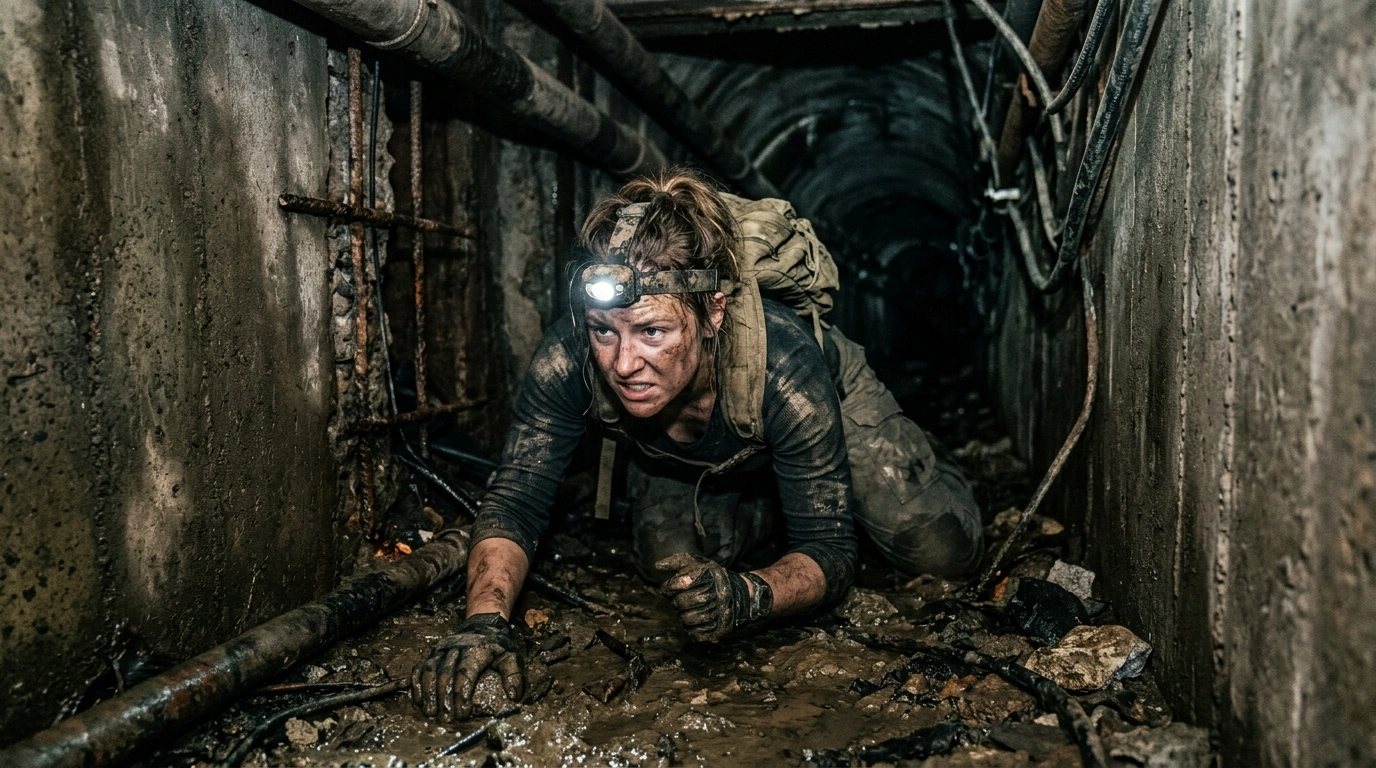
Key Differences Between Crawl or Die
The difference between crawl or die is mainly about the action or state each word describes.
- Crawl means to move slowly or close to the ground.
- Die means to stop living.
- Crawl is commonly a verb and can also be a noun.
- Die is primarily a verb in its life-related meaning.
- Crawl can describe literal or figurative movement.
- Die can describe literal death or figurative disappearance.
- Crawl is a regular verb: crawled.
- Die is an irregular verb: died.
- Their meanings are completely different, so context determines which word belongs in a sentence.
| Feature | Crawl | Die |
|---|---|---|
| Main word class | Verb | Verb |
| Basic meaning | Move slowly or close to the ground | Stop living |
| Past tense | Crawled | Died |
| -ing form | Crawling | Dying |
| Figurative use | Yes | Yes |
| Example | “The baby crawled.” | “The plant died.” |
| Common related idea | Slow movement | End of life |
| US/UK spelling | Same | Same |
Real-Life Conversation Examples
Example 1: Talking About a Baby
Emma: “What is the baby doing?”
Noah: “She’s starting to crawl.”
Emma: “She’s getting around much faster now!”
🎯 Lesson: Crawl describes a type of slow movement, especially on hands and knees.
Example 2: Talking About a Plant
Liam: “Why does the plant look so unhealthy?”
Sara: “It hasn’t had enough water. It might die.”
Liam: “I’ll water it right away.”
🎯 Lesson: Die means to stop living.
Example 3: Talking About Traffic
Jack: “Why are we moving so slowly?”
Mia: “Traffic is crawling.”
Jack: “At this rate, we’ll be late.”
🎯 Lesson: Crawl can describe something moving extremely slowly without literally crawling.
Example 4: Figurative Usage
Alex: “Is that old tradition still popular?”
Ben: “Not really. It’s slowly dying out.”
🎯 Lesson: Die can be used figuratively when something gradually disappears or stops being common.
When to Use Crawl or Die
Use “Crawl” for Slow Movement
Choose crawl when someone or something is moving slowly, particularly close to the ground.
Common situations include:
- Babies moving on hands and knees
- Insects moving across surfaces
- People moving carefully
- Traffic moving extremely slowly
- Figurative descriptions of slow progress
For example:
“The line was crawling forward.”
A simple memory trick is crawl = slow movement.
Use “Die” for the End of Life
Choose die when talking about a living thing stopping life.
For example:
- “The plant died.”
- “The animal died naturally.”
- “Some flowers die in extreme cold.”
It can also describe the disappearance of nonliving things in figurative language:
“The sound died away.”
Remember the Verb Forms
One common grammar mistake involves the past tense of these words.
Correct:
- crawl → crawled
- die → died
Also remember:
- crawl → crawling
- die → dying
The spelling of dying is particularly important because “dieing” is incorrect when you mean the process of dying.