
What Are Gnats?
Meaning and Usage
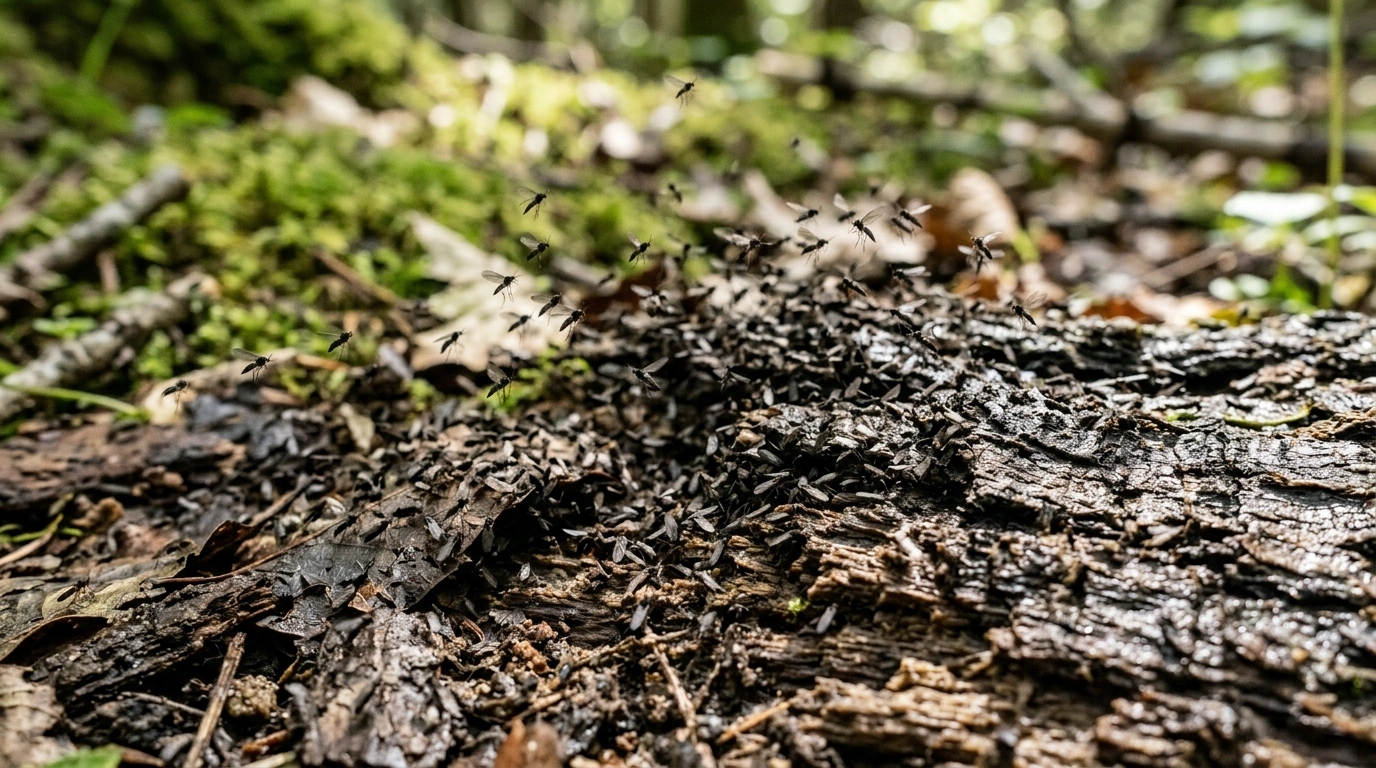
Gnat is a general common name for various small flying insects. It does not describe one single species or biological group.
Different insects called gnats can behave quite differently. For example, fungus gnats are small flies commonly associated with damp potting soil and houseplants. Other insects may also be called gnats because of their tiny size and flying behavior.
For example:
- “There are gnats around my houseplants.”
- “Small gnats appeared after I watered the plants.”
- “I noticed several gnats near the damp soil.”
Appearance
Many gnats are extremely small and have delicate bodies and wings. Fungus gnats, for instance, can look like tiny mosquitoes, although they do not belong to the same group as mosquitoes.
Because “gnat” covers many different insects, their exact appearance varies.
Habitat and Behavior
Gnats are often associated with moist environments. Fungus gnats commonly live around damp organic material and plant soil, while other types may be found around water, decaying vegetation, or other suitable habitats.
Their presence does not automatically mean there is structural damage to a building.
A Short History Note
The word gnat has been part of English for centuries. It has historically been used as a general term for small flying insects rather than as the precise scientific name of one particular insect.
What Are Termites?
Meaning and Usage
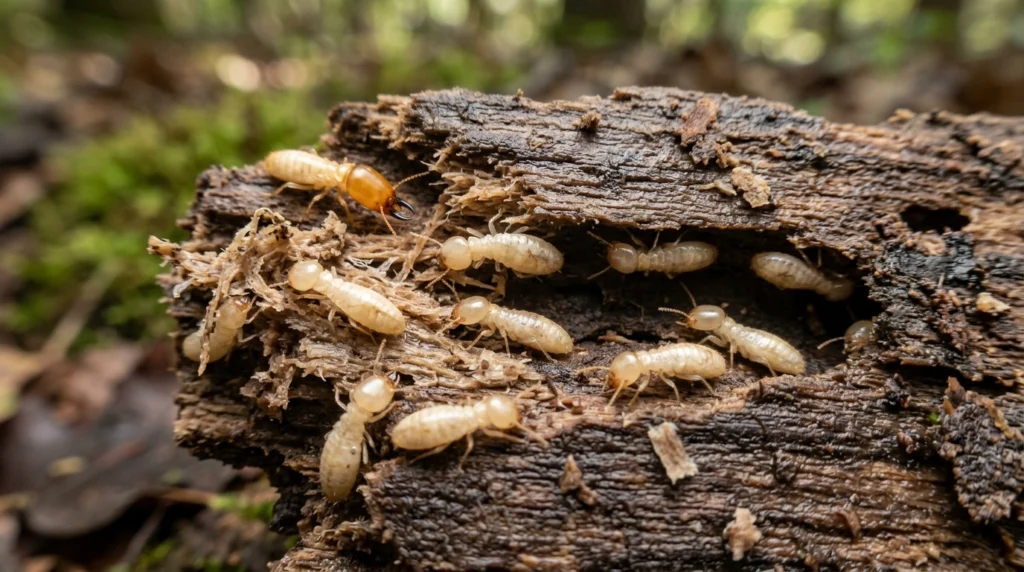
Termites are social insects belonging to the order Blattodea. They live in colonies and are especially known for feeding on cellulose-rich materials, including wood and plant matter.
Unlike gnats, termites are not simply tiny flying insects. Most termites spend much of their lives in colonies, soil, wood, or other protected environments.
For example:
- “The homeowner found signs of termites near the wooden structure.”
- “Termites live in organized colonies.”
- “A professional inspected the building for termites.”
Appearance
Termites have several forms within a colony. Worker termites are generally pale and soft-bodied, while reproductive termites can develop wings.
Winged reproductive termites are often called alates. These are the termites people are most likely to mistake for other small flying insects.
One useful clue is body shape. Winged termites generally have straight antennae, a broad waist, and wings of similar length.
Habitat and Behavior
Termites live in colonies and can establish themselves in soil, wood, or structures depending on the species.
Their feeding behavior makes them important decomposers in natural ecosystems. However, some species can also damage wooden structures and other cellulose-containing materials.
Regional Notes
Termite species and behavior vary significantly by region. Subterranean, drywood, and dampwood termites, for example, have different habits and habitat preferences.
Because identification can be difficult, suspected structural termite activity is often worth having professionally evaluated.
Key Differences Between Gnats or Termites
When comparing gnats or termites, their biggest differences involve biology, behavior, and the environments where they are found.
- Gnats is a broad common name for several types of small flies.
- Termites are social insects that live in colonies.
- Gnats are commonly associated with moisture, plants, or organic material depending on the type.
- Termites feed on cellulose-rich materials.
- Many gnats are naturally flying insects.
- Only certain termite colony members, particularly reproductive forms, have wings.
- Termites can damage wooden structures.
- Gnats generally do not cause structural wood damage.
- Winged termites have two pairs of wings that are typically similar in length.
- Small flies often have different wing and body structures.
| Feature | Gnats | Termites |
|---|---|---|
| General category | Common name for several tiny flying insects | Social insects |
| Typical size | Very small | Small to medium, depending on caste/species |
| Wings | Common among adult gnats | Present in reproductive forms |
| Body shape | Usually fly-like | Broad-waisted rather than pinched |
| Antennae | Vary by type | Generally straight |
| Common habitat | Moist soil, plants, organic material, etc. | Soil, wood, or colonies in protected spaces |
| Food | Varies by type | Cellulose and other organic materials |
| Structural wood damage | Generally no | Some species can cause significant damage |
| Colony structure | Varies | Highly organized colonies |
Real-Life Conversation Examples
Example 1: Around Houseplants
Emma: “There are tiny black insects flying around my plant.”
Noah: “They could be fungus gnats, especially if the soil stays damp.”
Emma: “So they’re probably not termites?”
Noah: “Not based on that description alone.”
🎯 Lesson: Tiny insects around damp houseplant soil are commonly associated with fungus gnats.
Example 2: Finding Winged Insects
Liam: “I found a bunch of winged insects near the window.”
Sara: “Are they termites or flying ants?”
Liam: “I’m not sure.”
Sara: “The body shape and wings can help distinguish them, but professional identification may be useful.”
🎯 Lesson: Winged termites can be confused with other flying insects, so appearance alone may not always be enough.
Example 3: Concern About Wood
Jack: “There’s damage around this wooden beam.”
Mia: “Could insects have caused it?”
Jack: “I’m wondering about termites.”
🎯 Lesson: Suspected insect-related structural wood damage deserves closer inspection rather than assuming the insects are gnats.
Example 4: Damp Conditions
Alex: “Why do I keep seeing tiny flies near the plants?”
Ben: “Check whether the soil stays very wet. Some gnats thrive around damp organic material.”
🎯 Lesson: Moist soil can be an important clue when identifying certain types of gnats.
When to Use Gnats or Termites
Think “Gnats” Around Small Flying Insects
The word gnats may be appropriate when you’re describing very small flying insects, particularly those associated with plants, soil, moisture, or organic material.
However, remember that gnat is a broad common name, so identifying the exact species may require looking at the insect’s appearance and habitat.
Think “Termites” When There Are Colony or Wood Clues
Consider termites when you see signs associated with termite activity, such as:
- Winged insects emerging from a structure
- Discarded wings near windows or doors
- Mud tubes associated with some termite species
- Hollow or damaged wood
- Visible termite workers or soldiers
These signs do not prove a termite infestation by themselves, but they can justify further inspection.
A Simple Memory Trick
Think:
Gnats = tiny flying insects.
Termites = colony insects associated with cellulose.
If you’re seeing tiny flies around damp plant soil, gnats may be the more likely description. If you’re seeing signs involving wood, colonies, mud tubes, or discarded wings, termites deserve consideration.
US vs. UK Notes
The basic terms gnat and termite are used in both American and British English. However, the exact insects called “gnats” can vary by region because the word is a broad common name rather than a precise scientific classification.