
What Is Waxing?
Meaning and Usage
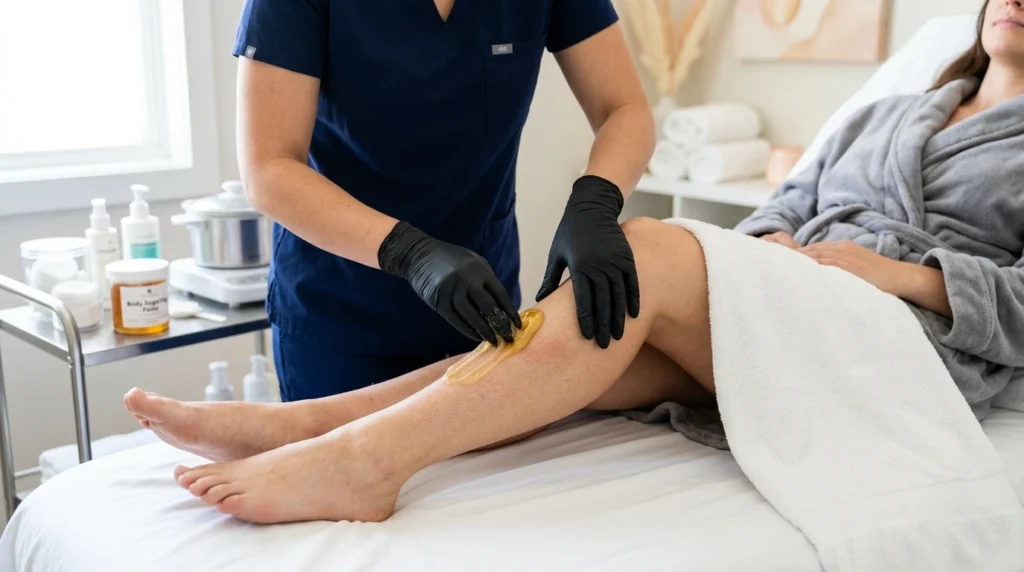
Waxing is a hair-removal method that uses wax to grip unwanted hair and remove it from the root. Depending on the type of wax, the product may be applied with a strip or allowed to harden before removal.
Waxing is commonly used on areas such as:
- Legs
- Arms
- Underarms
- Face
- Bikini area
- Back
- Chest
For example:
“I usually get my eyebrows waxed.”
“She booked a waxing appointment before her vacation.”
How Waxing Works
Wax is applied to the skin and allowed to adhere to the hair. The wax is then removed, taking the attached hair with it.
Some waxes are removed with a cloth or paper strip, while hard wax can be removed without a strip after it sets.
Because waxing removes hair from the root rather than cutting it at the skin’s surface, results generally last longer than shaving.
History and Usage
Hair removal through waxing has a long history, with different cultures using various forms of wax, resin, and other sticky substances. Modern salon waxing developed into a standardized beauty treatment and is now widely available around the world.
Different types of wax are formulated for different purposes, so professional products can vary considerably.
What Is Sugaring?
Meaning and Usage
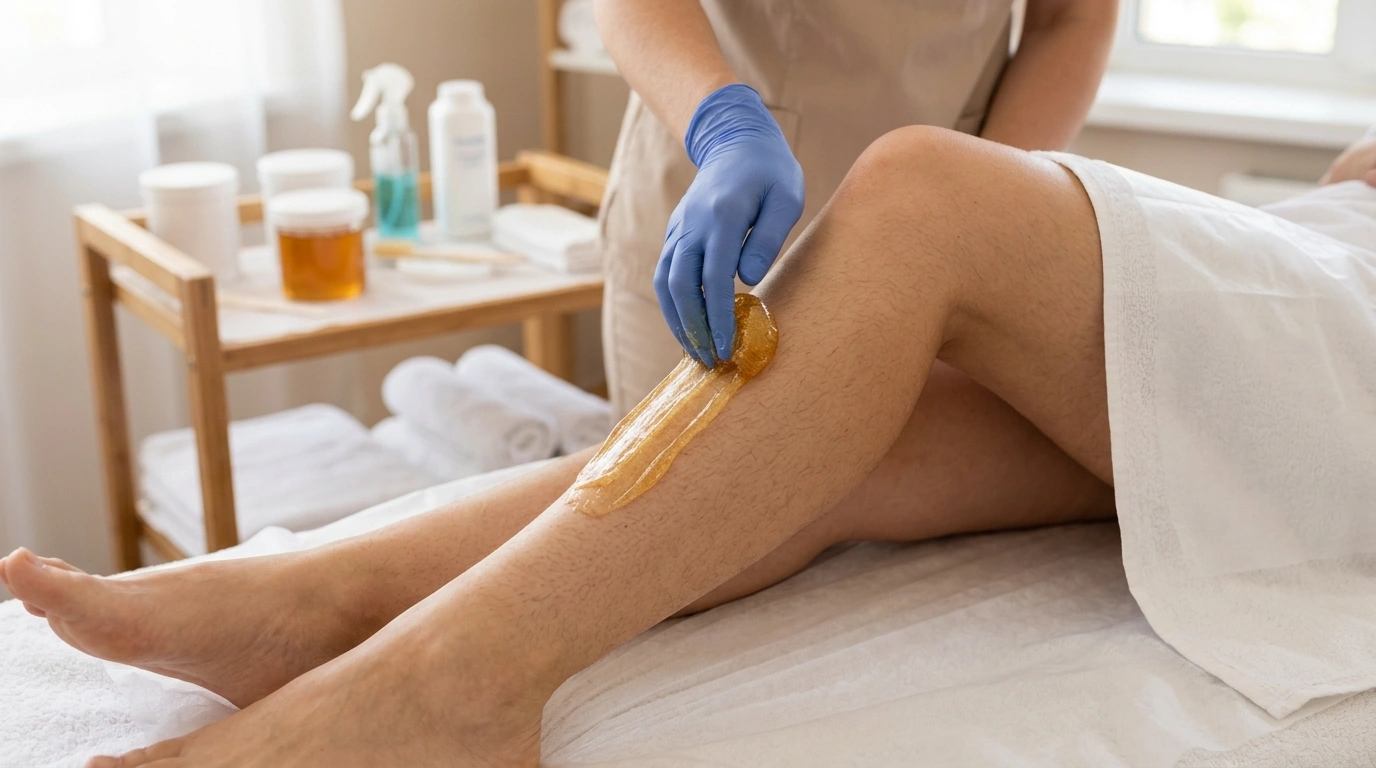
Sugaring is a hair-removal technique that uses a sticky sugar-based paste to remove hair from the root.
Traditional sugaring paste is commonly made from:
- Sugar
- Water
- Lemon juice or another acidic ingredient
The resulting paste is applied to the skin and manipulated so it can grip the hair before being removed.
Sugaring can be performed on many of the same areas as waxing, including the legs, arms, face, underarms, and bikini area.
How Sugaring Works
A common sugaring technique involves applying the paste against the direction of hair growth and removing it in the direction of growth.
This differs from many traditional waxing techniques, where wax is commonly removed against the direction of hair growth.
Sugaring paste generally does not adhere to the skin in exactly the same way as wax, although the experience varies depending on the technique, product, and individual skin.
History and Regional Notes
Sugaring is often associated with ancient hair-removal traditions in parts of the Middle East and North Africa. The technique has since become popular internationally, particularly as an alternative to conventional waxing.
Modern salons may use different recipes and techniques, so not every sugaring treatment is identical.
Key Differences Between Waxing or Sugaring
The most important differences between waxing or sugaring involve the product, application technique, and direction in which the hair is removed.
- Waxing uses wax, while sugaring uses a sugar-based paste.
- Wax is commonly removed against hair growth.
- Sugaring is commonly removed in the direction of hair growth.
- Both methods can remove hair from the root.
- Both can provide longer-lasting smoothness than shaving.
- Skin sensitivity varies from person to person.
- Both methods can cause temporary redness or irritation.
- Sugaring paste is generally water-soluble, making residue easier to remove with water.
- Wax may require an appropriate oil-based or specialized cleanser for residue.
- Results depend on hair-growth cycles, technique, and individual factors.
| Feature | Waxing | Sugaring |
|---|---|---|
| Main material | Wax | Sugar-based paste |
| Hair removal | From the root | From the root |
| Typical removal direction | Against hair growth | With hair growth |
| Residue cleanup | Depends on wax type | Generally dissolves with water |
| Skin reaction | Temporary redness or irritation possible | Temporary redness or irritation possible |
| Suitable areas | Many body areas | Many body areas |
| Results | Longer-lasting than shaving | Longer-lasting than shaving |
| Technique | Often quick and standardized | Requires specific paste technique |
| Ingredients | Varies by product | Traditionally sugar, water, and acid |
| Best choice | Depends on preference and skin response | Depends on preference and skin response |
Real-Life Conversation Examples
Example 1: Choosing for a Vacation
Emma: “I’m going on vacation and want smooth legs.”
Noah: “Have you considered waxing or sugaring?”
Emma: “What’s the difference?”
Noah: “Both remove hair from the root, but they use different products and techniques.”
🎯 Lesson: Both methods can provide longer-lasting results than shaving, but the experience differs.
Example 2: Sensitive Skin
Liam: “My skin gets irritated easily.”
Sara: “Then you may want to discuss both options with an experienced professional before choosing.”
🎯 Lesson: Skin can react differently to each method, so personal tolerance matters.
Example 3: Removing Residue
Jack: “I hate sticky residue after hair removal.”
Mia: “Sugaring paste is generally water-soluble, so cleanup can be easier.”
🎯 Lesson: Sugaring can have a cleanup advantage because traditional sugar paste dissolves in water.
Example 4: Direction of Removal
Alex: “Why does sugaring feel different from waxing?”
Ben: “One reason is that the traditional techniques remove the hair in different directions.”
🎯 Lesson: Removal direction is one of the main technical differences between waxing and sugaring.
When to Use Waxing or Sugaring
Choose Waxing for Familiar Salon Convenience
Waxing may be a good option if you want a widely available hair-removal treatment with many product and technique choices.
It can be particularly convenient when:
- You already know your skin tolerates waxing.
- You want professional salon treatment.
- You need several body areas treated.
- Your preferred salon specializes in waxing.
- You prefer the feel or speed of conventional waxing.
Consider Sugaring If You Prefer a Sugar-Based Method
Sugaring may appeal to people who prefer a sugar-based paste and the traditional technique associated with it.
It can be attractive if:
- You prefer water-soluble products.
- You dislike conventional wax residue.
- You want to try a different hair-removal technique.
- You like the traditional ingredients used in sugar paste.
- A reputable professional near you specializes in sugaring.
What About Pain?
Neither method can honestly be described as completely painless.
Both waxing and sugaring remove hair from the root, so some discomfort is normal. How much you feel can depend on the treatment area, hair thickness, skin sensitivity, technique, and your personal pain tolerance.
Some people find sugaring more comfortable, while others prefer waxing. There is no universal winner.
What About Hair Regrowth?
Because both methods remove hair from the root, the results generally last longer than shaving. However, hair does not all grow at the same rate.
Regrowth can therefore appear at different times depending on the individual and treatment area.
What About Aftercare?
After either treatment, skin may temporarily appear red or feel sensitive.
Common professional aftercare advice may include:
- Avoiding excessive heat immediately afterward
- Avoiding unnecessary friction
- Wearing comfortable clothing after body treatments
- Following the specific aftercare instructions provided by your practitioner
If significant irritation develops or persists, seek appropriate professional medical advice.
A Simple Memory Trick
Think:
Waxing = wax.
Sugaring = sugar paste.
Both remove hair from the root, but the product and technique are different.