

What Is a Balcony?
Meaning and Usage
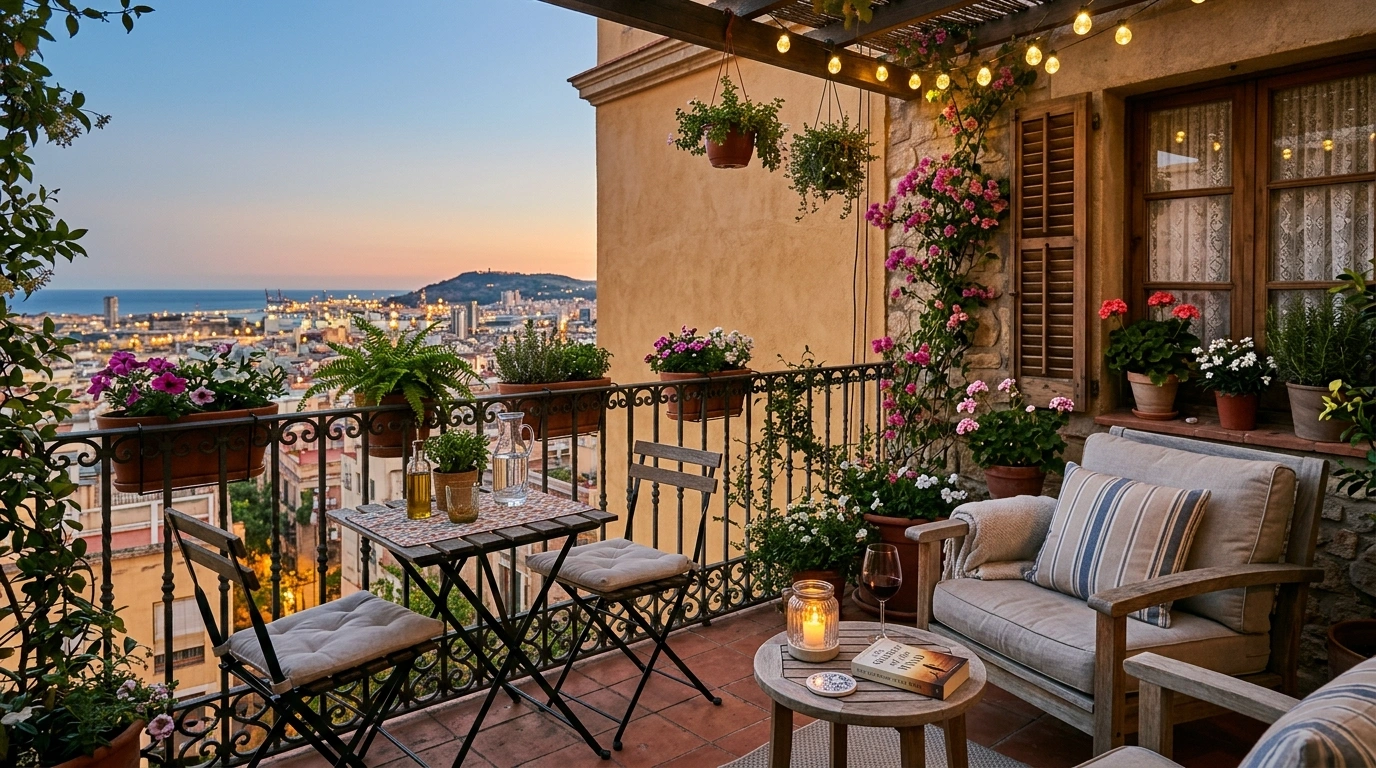
A balcony is an elevated platform that projects from the side of a building and is usually enclosed by a railing or balustrade.
Balconies are commonly attached to:
- Apartments
- Hotels
- Houses
- Offices
- Theaters
For example:
- “The apartment has a small balcony.”
- “We sat on the balcony and watched the sunset.”
- “Her bedroom opens onto a private balcony.”
A balcony is usually connected directly to an interior room and is accessed through a door.
Structure and Size
Balconies are typically smaller than terraces, although there is no universal size limit.
They are often supported by:
- Brackets
- Columns
- Cantilevered structural elements
- The building’s structural frame
Because a balcony projects from a building, its size and weight capacity are usually subject to specific structural requirements.
Regional Usage
The word balcony has a broadly consistent meaning in American and British English.
However, the exact architectural design can vary. Some balconies are extremely small and designed mainly for standing, while others are large enough for outdoor furniture.
A Short History Note
The word balcony entered English through French and Italian, ultimately tracing back to an Italian term associated with a projecting platform. Balconies have been used in architecture for centuries for views, ventilation, social gatherings, and decorative purposes.
What Is a Terrace?
Meaning and Usage
A terrace is generally a relatively large, level outdoor area. It may be located:
- On the roof of a building
- On an upper floor
- At ground level
- Alongside a building
- On a raised platform or landscaped level
For example:
- “The hotel has a rooftop terrace.”
- “We eat dinner on the terrace during summer.”
- “The apartment has access to a large private terrace.”
Unlike a balcony, a terrace does not necessarily have to project outward from a building.
Structure and Size
A terrace is generally larger and more spacious than a balcony, although architectural definitions vary.
A terrace may have room for:
- Tables
- Chairs
- Outdoor sofas
- Plants
- Grills where permitted
- Dining areas
A rooftop terrace, for example, can occupy a substantial portion of a building’s roof.
Regional Notes
Terrace has different everyday meanings in different varieties of English.
In American English, it often refers to a larger outdoor space connected with a home or building.
In British English, terrace can also refer to a row of attached houses, as in terraced houses. That meaning has nothing to do with an outdoor platform.
In some countries, especially in real estate listings, “terrace” may be used broadly for an outdoor living area that could resemble a large balcony.
Key Differences Between Terrace or Balcony
The clearest distinction between terrace or balcony is their typical size, position, and structural relationship to the building.
- A balcony usually projects from a building.
- A terrace is generally a larger, more open outdoor area.
- Balconies are usually elevated above ground level.
- Terraces can be at ground level, on roofs, or on raised levels.
- Balconies are commonly accessed directly from an interior room.
- Terraces may have broader access and can sometimes connect to multiple spaces.
- A terrace generally provides more usable floor area.
- A balcony is usually surrounded by a railing or balustrade.
- Both can be private or shared.
- Both can contain outdoor furniture and plants.
- Regional terminology can blur the distinction.
| Feature | Balcony | Terrace |
|---|---|---|
| Typical size | Smaller | Usually larger |
| Typical position | Projects from building | Ground, raised, or rooftop |
| Relationship to building | Usually attached/projecting | May be integrated with or alongside building |
| Access | Usually through a room | May have one or more access points |
| Outdoor furniture | Limited by space | Usually more space |
| Railing | Usually required | May have railing depending on height |
| Privacy | Often private or semi-private | Can be private or shared |
| Rooftop use | Rarely | Common |
| Garden potential | Limited | Often greater |
| US/UK meaning | Relatively consistent | More varied |
Real-Life Conversation Examples
Example 1: Small Apartment Space
Emma: “My apartment has a tiny outdoor platform.”
Noah: “If it projects from the building and has a railing, I’d probably call it a balcony.”
🎯 Lesson: A projecting elevated platform is typically a balcony.
Example 2: Rooftop Space
Liam: “The hotel has tables and sofas on the roof.”
Sara: “That’s more likely to be called a rooftop terrace.”
🎯 Lesson: A large usable rooftop outdoor area is commonly called a terrace.
Example 3: Large Apartment Outdoor Area
Jack: “Our new apartment has enough outdoor space for a dining table and several chairs.”
Mia: “The property listing might describe that as a terrace, depending on its design.”
🎯 Lesson: Larger outdoor living areas are often described as terraces.
Example 4: Regional Terminology
Alex: “Why does this listing call it a terrace when I’d call it a balcony?”
Ben: “Real-estate terminology varies by country and even by property.”
🎯 Lesson: Context and regional usage can affect whether an outdoor space is called a terrace or balcony.
When to Use Terrace or Balcony
Use “Balcony” for a Projecting Platform
Choose balcony when the outdoor space:
- Projects from a building
- Is elevated above the ground
- Has a railing or balustrade
- Is directly accessible from an interior room
- Is relatively compact
For example:
“The bedroom has a private balcony.”
Use “Terrace” for a Larger Outdoor Area
Choose terrace when the outdoor area:
- Is relatively spacious
- Is on a rooftop
- Functions as an outdoor living or dining area
- Is integrated into a larger level of the building
- Provides room for substantial furniture or plants
For example:
“The penthouse has a large rooftop terrace.”
What About Ground-Level Spaces?
This is where terminology gets especially interesting.
A ground-level outdoor area is generally not called a balcony, because balconies are elevated. Depending on the property and region, it may be called a terrace, patio, deck, courtyard, or garden.
The exact term depends on its construction and location.
US vs. UK Notes
In both American and British English, balcony generally refers to an elevated platform attached to a building.
Terrace, however, has a wider range of meanings.
In American English, it can describe an outdoor area used for sitting or entertaining.
In British English, it can also describe a row of attached houses, such as:
“They live in a terrace.”
More commonly, the housing form is called a terraced house.
A Simple Memory Trick
Think:
Balcony = building projection.
Terrace = larger outdoor area.
If it sticks out from the building, think balcony.
If it is a broad outdoor space, especially on a roof, think terrace.