

What Is a Shower?
A shower is a bathroom fixture that sprays water over the body while a person stands or sits beneath the water stream. Showers are designed primarily for quick, convenient bathing and are common in modern homes.
A typical shower may include:
Showerhead
Shower valve
Controls for temperature and water flow
Shower enclosure or curtain
Drain
Wall or floor surfaces designed to handle water
Common Uses
Showers are especially popular for everyday bathing because they can be faster than filling a bathtub.
For example:
“I usually take a shower before work.”
“We installed a walk-in shower during the renovation.”
“The shower has a handheld sprayer.”
Short History and Usage Note
Early forms of showers existed in ancient civilizations, but modern indoor showers became increasingly practical as plumbing and water systems improved.
Today, showers range from simple fixed showerheads to sophisticated systems with handheld sprays, multiple controls, built-in seating, and accessibility features.
What Is a Tub?
A tub, short for bathtub, is a bathroom fixture designed to hold water so a person can bathe while sitting or lying inside it.
Bathtubs come in many styles, including:
Freestanding tubs
Alcove tubs
Drop-in tubs
Corner tubs
Soaking tubs
Walk-in tubs
A tub can also include a showerhead, creating a shower-tub combination.
Common Uses
Bathtubs are particularly useful for relaxing baths and bathing children.
Examples:
“The kids take baths in the tub.”
“We installed a deep soaking tub.”
“She likes relaxing in the tub after a long day.”
Short History and Usage Note
Bathing in tubs has a long history, with ancient civilizations developing various forms of bathing facilities. Modern residential bathtubs became increasingly common as indoor plumbing expanded.
Today, tubs are available in many shapes and sizes, ranging from compact standard models to large luxury soaking tubs.
Key Differences Between Shower and Tub
The main difference between a shower or tub is how you bathe and how much space and time the fixture typically requires.
Showers are usually faster and more convenient.
Tubs are better suited to soaking and relaxing.
Showers generally require less water for short bathing sessions.
Tubs can use more water because the basin must be filled.
Showers can be easier to enter and exit when designed with accessibility in mind.
Tubs are often useful for bathing young children.
Showers can make better use of limited bathroom space.
Tubs can add a traditional or luxurious feel to a bathroom.
Both can increase the usefulness and appeal of a bathroom.
A combination unit can provide both options in one fixture.
Comparison Table
| Feature | Shower | Tub |
|---|---|---|
| Main purpose | Quick bathing | Soaking and bathing |
| Typical bathing time | Shorter | Longer |
| Water use | Often lower for short showers | Usually higher when fully filled |
| Space | Often more flexible | Can require more floor area |
| Relaxation | Moderate | Excellent |
| Children | Less convenient for small children | Very convenient |
| Accessibility | Walk-in designs can be easier | Standard tubs can be harder to enter |
| Cleaning | Usually easier | Can require more cleaning |
| Installation | Varies | Varies |
| Best for | Convenience and everyday use | Relaxation and family bathing |
Real-Life Conversation Examples
Dialogue 1: Busy Morning
Emma: “I only have ten minutes before work.”
Jack: “Then take a shower.”
Emma: “Definitely. A bath would take too long.”
🎯 Lesson: A shower is usually the more convenient choice for a quick daily routine.
Dialogue 2: Relaxation
Mia: “I want to relax after a stressful week.”
Sara: “A bathtub might be better.”
Mia: “That’s exactly what I was thinking.”
🎯 Lesson: A tub is generally better suited to a long, relaxing soak.
Dialogue 3: Young Children
Alex: “Which is better for a house with small children?”
Liam: “I’d keep at least one tub if you have the space.”
Alex: “Why?”
Liam: “Bathing young children can be easier in a tub.”
🎯 Lesson: A bathtub can be particularly practical for families with young children.
Dialogue 4: Small Bathroom
Noah: “Our bathroom is tiny.”
Olivia: “A compact shower could give you more usable space.”
Noah: “That sounds better than trying to fit a large tub.”
🎯 Lesson: A shower can be a practical solution when bathroom space is limited.
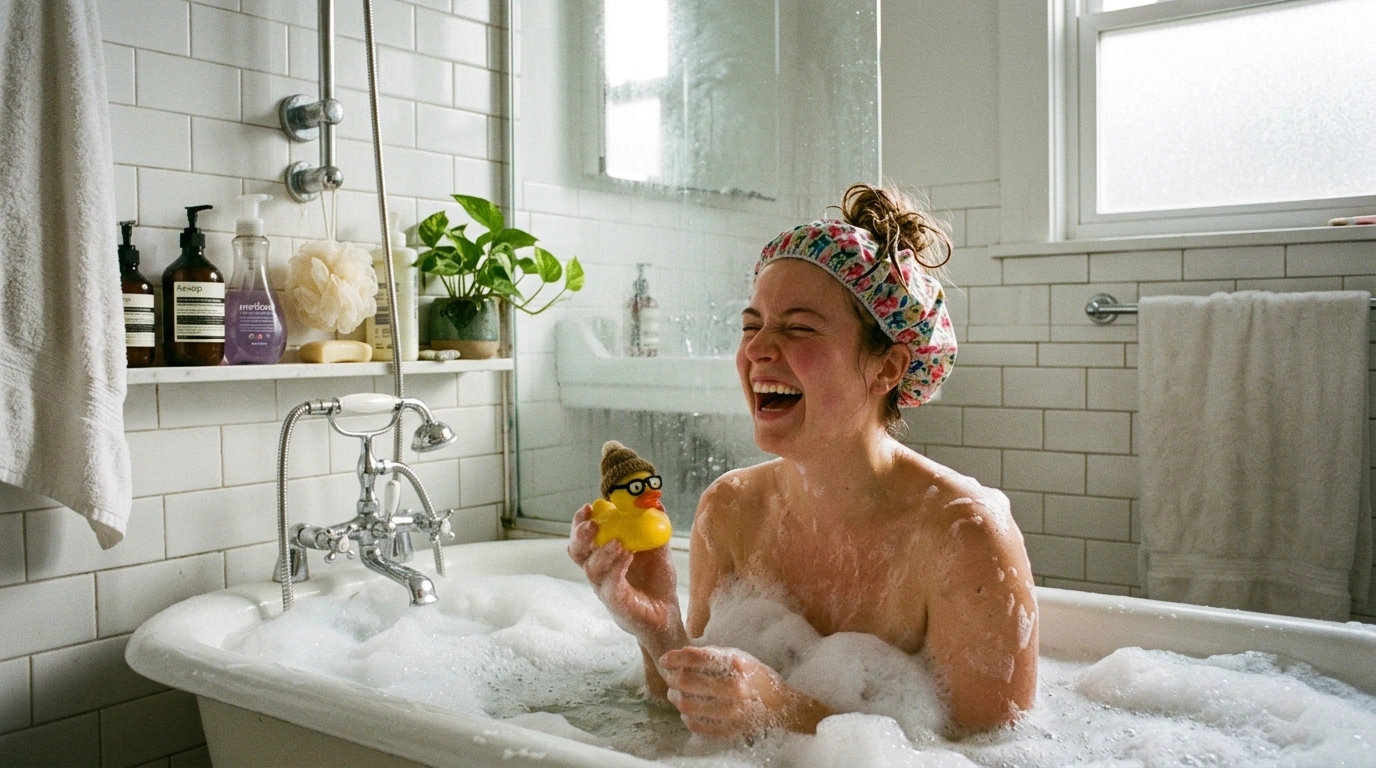
When to Choose a Shower or Tub
When deciding between a shower or tub, think about how you actually use your bathroom.
Choose a Shower for Convenience
A shower may be the better option if you:
Take quick baths
Have a busy schedule
Want easier daily access
Have limited bathroom space
Prefer standing while bathing
Want a modern bathroom design
A walk-in shower can also be designed with features such as grab bars, seating, handheld showerheads, and low-threshold entrances.
Choose a Tub for Relaxation
A bathtub may be a better choice if you:
Enjoy long baths
Have young children
Want a soaking experience
Have enough bathroom space
Prefer traditional bathroom layouts
Want a dedicated bathing area
A deep soaking tub can create a more spa-like experience, although it may require more space and water.
Consider a Shower-Tub Combination
If you cannot decide between a shower or tub, a combination can give you both.
A tub with a shower above it lets you take quick showers while keeping the option of taking a bath. This is a popular solution for family bathrooms because it offers flexibility.
Think About Accessibility
Accessibility should be part of the decision, especially if the bathroom will be used by someone who has difficulty stepping over a high tub wall.
A properly designed walk-in shower can provide easier entry and exit. Features such as a built-in bench, handheld showerhead, grab bars, and non-slip surfaces can improve usability.
For a tub, walk-in models are also available for people who need easier access.
Think About Resale Appeal
If you are renovating a home, consider how the bathroom will be used by future occupants. A home with multiple bathrooms may have more flexibility because you can keep a tub in one bathroom and install a shower in another.
Instead of asking whether a shower or tub is universally better, consider what makes sense for the entire home.
Easy Memory Trick
Remember:
Shower = quick and convenient.
Tub = relaxing and spacious.
It is not a perfect rule, but it makes the basic difference easy to remember.
US vs. UK Notes
In American English, tub and bathtub are common terms.
In British English, bath or bathtub is more common, while shower has essentially the same meaning.
For example:
US: “I’m taking a shower or getting in the tub.”
UK: “I’m having a shower or having a bath.”
The fixtures themselves are essentially the same, even though everyday terminology can differ.
Fun Facts or History
1. Showers Were Not Always Common in Homes
Modern showers became much more practical as indoor plumbing, reliable water supplies, and household heating systems developed.
2. Bathtubs Have Been Used for Centuries
Bathing in large containers and dedicated baths dates back thousands of years. Modern household tubs evolved as indoor plumbing became widely available.