
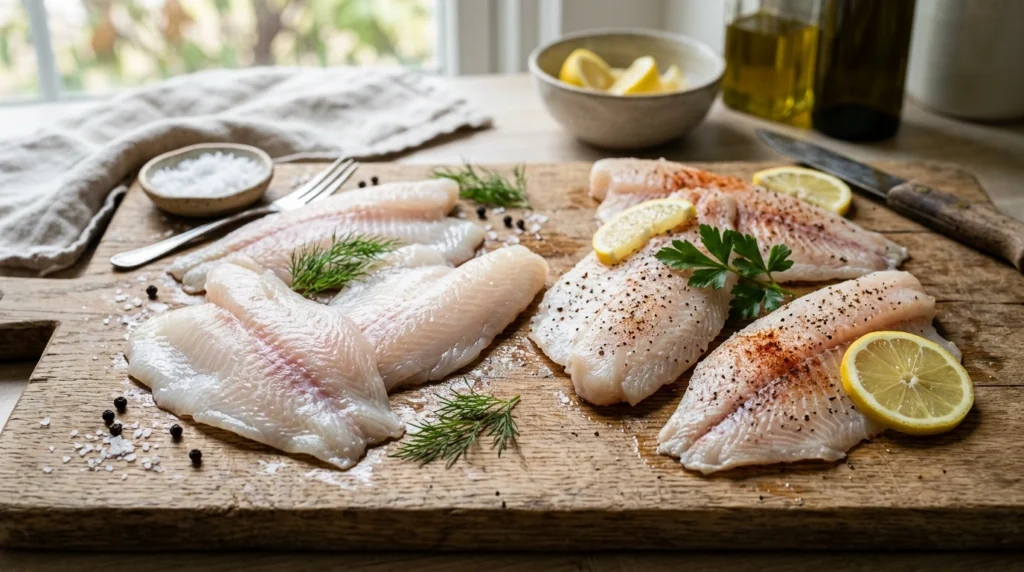
What Is Swai?
Meaning and Usage
Swai is a common market name for a freshwater catfish, particularly Pangasianodon hypophthalmus. It is native to parts of Southeast Asia and is widely farmed for food.
You may also see swai sold under names such as iridescent shark or striped catfish, depending on the market.
For example:
- “I bought frozen swai fillets for dinner.”
- “Swai has a mild flavor.”
- “The recipe works well with swai.”
Swai is typically sold as boneless, skinless fillets, making it popular for frying, baking, grilling, and pan-searing.
Taste and Texture
Swai generally has a mild, slightly sweet flavor and a soft, moist texture.
Compared with stronger-tasting fish, swai is relatively neutral, which makes it easy to pair with:
- Lemon
- Garlic
- Herbs
- Spices
- Butter
- Breadcrumbs
- Sauces
Its relatively delicate texture means it can break apart more easily during cooking than some firmer fish.
Farming and Origin
Most commercially available swai comes from aquaculture in Southeast Asia, particularly the Mekong River region.
Because farming practices can vary, the source and certification of the fish matter when making purchasing decisions.
A Short History Note
Swai became increasingly popular in international seafood markets because it is relatively inexpensive to farm and produces affordable fillets. Its growing popularity has also led to labeling and sustainability discussions surrounding imported farmed seafood.
What Is Tilapia?
Meaning and Usage
Tilapia is a common name used for several species of freshwater fish in the cichlid family.
Tilapia is widely farmed around the world and is one of the most commonly consumed farmed fish.
For example:
- “We baked tilapia with lemon and herbs.”
- “Tilapia is a mild white fish.”
- “The restaurant serves grilled tilapia.”
Like swai, tilapia is commonly sold as boneless, skinless fillets.
Taste and Texture
Tilapia has a mild flavor that can range from slightly sweet to neutral. Its flesh is generally firmer and somewhat more structured than swai.
That makes tilapia useful for:
- Grilling
- Baking
- Pan-frying
- Air frying
- Tacos
- Fish sandwiches
- Curries
Because its flavor is mild, tilapia works well with bold seasonings and sauces.
Farming and Origin
Tilapia is farmed extensively in many parts of the world, including Africa, Asia, Latin America, and other regions.
The conditions under which tilapia is raised can vary significantly between farms and countries, so the label and source can provide useful information.
A Short History Note
Tilapia has been raised as food for thousands of years. Ancient Egyptian artwork and archaeological evidence show that tilapia were known and consumed in ancient Egypt.
Modern aquaculture has turned tilapia into a major global food fish.
Key Differences Between Swai or Tilapia
The main differences between swai or tilapia involve species, texture, farming, and nutrition.
- Swai is a freshwater catfish.
- Tilapia belongs to the cichlid family.
- Both are generally mild-tasting.
- Swai tends to have a softer, more delicate texture.
- Tilapia generally has firmer, leaner flesh.
- Both are commonly sold as boneless, skinless fillets.
- Swai is heavily associated with Southeast Asian aquaculture.
- Tilapia is farmed in many regions worldwide.
- Both are relatively affordable compared with many premium seafood choices.
- Both are versatile in recipes.
- Exact nutritional values vary by product and preparation.
- The country and method of farming matter when evaluating sustainability.
| Feature | Swai | Tilapia |
|---|---|---|
| Fish type | Freshwater catfish | Freshwater cichlid |
| Common scientific name | Pangasianodon hypophthalmus | Several species |
| Flavor | Mild, slightly sweet | Mild, neutral to slightly sweet |
| Texture | Softer and delicate | Firmer |
| Typical color | White to pale flesh | White to pale flesh |
| Common preparation | Baking, frying, pan-searing | Baking, grilling, frying, air frying |
| Farming | Commonly Southeast Asian | Globally farmed |
| Protein | Good source | Good source |
| Fat | Generally low | Generally low |
| Mercury | Generally low | Generally low |
| Price | Usually inexpensive | Usually inexpensive |
| Best feature | Soft texture and mild flavor | Firmer texture and versatility |
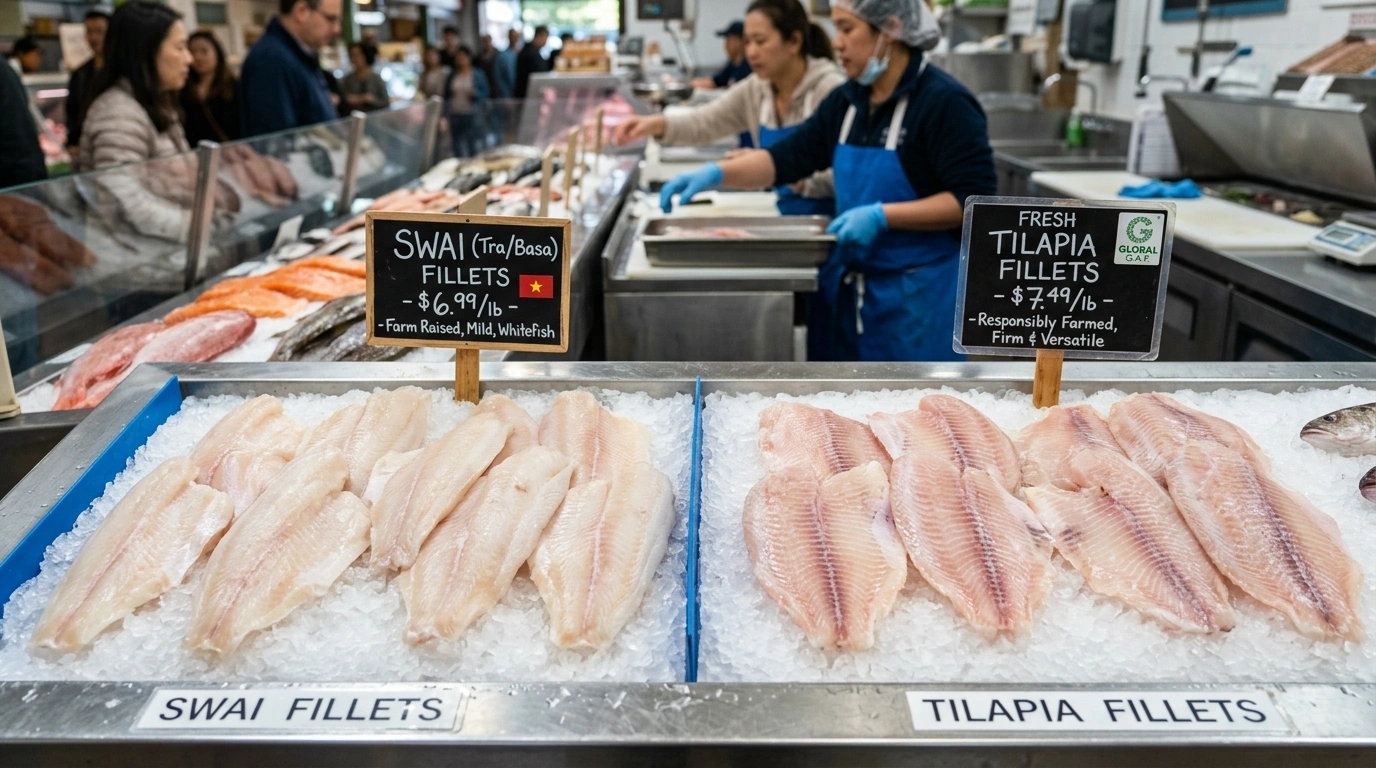
Real Life Conversation Examples of Swai or Tilapia
Example 1: Mild Flavor
Emma: “I don’t like fish that tastes too strong.”
Noah: “Both swai and tilapia are mild, so either could work.”
Emma: “Which one is softer?”
Noah: “Swai is generally softer and more delicate.”
🎯 Lesson: Both are mild, but swai usually has a softer texture.
Example 2: Grilling
Liam: “I want to grill my fish.”
Sara: “Tilapia may be easier to handle because its flesh is generally firmer.”
🎯 Lesson: Tilapia’s firmer texture can make it convenient for grilling.
Example 3: Budget Dinner
Jack: “I need an inexpensive fish for tacos.”
Mia: “Either can work. Seasoning and cooking method will make a bigger difference in the final dish.”
🎯 Lesson: Both swai and tilapia are versatile, budget-friendly choices for many recipes.
Example 4: Choosing for Nutrition
Alex: “Which one is healthier?”
Ben: “Neither is automatically the winner. Compare the nutrition label, preparation method, and what else you’re eating with it.”
🎯 Lesson: Overall dietary context matters more than simply choosing one fish by name.
When to Use Swai or Tilapia
Choose Swai for a Softer, Delicate Fillet
Swai may be a good choice if you want:
- A mild flavor
- A soft texture
- An inexpensive fillet
- A fish that absorbs sauces well
- Easy baking or pan-frying
Swai works particularly well when you want the seasoning or sauce to dominate rather than the fish itself.
Choose Tilapia for a Firmer, More Versatile Fillet
Tilapia may be preferable when you want:
- A mild flavor
- Firmer flesh
- A versatile cooking fish
- A good option for grilling
- Fish tacos
- Air-fried or pan-fried fillets
Its firmer structure can make it easier to work with in recipes where you want the fillet to remain intact.
What About Nutrition?
Both swai and tilapia can be nutritious sources of protein while generally being relatively low in calories and saturated fat.
However, neither is particularly high in the long-chain omega-3 fats associated with oily fish such as salmon, sardines, and mackerel.
Nutritional values can also vary depending on:
- Farming conditions
- Fillet size
- Preparation
- Added oils
- Breading
- Sauces
If you’re comparing two packages at the store, check the nutrition facts panel rather than relying only on general claims about the species.
What About Mercury?
Both swai and tilapia are generally considered low-mercury fish. That can make them reasonable choices within seafood consumption guidelines.
However, seafood advice can vary for pregnant people, children, and other groups. If you’re in a higher-risk category, follow current guidance from your local health authority rather than relying on a general comparison.
What About Sustainability?
Sustainability isn’t as simple as asking whether swai or tilapia is better.
Environmental impact depends on factors such as:
- Farm management
- Feed
- Water use
- Pollution control
- Disease management
- Country of production
- Certification
- Transportation
If sustainability is important to you, look for credible certification or information about the specific source, rather than assuming every farmed fish has the same environmental impact.
What About Price?
Both are usually positioned as affordable seafood options. Prices can vary based on:
- Country
- Fresh versus frozen
- Brand
- Store
- Packaging
- Certification
- Fillet size
Frozen fillets are often particularly economical.
A Simple Memory Trick
Think:
Swai = softer.
Tilapia = firmer.
That isn’t a scientific rule for every fillet, but it’s a useful cooking shortcut.