

What Is Arugula?
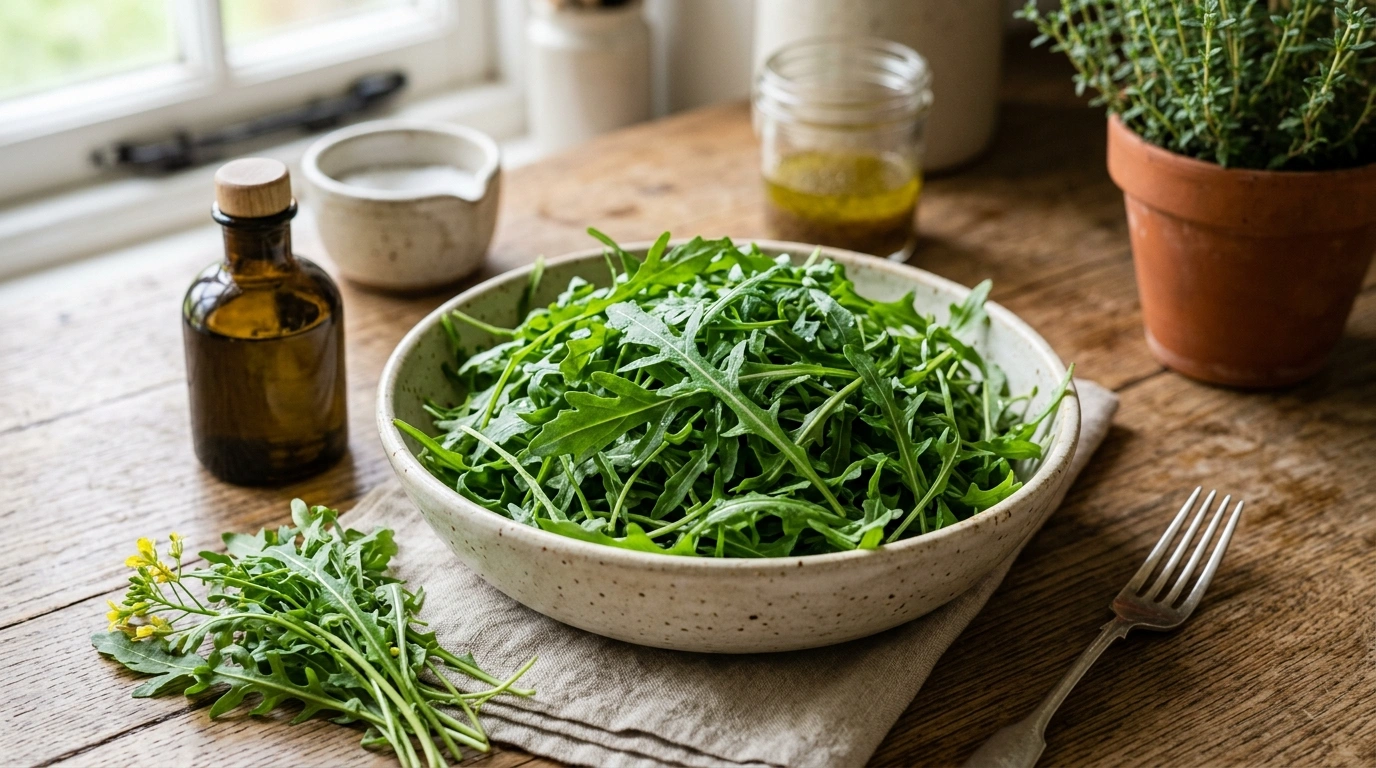
Arugula is a leafy green vegetable known for its peppery, slightly bitter, and nutty flavor. It belongs to the mustard family, Brassicaceae, which also includes vegetables such as broccoli, cabbage, kale, and radishes.
In the United States, arugula is the most common name for this leafy green.
What Does Arugula Taste Like?
Fresh arugula has a distinctive flavor that can range from mildly peppery to quite spicy.
Its flavor is often described as:
- Peppery
- Fresh
- Slightly bitter
- Nutty
- Spicy
- Mustard-like
Younger leaves tend to have a milder flavor, while mature leaves can taste noticeably stronger.
How Is Arugula Used?
Arugula is extremely versatile. You can eat it raw or cooked.
Popular uses include:
- Salads
- Sandwiches
- Wraps
- Pizza toppings
- Pasta dishes
- Pesto
- Soups
- Grain bowls
- Garnishes
A simple salad of arugula, tomatoes, olive oil, lemon juice, and Parmesan can turn a few basic ingredients into something surprisingly flavorful.
Where Does the Name Arugula Come From?
The English word arugula comes from Italian rucola, with its history connected to Latin terminology for the plant. The word became particularly common in American English.
Interestingly, different languages and regions have developed several names for the same leafy green, which explains much of the arugula or rocket confusion.
What Is Rocket?
Rocket is the common English name for the same leafy green known as arugula in the United States.
In British English, Australia, New Zealand, and several other regions, rocket is a familiar name for this peppery salad leaf.
What Does Rocket Taste Like?
Rocket has the same characteristic flavor as arugula because they refer to the same plant.
It can taste:
- Peppery
- Spicy
- Slightly bitter
- Earthy
- Nutty
The intensity depends on the variety, maturity, growing conditions, and preparation.
How Is Rocket Used?
Rocket is popular in many of the same dishes as arugula.
For example:
- Rocket salads
- Pizza
- Pasta
- Sandwiches
- Wraps
- Pesto
- Mediterranean-style dishes
- Grain salads
If a British recipe tells you to add a handful of rocket, an American cook can generally use arugula instead.
Why Is It Called Rocket?
The name rocket is related to older European names for the plant. British English adopted forms of the word that eventually became rocket.
This has nothing to do with space travel. The salad green’s name simply developed from its botanical and historical naming traditions.
Arugula or Rocket: Key Differences
When comparing arugula or rocket, the most important fact is that there is generally no major botanical difference between the two terms.
Main Differences
- Arugula and rocket generally refer to the same leafy green.
- Arugula is especially common in American English.
- Rocket is especially common in British English.
- The leaves can vary in size, shape, and flavor depending on the variety.
- Both have a peppery and slightly bitter taste.
- Both can be eaten raw or cooked.
- Both are popular in salads and Mediterranean-style dishes.
- Younger leaves are usually milder.
- Mature leaves can have a stronger peppery bite.
- The difference is primarily regional vocabulary, not the identity of the vegetable.
Comparison Table
| Feature | Arugula | Rocket |
|---|---|---|
| Refers to | Same leafy green | Same leafy green |
| Common in | American English | British English |
| Flavor | Peppery, slightly bitter | Peppery, slightly bitter |
| Appearance | Green, tender leaves | Green, tender leaves |
| Used raw | Yes | Yes |
| Used cooked | Yes | Yes |
| Common in salads | Yes | Yes |
| Common on pizza | Yes | Yes |
| Botanical family | Brassicaceae | Brassicaceae |
| Main difference | Regional name | Regional name |
Real-Life Conversation Examples
Conversation 1: American Recipe
Emma: “This recipe says to add two cups of arugula.”
James: “I only have rocket.”
Emma: “That’s fine. They’re the same leafy green.”
🎯 Lesson: American recipes usually say arugula, while British recipes often say rocket.
Conversation 2: Traveling in the UK
Mike: “I’d like a salad with arugula.”
Waiter: “Do you mean rocket?”
Mike: “Yes!”
🎯 Lesson: In Britain, asking for rocket will usually get you the ingredient Americans call arugula.
Conversation 3: Shopping
Sarah: “Where can I find arugula?”
Store Employee: “It’s in the salad section, next to the rocket.”
Sarah: “Oh, so they’re the same thing?”
🎯 Lesson: Different labels can describe the same leafy green.
Conversation 4: Pizza
David: “The menu says rocket pizza.”
Lisa: “That’s usually pizza topped with fresh arugula.”
🎯 Lesson: Rocket is commonly used on menus in British English and other regions.
When to Use Arugula or Rocket
The easiest choice depends on your audience.
Use Arugula in American English
If you’re writing for an American audience, arugula is usually the more familiar word.
For example:
“Add fresh arugula to the salad.”
“Top the pizza with arugula after baking.”
Use Rocket in British English
For British audiences, rocket is the more natural term.
For example:
“Serve the pasta with fresh rocket.”
“Add rocket leaves to the sandwich.”
A Simple Memory Trick
Think:
Arugula = American
Rocket = British and other regions
If you see either word in a recipe, you generally don’t need to search for a different vegetable. You can use the same leafy green.
Is Arugula the Same as Rocket?
Yes. In everyday food terminology, arugula and rocket are names for the same leafy green.
However, there are multiple related species and varieties within the broader group of plants sold under these names. That’s why two packages can sometimes look slightly different or have noticeably different levels of pepperiness.
So if one bunch tastes stronger than another, that doesn’t necessarily mean you’ve bought a different vegetable.
Arugula or Rocket Nutrition
Both arugula and rocket provide similar nutritional benefits because they refer to the same leafy green.
It is naturally low in calories and provides nutrients such as:
- Vitamin K
- Vitamin A
- Folate
- Vitamin C
- Calcium
- Potassium
Like other leafy greens, it can contribute to a varied and balanced diet.
The exact nutritional content can vary depending on serving size, growing conditions, and preparation.
Raw vs. Cooked
Eating the leaves raw preserves their crisp texture and strong peppery flavor.
Cooking softens the leaves and reduces some of their sharpness. You can quickly wilt rocket or arugula into pasta, soups, sauces, and warm grain dishes.
Arugula or Rocket for Cooking
Both work beautifully in the kitchen.
In Salads
Raw leaves add a strong flavor that pairs especially well with:
- Lemon
- Olive oil
- Parmesan
- Tomatoes
- Balsamic vinegar
- Avocado
- Nuts
- Fresh fruit
Because the leaves are flavorful, you often don’t need a large amount of dressing.
On Pizza
Fresh arugula or rocket is frequently added after baking. The heat from the pizza gently wilts the leaves while preserving some of their peppery character.
In Pesto
Rocket can replace some or all of the basil in pesto. The result is usually more peppery and robust than traditional basil pesto.
US vs. UK Usage
The arugula or rocket distinction is one of the clearest examples of regional English food vocabulary.
In the United States:
“I bought some arugula.”
In the United Kingdom:
“I bought some rocket.”
Neither speaker is necessarily talking about a different plant.
Other English-speaking regions may use one term more frequently than the other, while restaurants and food brands may use both depending on their audience.