

What Is Bison?
Bison is the meat of American bison, a large grazing mammal native to North America. It is often mistakenly called “buffalo,” although American bison and true buffalo are different animals.
Bison meat is commonly sold as steaks, ground meat, roasts, burgers, and other cuts.
What Does Bison Taste Like?
Bison generally has a rich, slightly sweet, beef-like flavor. Because it is often leaner than many types of beef, it can taste clean and meaty without the heavy richness associated with fattier beef.
The exact flavor depends on the cut, animal, diet, aging, and cooking method.
A properly cooked bison steak can be tender and flavorful. However, because many bison cuts are relatively lean, overcooking can make them dry or tough.
Example Bison Dishes
Bison can be used in many familiar dishes, including:
- Bison burgers
- Bison steaks
- Bison chili
- Bison tacos
- Bison meatballs
- Bison meatloaf
- Bison stir-fry
Ground bison can often replace ground beef in recipes, although its lower fat content can change the final texture.
Where Is Bison Commonly Eaten?
Bison is especially associated with North America, where American bison have both cultural and historical significance.
Commercial bison farming has also made the meat available in restaurants, specialty stores, and some supermarkets.
A Short History of Bison Meat
Bison has been an important food source for Indigenous peoples of North America for thousands of years. Historically, bison provided not only meat but also materials for clothing, tools, shelter, and other essential goods.
The near-destruction of wild bison populations during the 19th century dramatically changed their place in North American life. Conservation efforts later helped populations recover.
Today, commercially available bison meat usually comes from managed herds rather than animals hunted from wild populations.
What Is Beef?
Beef is meat from cattle. It is one of the most widely consumed meats in the world and is available in an enormous variety of cuts and grades.
Unlike bison, beef comes with a particularly broad range of fat levels, textures, flavors, and price points.
What Does Beef Taste Like?
Beef flavor varies significantly depending on the cut and its fat content.
A lean beef cut can taste relatively mild and clean, while a well-marbled steak such as ribeye can have a much richer, buttery flavor.
The amount of intramuscular fat, commonly called marbling, plays a major role in the flavor and tenderness of many beef cuts.
Example Beef Dishes
Beef is incredibly versatile and can be used for:
- Burgers
- Steaks
- Roast beef
- Beef stew
- Meatballs
- Meatloaf
- Tacos
- Stir-fries
- Kebabs
- Beef curries
Because there are so many cuts available, beef can be prepared using nearly every major cooking technique.
Beef and Regional Usage
Beef is widely eaten across the world, although culinary traditions differ greatly between countries.
For example, steak culture is particularly prominent in countries such as the United States, Argentina, Australia, and parts of Europe, while beef also plays an important role in many Asian, Middle Eastern, and South Asian cuisines.
A Short History of Beef
Humans have raised cattle for thousands of years, using them for food, milk, labor, and other purposes. Over time, cattle became deeply integrated into agricultural systems across Europe, Asia, Africa, and the Americas.
Modern beef production has developed into a large global industry with numerous breeds, production systems, grading systems, and specialized cuts.
Key Differences Between Bison or Beef
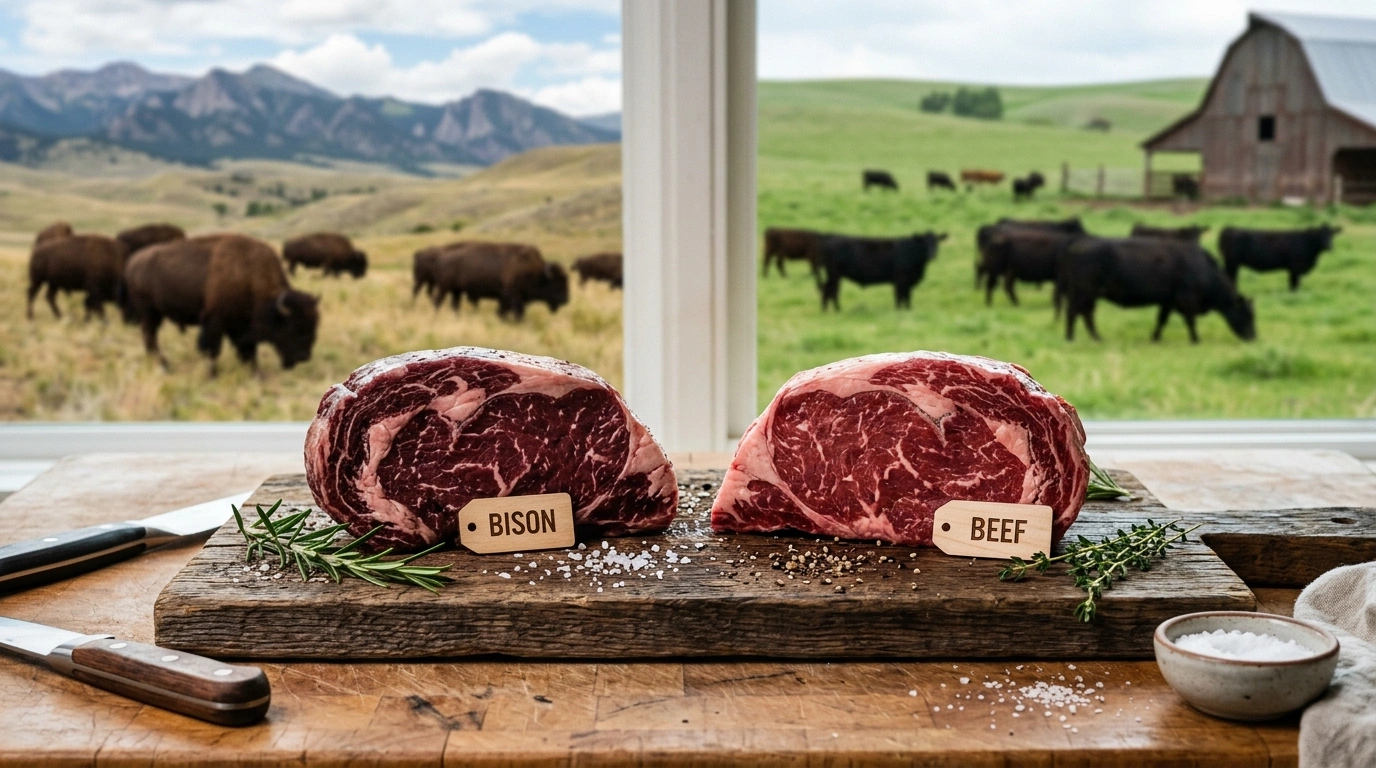
The biggest difference between bison or beef is that bison is generally leaner, while beef offers a much broader range of fat levels and cuts.
Here are the major differences:
- Animal: Bison comes from American bison; beef comes from cattle.
- Fat: Bison is often leaner than comparable beef cuts.
- Flavor: Bison can have a rich, slightly sweet flavor; beef varies widely depending on the cut and marbling.
- Texture: Properly cooked bison can be tender, but lean cuts can dry out quickly. Beef texture varies considerably.
- Cooking: Bison generally benefits from careful cooking to avoid overcooking.
- Protein: Both can provide substantial amounts of high-quality protein.
- Calories: Lean bison can be lower in calories than fattier beef, but the exact difference depends on the cut.
- Price: Bison is often more expensive and less widely available than conventional beef.
- Availability: Beef is much easier to find in most supermarkets.
- Versatility: Beef has an enormous range of cuts and culinary applications.
Bison or Beef Comparison Table
| Feature | Bison | Beef |
|---|---|---|
| Source | American bison | Cattle |
| Typical fat level | Often leaner | Varies widely |
| Flavor | Rich, slightly sweet, meaty | Ranges from mild to rich |
| Protein | High | High |
| Calories | Often lower when comparing lean cuts | Depends heavily on cut |
| Marbling | Generally less | Can be substantial |
| Cooking | Easy to overcook | More forgiving with many cuts |
| Availability | More limited | Very widely available |
| Typical price | Often higher | Broad range |
| Best known for | Lean red meat and distinctive flavor | Variety and versatility |
Real-Life Conversation Examples
Dialogue 1: The Burger Debate
Sam: “Should we make bison or beef burgers?”
Jake: “Bison could be great, but it’s leaner.”
Sam: “Does that matter?”
Jake: “Yes. You need to be more careful not to overcook it.”
🎯 Lesson: Bison can make excellent burgers, but its lower fat content can require more careful cooking.
Dialogue 2: The Flavor Question
Emma: “Does bison taste completely different from beef?”
Liam: “Not completely. It still tastes like red meat, but many people find bison slightly sweeter and less heavy.”
Emma: “So it’s not an entirely different flavor?”
Liam: “Exactly.”
🎯 Lesson: Bison has a distinctive flavor, but it can still feel familiar to someone who enjoys beef.
Dialogue 3: The Nutrition Question
Nora: “Is bison automatically healthier than beef?”
Alex: “Not necessarily. It depends on the specific cuts and how they’re prepared.”
Nora: “So lean beef can also be a good option?”
Alex: “Absolutely.”
🎯 Lesson: Don’t judge the nutritional value by the animal alone; compare the actual cuts and portions.
Dialogue 4: The Price Question
Chris: “Why is this bison burger more expensive?”
Taylor: “Bison is less widely produced and distributed than conventional beef.”
Chris: “So beef is usually easier on the wallet?”
Taylor: “Generally, yes, especially for everyday meals.”
🎯 Lesson: Beef is usually more affordable and accessible, while bison is often positioned as a specialty meat.
When to Use Bison or Beef
The choice between bison or beef depends on your priorities.
Choose Bison If You Want Leaner Meat
Bison may appeal to you if you prefer:
- A leaner red meat
- A slightly sweet, distinctive flavor
- Something different from standard beef
- High-protein meals with relatively little fat in certain cuts
- A specialty meat for burgers, steaks, or chili
If you choose bison, pay attention to cooking time. Lean meat can become dry when exposed to excessive heat for too long.
Choose Beef If You Want Variety
Beef is usually the better choice if you want:
- A huge selection of cuts
- Different levels of marbling
- Easy supermarket availability
- Budget-friendly options
- Rich, fatty steaks
- Familiar recipes
- Greater flexibility with cooking methods
From inexpensive ground beef to highly marbled premium steaks, beef covers a very broad spectrum.
Which Is Healthier?
There is no universal winner in the bison or beef debate.
Bison is often leaner, which can mean fewer calories and less total fat when comparing similar portions. However, lean beef can also provide plenty of protein and important nutrients.
Both meats provide nutrients such as:
- Protein
- Iron
- Zinc
- Vitamin B12
- Other B vitamins
The overall nutritional picture depends on the cut, portion size, preparation method, and the rest of your diet.
If reducing saturated fat is important to you, compare lean cuts and trim visible fat rather than assuming one animal is always the healthier choice.
Which Is Better for Burgers?
Both can work very well.
Bison burgers tend to be leaner, so they can dry out if cooked too long.
Beef burgers can be especially juicy when made with a moderate amount of fat.
For either one, avoid relying solely on appearance to judge doneness. A food thermometer is the safest way to check that ground meat has reached an appropriate internal temperature.
Which Is Better for Steak?
For steak lovers, beef offers a much wider range of choices.
If you enjoy rich marbling and buttery texture, beef provides numerous options. Bison is appealing if you prefer a leaner, more distinctive steak.
Bison steaks should generally be treated carefully because their lower fat content gives you less room for overcooking.
Which Is Better for the Environment?
This question is more complicated than simply declaring one meat the winner.
Environmental impact depends on factors such as:
- Farming or ranching practices
- Land use
- Feed
- Water consumption
- Transportation
- Herd management
- Production efficiency
- Local ecosystem conditions
Bison can play an important ecological role in grassland systems, particularly in appropriate conservation and grazing contexts. However, commercially produced bison meat is still an animal product with environmental impacts.
So, if environmental impact is your main concern, look beyond the label and consider the specific production system and sourcing practices.