
What Is “Cabinet”?
Meaning and Usage
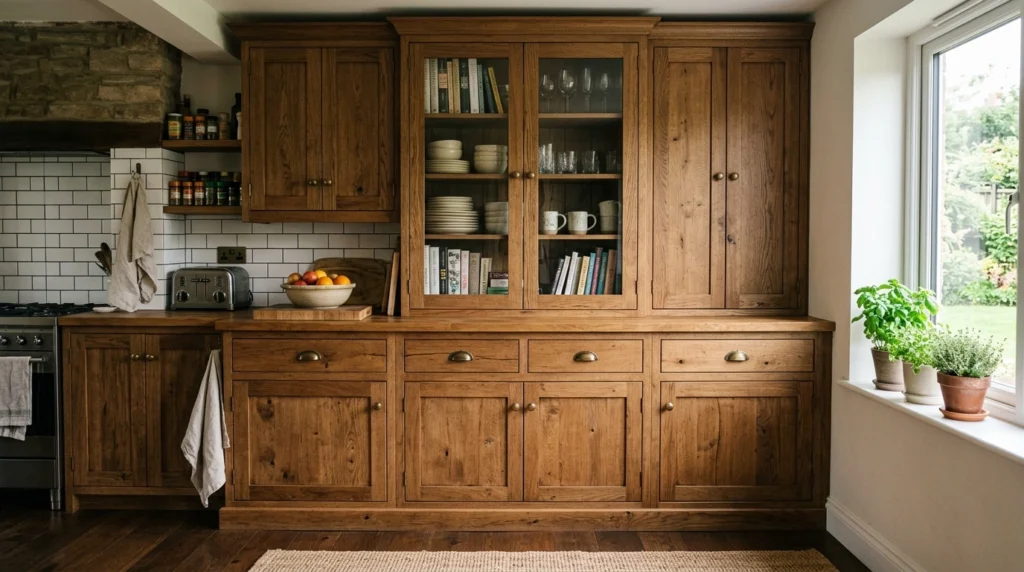
A cabinet is a piece of furniture or built-in storage unit with shelves, drawers, compartments, or doors. Cabinets can be found in kitchens, bathrooms, offices, workshops, bedrooms, and living rooms.
For example:
- “The plates are in the kitchen cabinet.”
- “I keep my files in the office cabinet.”
- “The bathroom cabinet has several shelves.”
The word is broad enough to describe many different types of storage furniture.
Grammar Rules
Cabinet is a countable noun.
Its singular form is:
“a cabinet”
Its plural form is:
“cabinets”
Examples:
- “We installed a new cabinet.”
- “The kitchen has several cabinets.”
Cabinet can also appear in compound expressions such as kitchen cabinet, medicine cabinet, filing cabinet, and display cabinet.
Regional Usage
Cabinet is particularly common in American English, especially when discussing kitchen storage.
For example, an American speaker might naturally say:
“Put the glasses in the cabinet.”
In British English, cupboard is often preferred in similar situations.
A Short History Note
The word cabinet comes from French and Italian roots associated with a small room or private space. Over time, its meaning developed to include a piece of furniture designed for storing or displaying objects.
What Is “Cupboard”?
Meaning and Usage
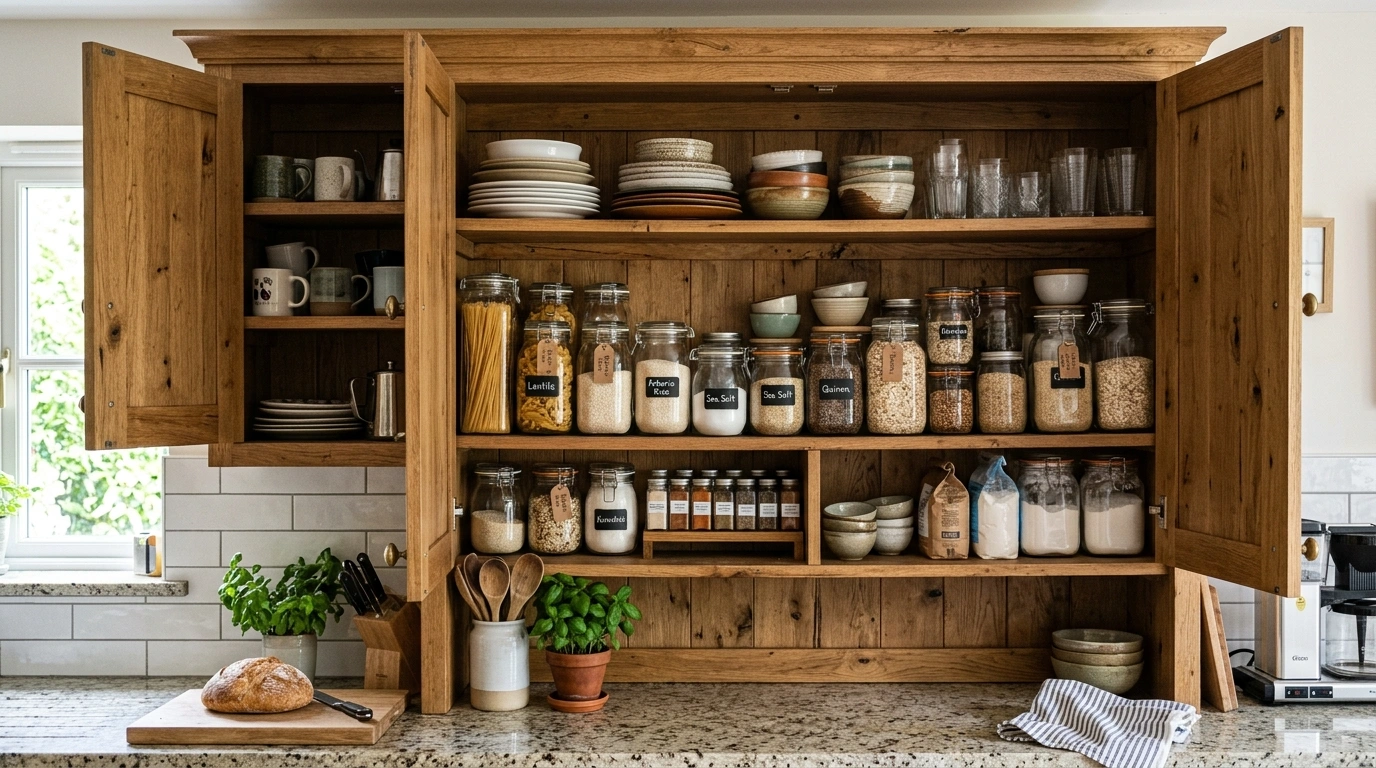
A cupboard is an enclosed storage space or piece of furniture, traditionally used for storing cups, dishes, food, clothing, or household items.
For example:
- “The mugs are in the cupboard.”
- “Put the cereal in the kitchen cupboard.”
- “The towels are in the bathroom cupboard.”
Despite the word’s spelling, cupboard is usually pronounced approximately like “kub-erd” in modern English.
Grammar Rules
Like cabinet, cupboard is a countable noun.
The singular is:
“a cupboard”
The plural is:
“cupboards”
Examples:
- “There is a cupboard beside the refrigerator.”
- “The kitchen has several cupboards.”
The word can describe both freestanding furniture and built-in storage.
Regional Usage
Cupboard is especially common in British English and other varieties influenced by British English.
A British speaker might say:
“The plates are in the cupboard.”
An American speaker may be more likely to say:
“The plates are in the cabinet.”
Neither choice is automatically wrong. The preferred term often depends on the variety of English being used.
A Short History Note
The word cupboard literally developed from the idea of a board or storage place for cups. Over time, its meaning expanded beyond cups to include many types of enclosed household storage.
Key Differences Between Cabinet or Cupboard
The difference between cabinet or cupboard is largely about meaning, context, and regional usage.
- Cabinet is a broad term for enclosed storage furniture.
- Cupboard traditionally refers to enclosed storage for household items.
- Cabinet is especially common in American English.
- Cupboard is especially common in British English.
- A cabinet can contain drawers, shelves, or doors.
- A cupboard usually emphasizes enclosed storage.
- Both can refer to built-in or freestanding storage.
- Both words can describe kitchen storage.
- The words often overlap in everyday conversation.
- Filing cabinet is standard, while “filing cupboard” is not normally the usual term.
- Kitchen cupboard is very natural in British English.
- Kitchen cabinet is especially natural in American English.
| Feature | Cabinet | Cupboard |
|---|---|---|
| Basic meaning | Enclosed storage furniture | Enclosed storage space/furniture |
| Common US usage | Very common | Less common |
| Common UK usage | Common | Very common |
| Kitchen storage | Very common | Very common |
| Office storage | Very common | Less common |
| Can be built-in? | Yes | Yes |
| Can be freestanding? | Yes | Yes |
| Typical pronunciation | “cab-in-it” | Approximately “kub-erd” |
| Common example | Filing cabinet | Kitchen cupboard |
| Regional difference | Strongly common in American English | Strongly common in British English |
Real-Life Conversation Examples
Example 1: American English
Emma: “Where are the coffee mugs?”
Noah: “They’re in the kitchen cabinet.”
Emma: “Got them.”
🎯 Lesson: Cabinet is a very common term for kitchen storage in American English.
Example 2: British English
Liam: “Where did you put the tea?”
Sara: “It’s in the kitchen cupboard.”
Liam: “Thanks!”
🎯 Lesson: Cupboard is especially natural for kitchen storage in British English.
Example 3: Office Storage
Jack: “Where should I put these documents?”
Mia: “Use the filing cabinet.”
🎯 Lesson: Cabinet is the standard choice for many types of office storage.
Example 4: Regional Difference
Alex: “I need to replace the kitchen cupboards.”
Ben: “We’d usually call those kitchen cabinets here.”
Alex: “So both terms can work?”
Ben: “Yes, depending on the variety of English.”
🎯 Lesson: Cabinet or cupboard can describe similar kitchen storage, but regional preference matters.
When to Use Cabinet or Cupboard
Use “Cabinet” for Broad Storage Terms
Choose cabinet when you’re talking about enclosed furniture or storage in contexts such as:
- Kitchens
- Bathrooms
- Offices
- Workshops
- Living rooms
- Display areas
Examples:
“The documents are in the filing cabinet.”
“The bathroom cabinet needs repair.”
“We installed new kitchen cabinets.”
Use “Cupboard” for Household Storage
Choose cupboard when talking about enclosed household storage, particularly in British English.
Examples:
“The dishes are in the cupboard.”
“Put the flour in the cupboard.”
“The towels are in the bathroom cupboard.”
US vs. UK Notes
This is one of the clearest areas where regional English matters.
American English:
- Kitchen cabinet
- Bathroom cabinet
- Medicine cabinet
- Filing cabinet
British English:
- Kitchen cupboard
- Bathroom cupboard
- Cupboard under the stairs
- Storage cupboard
However, British speakers also use cabinet in certain contexts, particularly for specialized furniture or storage.
An Easy Memory Trick
Think:
Cabinet = broader storage term.
Cupboard = household enclosed storage, especially British English.
If you’re writing for an American audience, cabinet will often sound more natural for kitchen storage. If you’re writing for a British audience, cupboard may be the better choice.