
What Is an Earwig?
An earwig is an insect belonging to the order Dermaptera. Earwigs are best known for the pair of forceps-like appendages, called cerci, at the end of their abdomen.
Despite an old myth, earwigs do not normally crawl into people’s ears to lay eggs or burrow into the brain.
What Does an Earwig Look Like?
An adult earwig typically has:
- An elongated body
- A flattened appearance
- Six legs
- Long antennae
- A pair of noticeable pincers at the rear
- Brown, reddish-brown, or dark coloration depending on the species
The pincers are the easiest feature to recognize.
Male earwigs often have more curved forceps, while females commonly have straighter ones.
Where Do Earwigs Live?
Earwigs generally prefer cool, damp, sheltered environments.
You may find them:
- Under leaves
- Beneath stones
- Around garden debris
- Under flowerpots
- In mulch
- Around damp foundations
- In garages
- In basements
- Around other sheltered outdoor areas
They may enter homes through cracks, gaps, doors, and windows.
What Do Earwigs Eat?
Earwigs can eat a variety of things, including:
- Decaying plant material
- Other insects
- Small invertebrates
- Fungi
- Soft plant tissues
Some species can occasionally damage flowers, seedlings, or other garden plants.
Do Earwigs Bite?
Earwigs are not generally considered dangerous to people.
Their pincers can pinch if the insect is handled, but serious injuries are uncommon. They do not have venomous stingers.
A Short History of Earwigs
The name earwig is associated with an old European belief that these insects entered human ears. Despite the persistence of the story, there is no scientific basis for the idea that earwigs have a special tendency to crawl into people’s ears.
What Is a Silverfish?
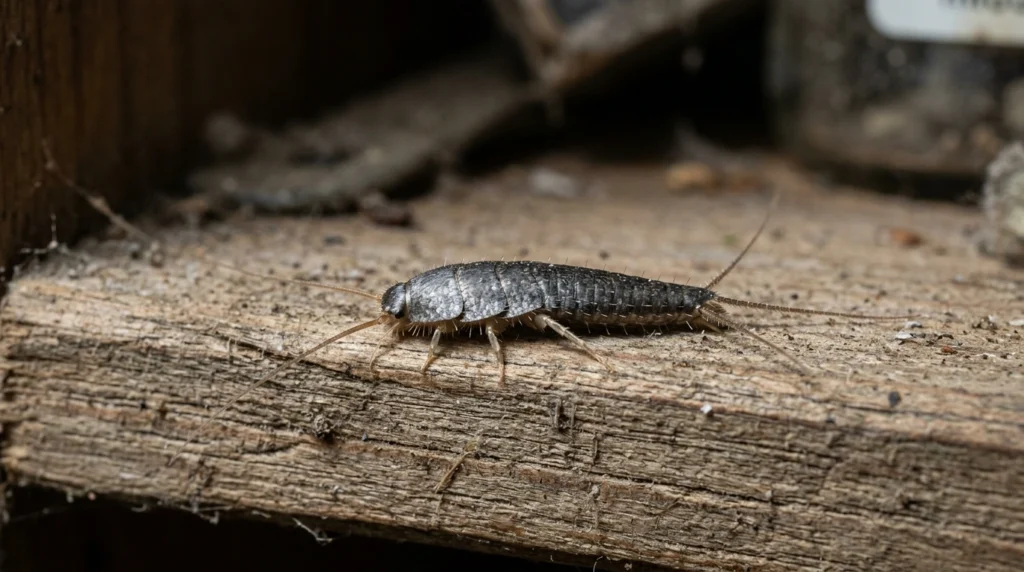
A silverfish is a small, wingless insect belonging to the order Zygentoma. Its scientific name is often associated with the genus Lepisma.
Silverfish get their common name from their silvery appearance and fish-like movements.
What Does a Silverfish Look Like?
A silverfish typically has:
- A flattened body
- Silvery or gray scales
- Long antennae
- Three tail-like appendages
- Six legs
- A tapered, carrot-shaped body
Unlike earwigs, silverfish do not have pincers.
Their three tail-like structures at the rear are a major identification clue.
Where Do Silverfish Live?
Silverfish often prefer dark, humid environments.
Common locations include:
- Bathrooms
- Basements
- Attics
- Kitchens
- Closets
- Storage areas
- Areas around plumbing
- Damp cracks and crevices
They can sometimes survive in drier parts of a building if suitable food and shelter are available.
What Do Silverfish Eat?
Silverfish are attracted to carbohydrate-rich materials and can feed on substances containing starches and other polysaccharides.
They may consume:
- Paper
- Books
- Cardboard
- Glue
- Wallpaper paste
- Fabrics containing starch
- Some stored materials
This is why silverfish can occasionally become a concern in libraries, archives, storage rooms, and homes with moisture problems.
Do Silverfish Bite?
Silverfish are not considered dangerous to people and do not normally bite humans.
They are primarily a nuisance and, in larger populations, can damage certain household materials.
A Short History of Silverfish
Silverfish are ancient-looking insects with a body structure that has changed relatively little over extremely long periods of evolutionary history.
Their primitive body design is one reason they are sometimes described as “living fossils,” although that phrase should be understood as a casual description rather than a literal scientific classification.
Key Differences Between Earwig or Silverfish
The easiest way to distinguish earwig or silverfish is to examine the insect’s rear end.
- Earwigs have pincers or forceps.
- Silverfish have three tail-like appendages.
- Earwigs are often brown or reddish-brown.
- Silverfish are usually silver, gray, or metallic-looking.
- Earwigs commonly spend time outdoors.
- Silverfish are frequently associated with indoor, humid areas.
- Earwigs may feed on plants, organic matter, and small insects.
- Silverfish often feed on starches, paper, glue, and other carbohydrate-containing materials.
- Earwigs have a more robust, elongated body.
- Silverfish have a distinctly tapered, fish-like shape.
- Neither is generally considered dangerous to humans.
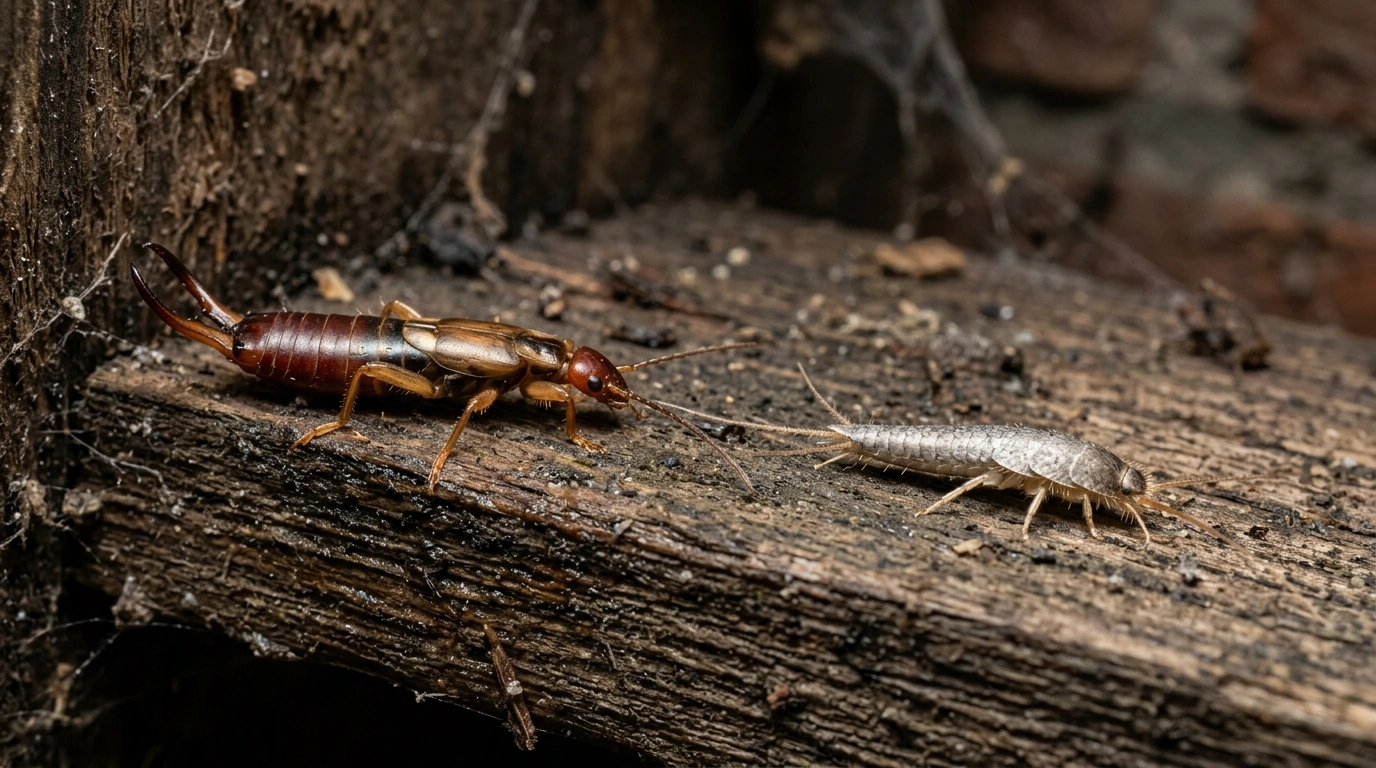
Earwig or Silverfish Comparison Table
| Feature | Earwig | Silverfish |
|---|---|---|
| Body shape | Elongated and flattened | Tapered and carrot-shaped |
| Color | Brown, reddish-brown, or dark | Silvery or gray |
| Rear appendages | Pincer-like forceps | Three tail-like structures |
| Wings | Some species have wings | Wingless |
| Preferred habitat | Often outdoors and damp areas | Often indoors and humid areas |
| Common hiding places | Gardens, mulch, cracks, basements | Bathrooms, basements, closets |
| Diet | Plants, organic matter, small insects | Starches, paper, glue, carbohydrates |
| Household damage | Usually minor | Can damage paper and stored materials |
| Human danger | Generally harmless | Generally harmless |
| Best identification clue | Pincers | Three tail-like appendages |
Real-Life Conversation Examples
Dialogue 1: The Pincers
Sarah: “I found a brown insect in the basement.”
Emma: “Did it have pincers at the back?”
Sarah: “Yes, definitely.”
Emma: “That sounds like an earwig.”
🎯 Lesson: Pincers at the rear strongly suggest an earwig.
Dialogue 2: The Silver Insect
Mike: “There’s a tiny silver bug in my bathroom.”
James: “Did it have three little tails?”
Mike: “Yes, and it moved really quickly.”
James: “That’s likely a silverfish.”
🎯 Lesson: A silvery, tapered body with three tail-like appendages is characteristic of silverfish.
Dialogue 3: Finding Them Outdoors
Nina: “I keep finding these insects under my flowerpots.”
Alex: “Are they brown with little pincers?”
Nina: “Yes.”
Alex: “Those are probably earwigs.”
🎯 Lesson: Damp outdoor hiding places are strongly associated with earwigs.
Dialogue 4: Finding Them Around Books
Tom: “Something has been damaging the edges of some old papers.”
Chris: “Have you seen small silvery insects nearby?”
Tom: “Yes, especially at night.”
Chris: “Silverfish could be worth considering.”
🎯 Lesson: Silverfish can feed on paper, glue, and starch-containing materials.
When to Choose Earwig or Silverfish
Knowing the difference between earwig or silverfish is useful when you’re trying to identify an unexpected insect.
An Earwig Is More Likely If…
Look for:
- Brown or reddish coloration
- A flattened body
- Prominent rear pincers
- Outdoor activity
- Presence around plants or garden debris
- Damp hiding places
If you see a pair of forceps-like structures at the rear, you’re probably looking at an earwig.
A Silverfish Is More Likely If…
Look for:
- Silvery scales
- A tapered body
- Fast, wriggling movement
- Three tail-like appendages
- Activity in bathrooms or humid rooms
- Presence near books, paper, cardboard, or glue
The three tail-like structures are one of the most useful clues.
How to Prevent Earwigs
If earwigs are repeatedly entering your home, reducing moisture and hiding places can help.
Consider:
- Repairing leaks
- Improving drainage
- Removing excess plant debris
- Sealing cracks around doors and windows
- Moving damp organic material away from foundations
- Reducing excessive moisture near the building
How to Prevent Silverfish
For silverfish, moisture control is especially important.
Helpful steps include:
- Fixing plumbing leaks
- Improving bathroom ventilation
- Using appropriate dehumidification
- Sealing cracks and gaps
- Reducing clutter
- Storing paper and cardboard appropriately
- Addressing damp areas
If you see large numbers of either insect or ongoing property damage, professional pest-control advice may be worthwhile.
A Simple Memory Trick
Remember:
Earwig = ears and pincers.
Silverfish = silver body and three tails.
You don’t need to memorize the scientific classification to tell them apart. Just check the insect’s color, body shape, and rear appendages.
US vs UK Notes
Both earwig and silverfish are standard English names used in the United States and United Kingdom.
There can be differences in which species are most commonly encountered in different regions, but the basic visual distinction remains the same.