
What Is a Flea?
Meaning and Usage
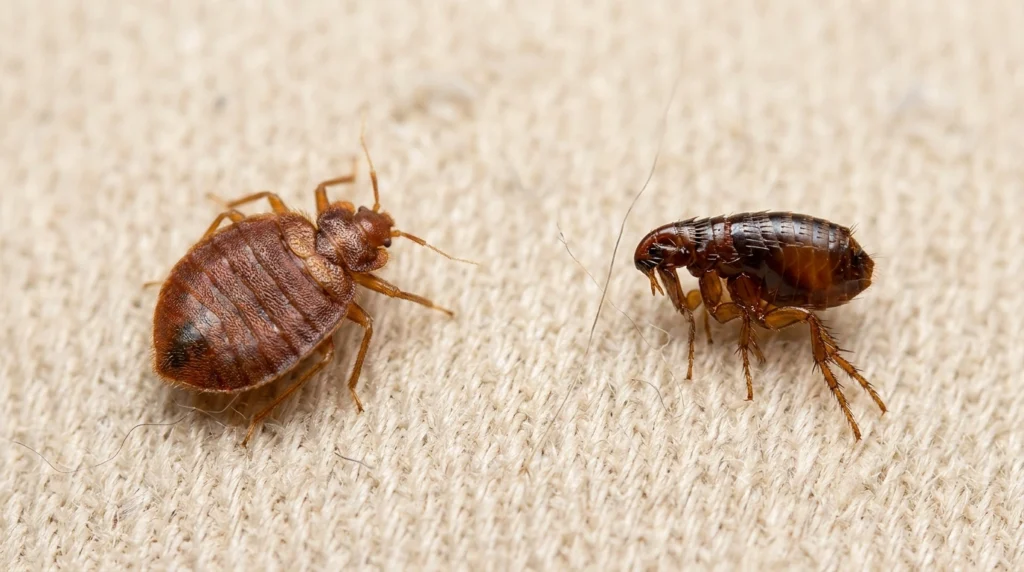
A flea is a tiny, wingless parasitic insect that feeds on the blood of mammals and birds. Several flea species exist, but the cat flea (Ctenocephalides felis) is especially common around domestic cats and dogs and can also bite humans.
Fleas are usually:
- Small
- Dark brown to reddish-brown
- Wingless
- Laterally flattened
- Extremely good at jumping
For example:
- “I found a flea on my dog.”
- “The cat has fleas.”
- “We noticed tiny jumping insects in the carpet.”
Appearance
Adult fleas are very small, often around 2–3 millimeters long, although size varies by species and feeding status.
Their bodies are flattened from side to side, which helps them move through animal fur.
One of their most recognizable features is their powerful hind legs. Fleas can jump impressive distances relative to their body size, allowing them to move quickly between hosts and surfaces.
Habitat and Behavior
Fleas often live and reproduce in environments associated with animals. Adults may feed on a host, while immature stages can develop in:
- Carpets
- Bedding
- Pet bedding
- Upholstery
- Cracks and crevices
- Outdoor areas frequented by animals
If a household has pets, finding fleas should prompt attention to both the animals and the home environment.
A Short History Note
Fleas have coexisted with humans and animals for thousands of years. Some flea species have historically played major roles in spreading disease, most famously through their involvement in the transmission of plague bacteria.
What Is a Bedbug?
Meaning and Usage
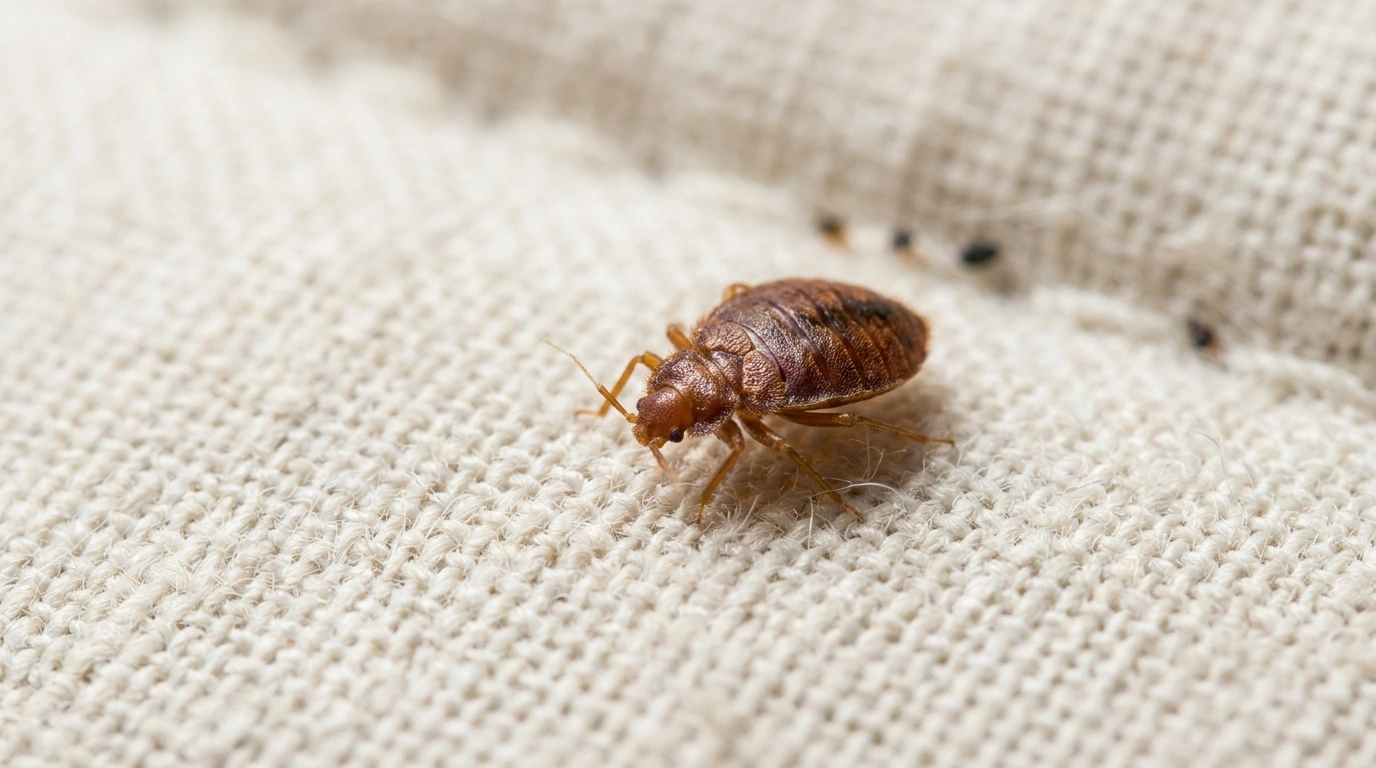
A bedbug is a small, wingless insect that feeds on blood. The common bed bug (Cimex lectularius) is the species most often associated with human infestations.
Bedbugs are generally:
- Flat before feeding
- Oval-shaped
- Brown to reddish-brown
- Wingless
- Slow-moving compared with fleas
For example:
- “We found a bedbug near the mattress.”
- “The hotel room had signs of bedbugs.”
- “Bedbugs can hide in mattress seams.”
Appearance
Adult bedbugs are usually around 5–7 millimeters long, making them generally larger than fleas.
Their bodies are oval and flattened. After feeding, a bedbug can become more swollen and reddish.
Unlike fleas, bedbugs do not jump. They crawl across surfaces and hide in narrow cracks during the day.
Habitat and Behavior
Bedbugs are strongly associated with areas where people sleep or rest.
They can hide in:
- Mattress seams
- Box springs
- Bed frames
- Headboards
- Furniture
- Cracks in walls
- Luggage
- Upholstery
They are attracted to people partly by cues associated with human presence, including body heat and carbon dioxide.
A Short History Note
Bedbugs have been associated with humans for centuries. Modern infestations became particularly difficult to manage in many places after bedbugs developed resistance to some commonly used insecticides.
Key Differences Between Flea or Bedbug
The most useful way to distinguish a flea or bedbug is to look at the insect’s body, movement, preferred habitat, and signs around the home.
- Fleas can jump; bedbugs cannot.
- Fleas are much smaller than adult bedbugs.
- Fleas have powerful hind legs.
- Bedbugs have broad, oval bodies.
- Fleas are often associated with pets and other animals.
- Bedbugs usually hide close to sleeping or resting areas.
- Fleas can infest carpets and pet bedding.
- Bedbugs commonly hide in mattress seams and bed frames.
- Flea bites often occur around the ankles and lower legs.
- Bedbug bites can appear on exposed skin after sleeping.
- Bites alone cannot reliably identify the pest.
- Both pests feed on blood.
| Feature | Flea | Bedbug |
|---|---|---|
| Type | Wingless parasitic insect | Wingless parasitic insect |
| Typical adult size | About 2–3 mm | About 5–7 mm |
| Body shape | Narrow/flattened from side to side | Oval and flattened |
| Color | Brown to reddish-brown | Brown to reddish-brown |
| Can jump? | Yes | No |
| Main movement | Jumping and crawling | Crawling |
| Common association | Pets and animals | People and sleeping areas |
| Common hiding places | Carpets, pet bedding, upholstery | Mattress seams, bed frames, furniture |
| Feeding | Blood | Blood |
| Bites | Often around ankles/lower legs | Often on exposed skin |
| Visible signs | Fleas, flea dirt, eggs/larvae | Bugs, shed skins, dark spotting |
Real-Life Conversation Examples
Example 1: The Jumping Insect
Emma: “Something tiny just jumped off my sock!”
Noah: “That sounds more consistent with a flea than a bedbug.”
Emma: “So bedbugs don’t jump?”
Noah: “Correct. They crawl.”
🎯 Lesson: A tiny insect that jumps is a strong clue for a flea.
Example 2: Around the Mattress
Liam: “I found a brown, oval insect in the seam of my mattress.”
Sara: “That location and appearance could be consistent with a bedbug.”
🎯 Lesson: An oval insect hiding around mattress seams deserves attention as a possible bedbug.
Example 3: Pet Problem
Jack: “My dog keeps scratching, and I’ve noticed tiny insects in its bedding.”
Mia: “Fleas would be one possibility. Check the pet and its environment.”
🎯 Lesson: Pets and pet bedding are important clues when investigating a possible flea problem.
Example 4: Bites Alone
Alex: “I have several itchy red spots. Does that prove I have bedbugs?”
Ben: “Not by itself. Flea bites and other insect bites can look similar.”
🎯 Lesson: Bites alone aren’t a reliable identification method.
When to Use Flea or Bedbug
Think “Flea” When You See Jumping or Pet-Related Signs
A flea is more likely when you notice:
- Tiny jumping insects
- Fleas on a pet
- Flea dirt in pet fur or bedding
- Scratching pets
- Bites concentrated around ankles or lower legs
- Activity around carpets or pet resting areas
If pets are present, treating only the visible insects may not solve the problem because flea life stages can remain in the environment.
Think “Bedbug” Around Beds and Furniture
A bedbug is more likely when you find:
- Small oval brown insects
- Bugs around mattress seams
- Dark spots around bedding or furniture
- Shed skins
- Eggs or eggshells
- Repeated bites after sleeping
- Signs around headboards or bed frames
A flashlight and careful inspection of seams and cracks can help reveal evidence.
What About the Bites?
This is where people often make mistakes.
Flea bites are frequently found around the feet, ankles, and lower legs, although fleas can bite elsewhere.
Bedbug bites may occur on exposed skin, including the arms, legs, neck, and face.
However, there is significant overlap in how bites look and feel. Some people also have little or no visible reaction.
For that reason, don’t try to identify flea or bedbug based solely on your skin.
What About Pets?
If you have cats or dogs, fleas deserve particular attention. A pet can bring fleas into the home, where their eggs and immature stages can develop in the environment.
Bedbugs, on the other hand, are not primarily a pet infestation. They feed on blood but are strongly associated with human sleeping and resting environments.
What About Travel?
Bedbugs are notorious for being transported in luggage, clothing, furniture, and other belongings.
This is why travelers may discover an infestation after returning home from a place where bedbugs were present.
Fleas can also be transported indirectly, especially through animals, but their life cycle and typical routes of introduction differ.
A Simple Memory Trick
Think:
Flea = jump.
Bedbug = bed.
If it jumps, think flea.
If you find a crawling, oval insect around a mattress or bed frame, think bedbug and investigate further.