

What Is Ghee?
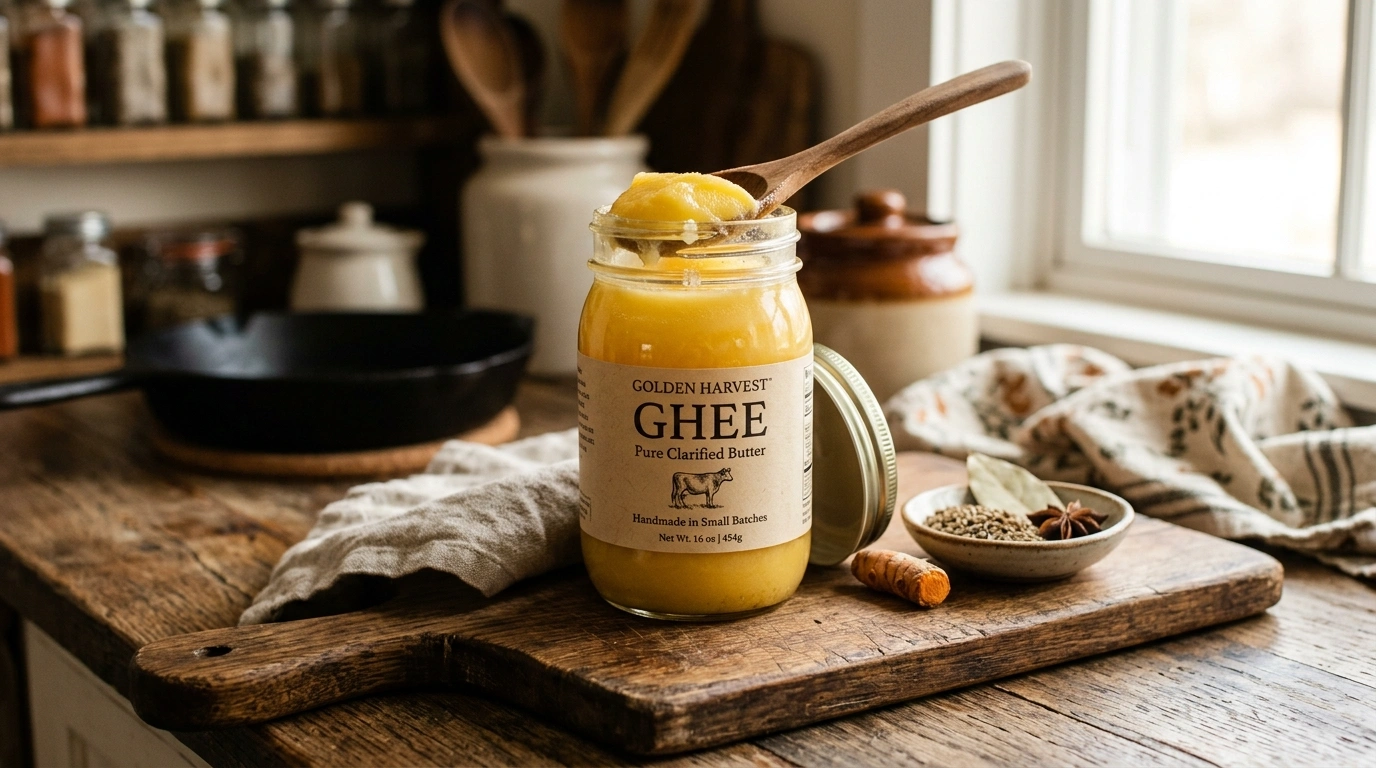
Ghee is a type of clarified butter traditionally associated with South Asian and Middle Eastern cuisines. It starts as butter, which contains milk fat, water, and milk solids. During the cooking process, much of the water evaporates and the milk solids separate from the fat. The resulting golden fat is ghee.
When comparing ghee or tallow, this origin is the easiest distinction to remember: ghee comes from butter, while tallow comes from rendered animal fat.
How Ghee Is Made
Traditional ghee is prepared by gently heating butter. As the butter cooks, water evaporates and the milk solids separate. The clear golden fat is then strained.
Because most of the milk solids are removed, ghee generally contains very little lactose and milk protein compared with ordinary butter. However, people with a milk allergy should not assume that ghee is automatically safe for them.
What Does Ghee Taste Like?
Ghee has a rich, buttery, slightly nutty flavor. Its aroma can become deeper and more toasted depending on how it is prepared.
That makes it particularly useful when you want cooking fat to contribute flavor rather than simply provide a neutral medium.
Common Uses for Ghee
Ghee is popular for:
- Frying and sautéing
- Roasting vegetables
- Cooking eggs
- Making curries
- Preparing rice dishes
- Brushing onto breads
- Baking
- Finishing savory dishes
It is especially common in Indian and South Asian cooking, where it has been used for centuries.
Example Sentences
“I used ghee to sauté the onions before adding the spices.”
“The roasted vegetables developed a rich flavor from the ghee.”
In the ghee or tallow debate, ghee is often the more natural choice when you want a distinctly buttery taste.
What Is Tallow?
Tallow is a rendered animal fat, traditionally made from the fatty tissue of cattle or sheep. Today, beef tallow is particularly common.
Rendering involves heating the fat so that the usable fat separates from connective tissue and other components. After straining and cooling, the fat becomes solid or semi-solid at room temperature.
What Does Tallow Taste Like?
Good-quality beef tallow can have a rich, savory, meaty character, although highly purified tallow can be relatively mild.
The exact flavor depends on the animal, the fat used, and how carefully the tallow is rendered.
Common Uses for Tallow
Tallow can be used for:
- Frying
- Roasting potatoes
- Searing meat
- Deep-frying
- Making savory dishes
- Traditional pastry preparations
- Certain soap-making applications
- Some skincare products
Tallow became particularly famous as a traditional cooking fat before modern vegetable oils became widespread.
Example Sentences
“The potatoes were roasted in beef tallow for extra crispness.”
“He uses tallow when searing steaks at high heat.”
When comparing ghee or tallow, tallow is usually the better fit when you’re looking for a beef-derived fat with a savory profile.
Regional Notes
The word tallow is used in both American and British English. The same is true for ghee.
However, culinary traditions vary by region. Ghee has especially strong roots in South Asian cuisine, while tallow has historically been used across various Western food traditions.
Ghee or Tallow: Key Differences
The biggest difference between ghee or tallow is their source.
- Ghee is made from butter.
- Tallow is rendered animal fat, commonly beef fat.
- Ghee generally has a buttery, nutty flavor.
- Tallow generally has a richer, more savory character.
- Ghee is particularly associated with South Asian cooking.
- Tallow is commonly used for roasting, frying, and cooking meat.
- Both are predominantly fats and are energy-dense foods.
- Their nutritional composition differs, so neither should automatically be considered universally “healthier.”
- Both can be useful cooking fats, depending on the recipe and dietary preferences.
Comparison Table
| Feature | Ghee | Tallow |
|---|---|---|
| Made from | Butter | Rendered animal fat |
| Common source | Cow’s milk butter | Beef fat |
| Main component | Milk fat | Animal fat |
| Texture at room temperature | Usually solid or semi-solid | Usually solid |
| Flavor | Buttery, nutty, rich | Savory, rich, sometimes meaty |
| Common cuisine | South Asian, Middle Eastern | Western and traditional cuisines |
| Popular uses | Curries, frying, roasting, baking | Frying, roasting, searing |
| Milk-derived | Yes | No |
| Contains cholesterol | Yes | Yes |
| Best known for | Rich buttery flavor | High-heat savory cooking |
Real-Life Conversation Examples
Example 1: Choosing a Cooking Fat
Aisha: “Should I use ghee or tallow for this curry?”
Sara: “Ghee would probably suit it better because its buttery flavor works naturally with the spices.”
🎯 Lesson: Choose ghee when you want a rich, buttery flavor that complements spiced dishes.
Example 2: Crispy Potatoes
Ben: “I want really crispy roasted potatoes.”
Mark: “Tallow can give them a wonderfully rich, savory flavor.”
🎯 Lesson: Tallow is a popular choice for roasting potatoes and other savory foods.
Example 3: Cooking Steak
Leo: “Would ghee work for searing steak?”
Dan: “Yes. Ghee can be useful for high-heat cooking, although tallow is another traditional option.”
🎯 Lesson: Both fats can work for searing, so flavor preference can help make the decision.
Example 4: Avoiding Dairy
Nora: “Tallow doesn’t come from dairy, right?”
Emily: “Correct. Tallow is rendered animal fat, while ghee starts with butter.”
🎯 Lesson: If the distinction is dairy-derived versus non-dairy-derived, tallow and ghee have different origins.
When to Use Ghee or Tallow
Knowing when to use ghee or tallow becomes much easier when you start with the flavor and recipe rather than nutrition claims.
Use Ghee When You Want Buttery Flavor
Ghee is excellent when you want the richness of butter without using ordinary butter directly.
It works especially well in:
- Curries
- Dal
- Rice dishes
- Fried eggs
- Roasted vegetables
- Sautéed aromatics
- Some baked goods
Its nutty aroma can make simple ingredients taste more complex.
Use Tallow for Savory, Meat-Friendly Cooking
Tallow works especially well with foods that already have a rich or savory character.
Try it for:
- Steak
- Burgers
- Roast potatoes
- Root vegetables
- Deep-frying
- Pan-searing
Because beef tallow can have a savory character, it may pair especially well with hearty foods.
A Simple Memory Trick
Remember:
Ghee = butter clarified.
Tallow = animal fat rendered.
That one distinction answers much of the ghee or tallow question before you even get to flavor or cooking temperature.
Nutrition: Is Ghee or Tallow Healthier?
This question needs a little nuance.
Both ghee and tallow are concentrated sources of dietary fat, meaning they provide substantial calories in relatively small amounts. Neither should be viewed as a magical health food simply because it is traditional or minimally processed.
Their fatty-acid profiles aren’t identical, and both contain saturated fat. For overall dietary health, what matters is the broader eating pattern, portion sizes, and how these fats fit into your individual nutritional needs.
If you’re choosing between ghee or tallow solely because you heard one is automatically healthier, it’s better to be cautious about such claims.
For people managing cholesterol or cardiovascular risk, dietary-fat choices may be particularly important. A healthcare professional or registered dietitian can provide advice based on your individual circumstances.
Can You Substitute Ghee for Tallow?
Often, yes, but the result won’t necessarily taste the same.
Both fats can be used for sautéing, roasting, and frying. However, replacing tallow with ghee can make a dish taste more buttery and nutty. Replacing ghee with tallow can introduce a more savory character.
For baking or pastry, substitution can also affect texture because different fats behave differently.
So if a recipe specifically calls for one, consider whether its flavor and texture are part of the intended result.
Storage and Shelf Life
Both ghee and properly rendered tallow can be relatively stable compared with many fresh foods because they contain little water.
Still, storage conditions matter. Keep them in clean, tightly sealed containers and follow the storage instructions on commercially prepared products.
Signs of spoilage can include an unpleasant odor, unusual flavor, discoloration, or visible contamination.
Homemade fats deserve particular care because the quality of rendering and storage can vary.