

What Is Greyhound?
Greyhound is one of the best-known intercity bus brands in North America. It has a long history of connecting cities across the United States and has traditionally been associated with affordable long-distance bus travel.
Greyhound provides scheduled bus transportation between numerous cities and communities, although the exact network changes over time.
How Greyhound Works
Passengers generally purchase tickets for a specific route and departure. Depending on the trip, a journey may be direct or involve connections.
Greyhound services can include:
- Intercity transportation
- Long-distance routes
- Connections between major cities
- Regional routes
- Online and mobile ticketing
- Baggage options
- Wi-Fi on some buses or routes
Amenities and policies can vary depending on the specific service.
Greyhound’s Main Strengths
Greyhound’s biggest advantage is its long-established presence in intercity bus transportation.
It can be useful for travelers who:
- Want to travel between cities without driving.
- Need a relatively low-cost transportation option.
- Prefer bus travel over flying.
- Need routes that may connect smaller communities with larger cities.
- Want a familiar intercity bus brand.
However, the quality of the experience can vary significantly depending on the route, bus, station, and operating partner.
Example Greyhound Trip
Suppose you need to travel from one major US city to another and don’t want to drive.
You might search Greyhound for available departures, compare travel times and fares, select a ticket, and then check the baggage and boarding requirements for your specific trip.
The important point is that the route determines the actual experience. A convenient direct trip can feel very different from a journey involving multiple transfers.
A Short History of Greyhound
Greyhound has roots going back to the early development of intercity bus transportation in the United States during the 20th century. The brand became deeply associated with long-distance coach travel and became one of the most recognizable bus companies in the country.
Its network and ownership structure have changed over the years, but the Greyhound name remains strongly associated with intercity bus travel.
What Is FlixBus?
FlixBus is an intercity bus service that originated in Germany and expanded internationally. It operates through a combination of its own network management and partnerships with bus operators.
FlixBus became known for offering affordable long-distance coach travel and has expanded its presence across multiple countries, including the United States.
How FlixBus Works
FlixBus uses an extensive network model in which trips may be operated by partner bus companies under the FlixBus brand.
Passengers can search routes, compare departure times, and purchase tickets through the FlixBus platform.
Depending on the route, amenities may include:
- Wi-Fi
- Power outlets
- Restrooms
- Reclining seats
- Carry-on and checked-baggage options
Not every bus or route necessarily provides exactly the same experience, so travelers should check the details for their specific journey.
FlixBus’s Main Strengths
FlixBus is particularly attractive to travelers looking for:
- Competitive fares
- Modern online booking
- Extensive intercity connections
- International travel options
- Frequent promotions
- A broad network of routes
The company has built its brand around affordable and convenient bus travel.
Example FlixBus Trip
Imagine you want to travel between two cities served by FlixBus.
You can search the route, compare departure times, check the fare, review luggage rules, and select the journey that works best.
If the cheapest fare has restrictive conditions or the trip involves a less convenient departure time, a slightly more expensive ticket may offer better overall value.
A Short History of FlixBus
FlixBus was launched in Germany in the 2010s and expanded rapidly throughout Europe. It later entered additional markets, including the United States.
Its growth has been driven partly by a technology-focused booking model and partnerships with local bus operators.
Key Differences Between Greyhound or FlixBus
When comparing Greyhound or FlixBus, the biggest difference is not necessarily the vehicle itself. In many cases, route availability, price, schedule, and operating partner have a bigger effect on your experience.
Key differences include:
- History: Greyhound has a much longer history in North American intercity bus travel.
- Global presence: FlixBus has a particularly broad international network.
- Pricing: Both can offer low fares, but prices vary by route and booking time.
- Routes: Availability depends heavily on your origin and destination.
- Amenities: Wi-Fi, outlets, restrooms, and other features can vary by bus and route.
- Luggage: Policies and included allowances should be checked before booking.
- Booking: Both provide online booking, but their interfaces and ticket conditions differ.
- Travel time: A direct bus can be much faster than an itinerary involving transfers.
- Reliability: Delays can occur with either service because buses operate in real-world traffic and weather conditions.
- Overall value: The cheapest ticket isn’t always the best option if it has an inconvenient schedule or additional fees.
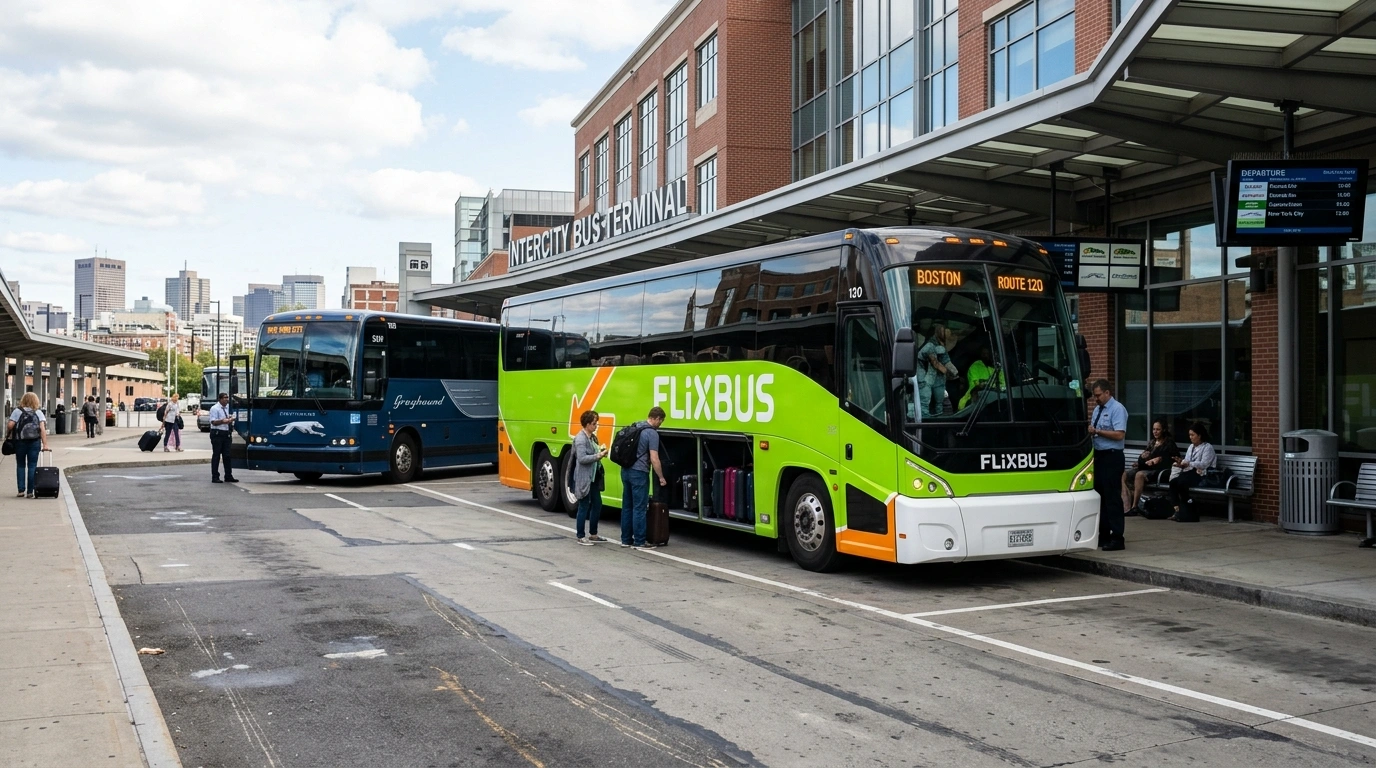
Greyhound or FlixBus Comparison Table
| Feature | Greyhound | FlixBus |
|---|---|---|
| Main market | North America | International, including the US |
| Long-distance travel | Yes | Yes |
| Online booking | Yes | Yes |
| Mobile booking | Yes | Yes |
| Wi-Fi | Available on some services | Available on some services |
| Power outlets | Route/bus dependent | Route/bus dependent |
| Restrooms | Often available on long-distance coaches | Often available, depending on service |
| Luggage | Subject to ticket and route rules | Subject to ticket and route rules |
| Pricing | Varies by route and booking time | Varies by route and booking time |
| Network | Strong North American presence | Broad international network |
| Best for | Travelers comparing established US intercity routes | Travelers seeking broad network options and competitive fares |
Real-Life Conversation Examples
Dialogue 1: The Cheapest Ticket
Jake: “Greyhound is cheaper on this route.”
Mia: “How long does it take?”
Jake: “About eight hours.”
Mia: “FlixBus costs a little more but gets there two hours earlier.”
Jake: “Then the cheapest ticket isn’t necessarily the best deal.”
🎯 Lesson: Compare total travel value, not just the advertised fare.
Dialogue 2: The Luggage Question
Sarah: “Does FlixBus let me bring a suitcase?”
Tom: “Usually there are baggage options, but the allowance depends on your ticket and route.”
Sarah: “So I should check before booking?”
Tom: “Definitely.”
🎯 Lesson: Always verify the current baggage allowance for your specific trip.
Dialogue 3: The Wi-Fi Question
Alex: “Does Greyhound have Wi-Fi?”
Chris: “Some services offer Wi-Fi, but I wouldn’t assume every bus has identical amenities.”
Alex: “Same with FlixBus?”
Chris: “Exactly. Check the trip details.”
🎯 Lesson: Amenities can vary by bus and route, so don’t rely only on the brand’s general reputation.
Dialogue 4: The Direct Route
Nina: “FlixBus is cheaper.”
Emma: “Does it go direct?”
Nina: “No, there’s a connection.”
Emma: “Greyhound costs $10 more but is direct.”
Nina: “I’d probably pay the extra $10.”
🎯 Lesson: A direct journey can be worth more than a slightly cheaper ticket.
When to Use Greyhound or FlixBus
The choice between Greyhound or FlixBus should start with your exact trip rather than the company’s overall reputation.
Choose Greyhound If It Has the Better Route
Greyhound may be the better option when:
- It offers a convenient departure time.
- It provides a direct connection.
- The fare is competitive.
- The route fits your schedule better.
- You prefer its available baggage options.
- Its station location is more convenient.
If Greyhound offers the best combination of price and schedule, there is little reason to choose another company simply because it has a newer brand image.
Choose FlixBus If It Has the Better Route
FlixBus may be preferable when:
- It offers a lower fare.
- It has a more convenient departure.
- The trip is direct.
- The arrival location is better for your plans.
- You want to compare multiple network options.
- You find a promotional fare.
Again, the specific route matters more than the logo.
Which Is Cheaper?
Neither company is consistently cheaper on every route.
Bus fares can change according to:
- Travel date
- Departure time
- Demand
- Booking time
- Route
- Seat availability
- Promotions
- Ticket type
A ticket that costs $30 today could cost significantly more closer to departure.
For the best comparison, search both services for the same date and approximate departure time.
Which Is More Comfortable?
Comfort depends on the specific bus.
Factors that can affect your experience include:
- Seat design
- Legroom
- Passenger load
- Bus age
- Air conditioning
- Wi-Fi quality
- Power availability
- Journey length
- Number of stops
A newer-looking bus does not automatically guarantee a better experience. Your route, operating partner, and travel conditions can make a major difference.
Which Has Better Reliability?
It is difficult to declare one service universally more reliable.
Intercity buses are affected by:
- Traffic
- Weather
- Road closures
- Mechanical issues
- Passenger delays
- Station congestion
- Connections
If your schedule is extremely tight, allow extra time rather than planning an important event immediately after your expected arrival.
Which Is Better for Luggage?
Both services have baggage policies, but the exact rules can vary according to the ticket and journey.
Before purchasing, check:
- Carry-on allowance
- Checked-bag allowance
- Additional baggage fees
- Weight limits
- Size limits
- Special-item rules
If you’re traveling with multiple suitcases, baggage costs can change which service actually offers the better deal.
Which Is Better for International Travel?
This depends on where you’re traveling.
FlixBus has a particularly broad international network and is a major option for bus travel in Europe and other markets.
Greyhound has historically been strongly associated with North American intercity transportation.
If your trip crosses international borders, check the specific route, border requirements, identification requirements, and operator policies before booking.
A Simple Memory Trick
Think:
Greyhound = long-established North American bus brand.
FlixBus = international network with strong technology-driven booking.
But when choosing between them, remember the more useful rule:
Best route + best schedule + best total price = best bus.