
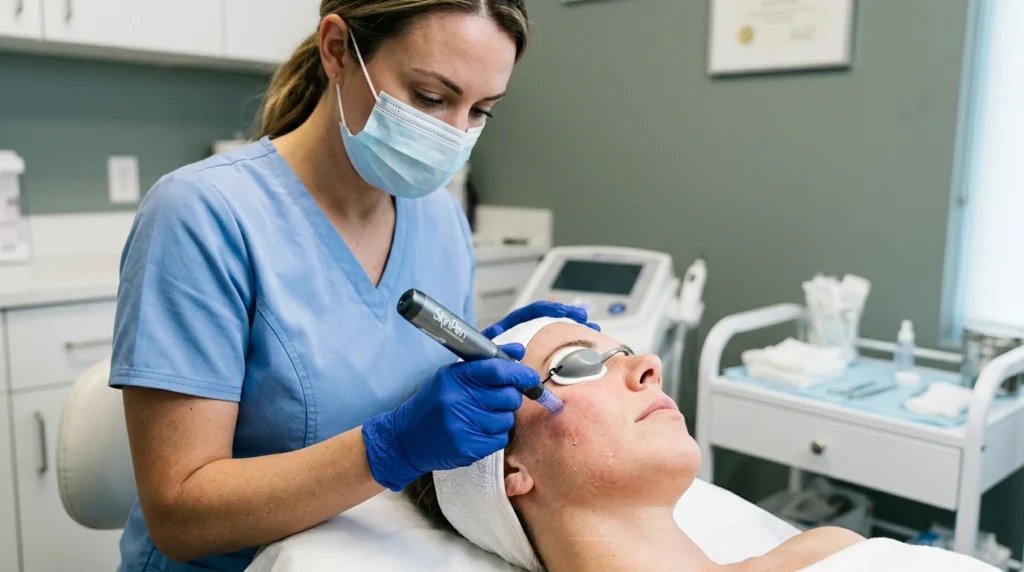
What Is IPL?
IPL stands for intense pulsed light. Despite sometimes being called a laser treatment, IPL is technically different from a laser. Instead of delivering one specific wavelength of light, IPL devices emit a broad range of light wavelengths.
When comparing IPL or microneedling, the easiest distinction is this: IPL uses light energy, while microneedling uses tiny needles.
IPL energy can be absorbed by specific targets in the skin, including pigment and blood vessels. Depending on the device and settings, this can help improve certain types of discoloration and visible redness.
What Does IPL Treat?
IPL is commonly used to improve:
- Sun spots
- Freckles
- Certain types of hyperpigmentation
- Facial redness
- Visible small blood vessels
- Uneven skin tone
- Some signs of photoaging
It is also sometimes used for hair reduction because the light can target pigment in hair follicles.
However, IPL isn’t appropriate for every skin concern or every skin type. A qualified professional should assess your skin before treatment.
How IPL Works
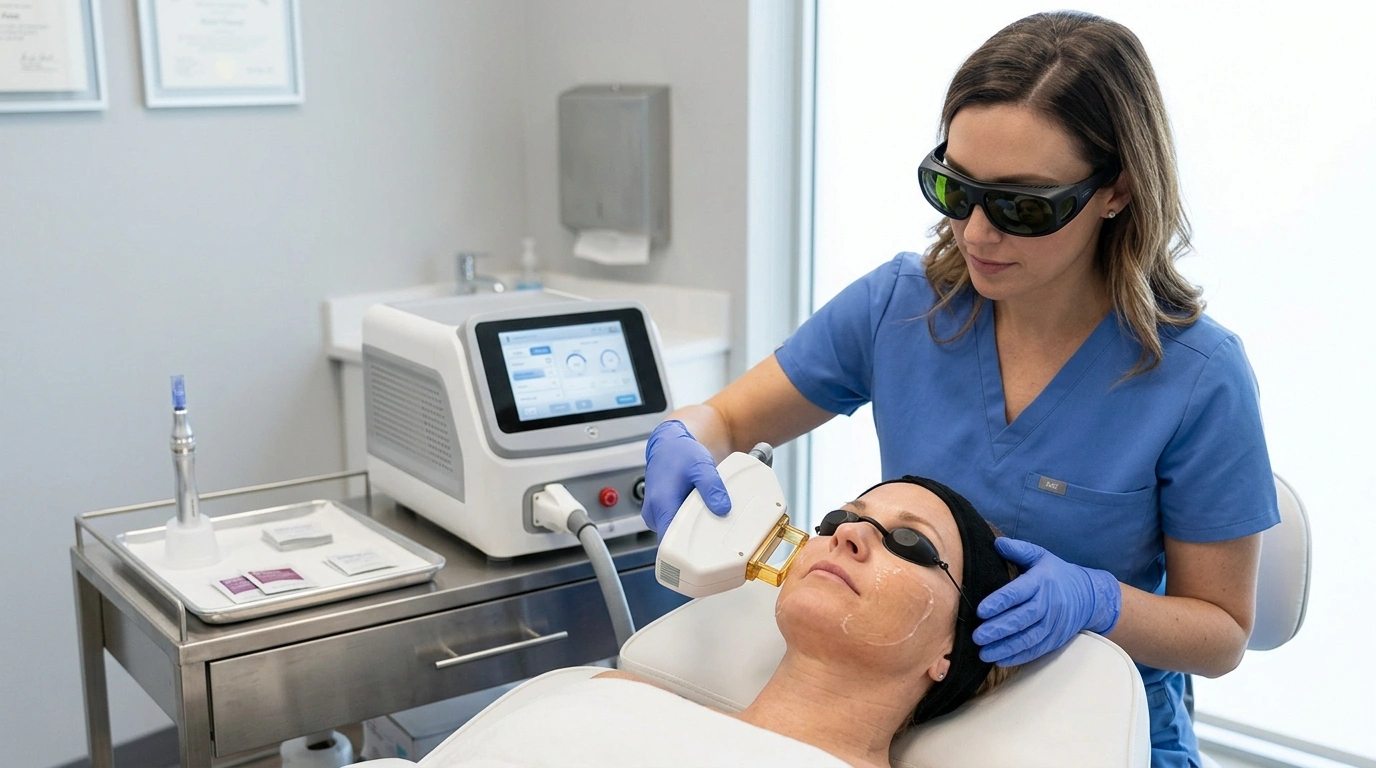
During treatment, the device delivers pulses of light into the skin. Certain pigments absorb the light energy, which produces a controlled heating effect.
For pigmentation concerns, the targeted pigment may become darker initially before gradually fading as the treated area heals.
Because IPL settings need to be adjusted to the individual, professional assessment is important.
IPL Recovery
Recovery is often relatively short, although it depends on the treatment intensity and the person’s skin.
Some people experience:
- Temporary redness
- Mild swelling
- Warmth
- Darkening of pigmented spots
- Temporary sensitivity
Sun protection is particularly important after IPL because treated skin can be more sensitive to sunlight.
Example Sentences
“She chose IPL to address sun-related pigmentation.”
“The dermatologist recommended IPL for certain areas of facial redness.”
When deciding between IPL or microneedling, IPL generally makes more sense when pigment or vascular redness is the primary concern.
What Is Microneedling?
Microneedling is a minimally invasive cosmetic procedure that uses a device containing very small needles to create controlled punctures in the skin.
These tiny injuries trigger the skin’s natural repair process. As the skin heals, it can produce more collagen and elastin, proteins that contribute to skin structure and firmness.
When comparing IPL or microneedling, microneedling is generally more focused on skin texture, scarring, and collagen remodeling rather than directly targeting pigmentation with light.
What Does Microneedling Treat?
Microneedling may be used to improve the appearance of:
- Acne scars
- Fine lines
- Uneven skin texture
- Enlarged pores
- Certain scars
- Mild skin laxity
- Overall skin smoothness
Results vary, and deeper scars or significant skin laxity may require different or additional treatments.
How Microneedling Works
A microneedling device creates many tiny controlled punctures in the skin. These trigger a wound-healing response.
Over time, collagen remodeling can improve the appearance of treated skin.
The results aren’t usually immediate. Instead, improvements tend to develop gradually over several weeks or months as the skin produces and remodels collagen.
Microneedling Recovery
After treatment, it’s common to experience:
- Redness
- Mild swelling
- Skin sensitivity
- Tightness
- Peeling or dryness
The skin can look sunburned for a short period after treatment. Recovery depends on the device, needle depth, treatment area, and individual skin response.
Example Sentences
“She chose microneedling to improve the texture of acne scars.”
“Microneedling can stimulate collagen production during the skin’s healing process.”
If your primary concern is texture or acne scarring, microneedling may be more relevant than IPL.
IPL or Microneedling: Key Differences
The most important difference between IPL or microneedling is what each treatment targets.
- IPL uses broad-spectrum light energy.
- Microneedling uses tiny needles to create controlled micro-injuries.
- IPL is commonly used for pigmentation and redness.
- Microneedling is commonly used for texture and collagen remodeling.
- IPL can address certain visible signs of sun damage.
- Microneedling may help improve the appearance of acne scars and fine lines.
- Both treatments may require multiple sessions.
- Both can cause temporary redness and irritation.
- IPL may not be suitable for certain darker skin tones depending on the device and settings.
- Microneedling can also have risks, particularly if performed incorrectly or on unsuitable skin.
Comparison Table
| Feature | IPL | Microneedling |
|---|---|---|
| Full name | Intense pulsed light | Microneedling |
| Main technology | Broad-spectrum light | Tiny needles |
| Primary action | Targets pigment and certain blood vessels | Creates controlled micro-injuries |
| Common concerns | Sun spots, redness, uneven pigmentation | Acne scars, texture, fine lines |
| Collagen stimulation | May occur indirectly | Major treatment goal |
| Typical recovery | Often short | Usually short, but varies |
| Common temporary effects | Redness, swelling, darkening of spots | Redness, sensitivity, peeling |
| Skin-type considerations | Important because of pigment absorption | Also important, but concerns differ |
| Number of sessions | Often multiple | Often multiple |
| Best suited to | Pigment/redness concerns | Texture/scarring concerns |
Real-Life Conversation Examples
Example 1: Sun Spots
Maya: “I have brown sun spots on my cheeks. Should I try microneedling?”
Sara: “IPL may be considered for certain types of pigmentation, but a professional should first identify what the spots actually are.”
🎯 Lesson: IPL is often considered when pigmentation and sun damage are the main concerns.
Example 2: Acne Scars
Ali: “My acne is gone, but I have uneven scars and texture.”
Omar: “Microneedling may be worth discussing with a qualified skin professional.”
🎯 Lesson: Microneedling is commonly used to improve the appearance of acne scars and uneven texture.
Example 3: Facial Redness
Nina: “My main problem is persistent facial redness.”
Emma: “IPL can sometimes target certain superficial blood vessels and redness.”
🎯 Lesson: IPL may be useful for certain types of vascular redness.
Example 4: Fine Lines and Texture
Leo: “I want smoother skin and fewer fine lines.”
Dan: “Microneedling may help stimulate collagen and improve overall texture.”
🎯 Lesson: Microneedling is commonly chosen for texture and collagen-related concerns.
When to Use IPL or Microneedling
The choice between IPL or microneedling should start with your primary skin concern.
Choose IPL for Certain Pigmentation and Redness
IPL may be worth discussing with a qualified dermatologist or experienced medical aesthetic professional if you’re concerned about:
- Sun spots
- Certain freckles
- Uneven pigmentation
- Certain forms of facial redness
- Visible superficial blood vessels
However, not every dark spot is suitable for IPL. A new, changing, irregular, or unexplained skin lesion should be evaluated medically rather than treated cosmetically.
Choose Microneedling for Texture and Scarring
Microneedling may be more appropriate when the main concern is:
- Acne scarring
- Uneven texture
- Fine lines
- Enlarged pores
- Certain superficial scars
The treatment stimulates a healing response rather than directly targeting pigment with light.
A Simple Memory Trick
Remember:
IPL = light for pigment and redness.
Microneedling = needles for texture and collagen.
It’s not an absolute rule, but it’s a useful starting point when thinking about IPL or microneedling.
Can You Combine IPL and Microneedling?
In some cosmetic treatment plans, professionals may use different procedures to address different concerns. For example, one treatment might focus on pigmentation while another focuses on texture.
However, combining procedures isn’t automatically better. Treatment timing, skin type, medical history, medications, and the condition being treated all matter.
A qualified professional should determine whether combining treatments is appropriate and how much recovery time is needed between them.
IPL vs. Microneedling for Acne Scars
If acne scars are your main concern, microneedling is generally more directly associated with collagen remodeling and improving the appearance of certain atrophic acne scars.
IPL doesn’t physically remodel scar tissue in the same way. However, it may sometimes be used when acne-related redness or pigmentation is also present.
The type of acne scar matters, too. Deep ice-pick scars, raised scars, and broad depressed scars may respond differently to various treatments.
IPL vs. Microneedling for Dark Spots
For certain types of sun-related pigmentation, IPL can be particularly useful because the treatment is designed to interact with pigment.
Microneedling isn’t primarily a pigment-targeting procedure. In fact, inappropriate microneedling can sometimes trigger post-inflammatory hyperpigmentation, particularly in people whose skin is prone to pigmentation after inflammation.
That makes professional assessment especially important for anyone concerned about dark spots.
Safety and Side Effects
Neither treatment should be treated as risk-free simply because both are widely offered.
IPL Risks
Possible effects include:
- Redness
- Swelling
- Temporary discomfort
- Pigment changes
- Burns or blistering if improperly performed
- Increased or decreased pigmentation
- Rare scarring
Skin tone and recent sun exposure can affect the risk profile.
Microneedling Risks
Possible effects include:
- Redness
- Swelling
- Skin irritation
- Infection
- Pigment changes
- Prolonged inflammation
- Scarring in uncommon cases
Sterile equipment and appropriate technique are essential.
People with active skin infections, certain inflammatory skin conditions, or particular medical circumstances may need to postpone or avoid treatment.
US vs. UK Usage
There is no meaningful American-versus-British spelling difference between IPL and microneedling.
IPL stands for intense pulsed light in both varieties of English, while microneedling is also commonly used in both.
The bigger differences you’ll encounter are related to regulations, practitioner qualifications, and the specific devices available in different countries.