

What Is ISTP?
ISTP stands for Introverted, Sensing, Thinking, and Perceiving in the Myers-Briggs Type Indicator (MBTI) personality framework.
ISTPs are often described as practical, observant, independent, and analytical. They tend to prefer learning by doing rather than spending excessive time discussing an idea before testing it.
What Does ISTP Mean?
Each letter represents a preference:
- I — Introversion: Often prefers internal reflection and independent time.
- S — Sensing: Tends to focus on concrete information and observable details.
- T — Thinking: Gives significant weight to logic and objective analysis.
- P — Perceiving: Usually prefers flexibility and keeping options open.
An ISTP may look at a broken machine and immediately want to figure out how it works and how to fix it.
For example:
“Let me take it apart and see what’s wrong.”
That practical approach is strongly associated with the ISTP profile.
Common ISTP Traits
ISTPs are often:
- Practical
- Curious
- Independent
- Calm under pressure
- Hands-on
- Adaptable
- Observant
- Logical
- Experimental
- Comfortable improvising
They may dislike unnecessary rules, long meetings, or explanations that don’t lead to useful action.
ISTP Learning Style
ISTPs often enjoy hands-on learning.
They may prefer:
Try → observe → adjust → improve
rather than:
Read everything → develop a theory → discuss possibilities → act later
This doesn’t mean ISTPs cannot enjoy theoretical subjects. It simply means they often want to connect ideas to something tangible.
ISTP at Work
ISTPs may enjoy environments where they can:
- Solve practical problems
- Work independently
- Troubleshoot systems
- Use tools or technology
- Respond to changing situations
- Make decisions quickly
- Experiment with solutions
Potentially appealing areas can include engineering, technical work, mechanics, emergency response, skilled trades, cybersecurity, aviation, or other hands-on and problem-solving fields.
Personality type alone, however, doesn’t determine career suitability.
Short History of ISTP
ISTP is one of the 16 personality types described by the MBTI framework, which was developed from ideas influenced by Swiss psychiatrist Carl Jung and later formalized by Katharine Cook Briggs and Isabel Briggs Myers.
What Is INTP?
INTP stands for Introverted, Intuitive, Thinking, and Perceiving.
INTPs are often characterized as analytical, theoretical, inventive, and highly curious about how systems and ideas work.
What Does INTP Mean?
The letters represent:
- I — Introversion: Tends to process thoughts internally.
- N — Intuition: Focuses more on patterns, possibilities, and abstract ideas.
- T — Thinking: Prioritizes logic and consistency.
- P — Perceiving: Prefers flexibility and exploration over rigid structure.
An INTP might see the same broken machine and think:
“Interesting. What principle is causing this system to fail?”
Rather than immediately fixing it, they may become fascinated by the underlying mechanism.
Common INTP Traits
INTPs are often:
- Analytical
- Curious
- Abstract thinkers
- Independent
- Inventive
- Open-minded
- Conceptual
- Skeptical
- Imaginative
- Interested in complex systems
They often enjoy exploring questions simply because the questions are interesting.
INTP Learning Style
INTPs frequently enjoy conceptual learning.
They may want to understand:
- Why something works
- How different ideas connect
- Whether a theory is logically consistent
- What would happen under different conditions
- What possibilities haven’t been considered
They can become deeply absorbed in subjects that challenge their reasoning.
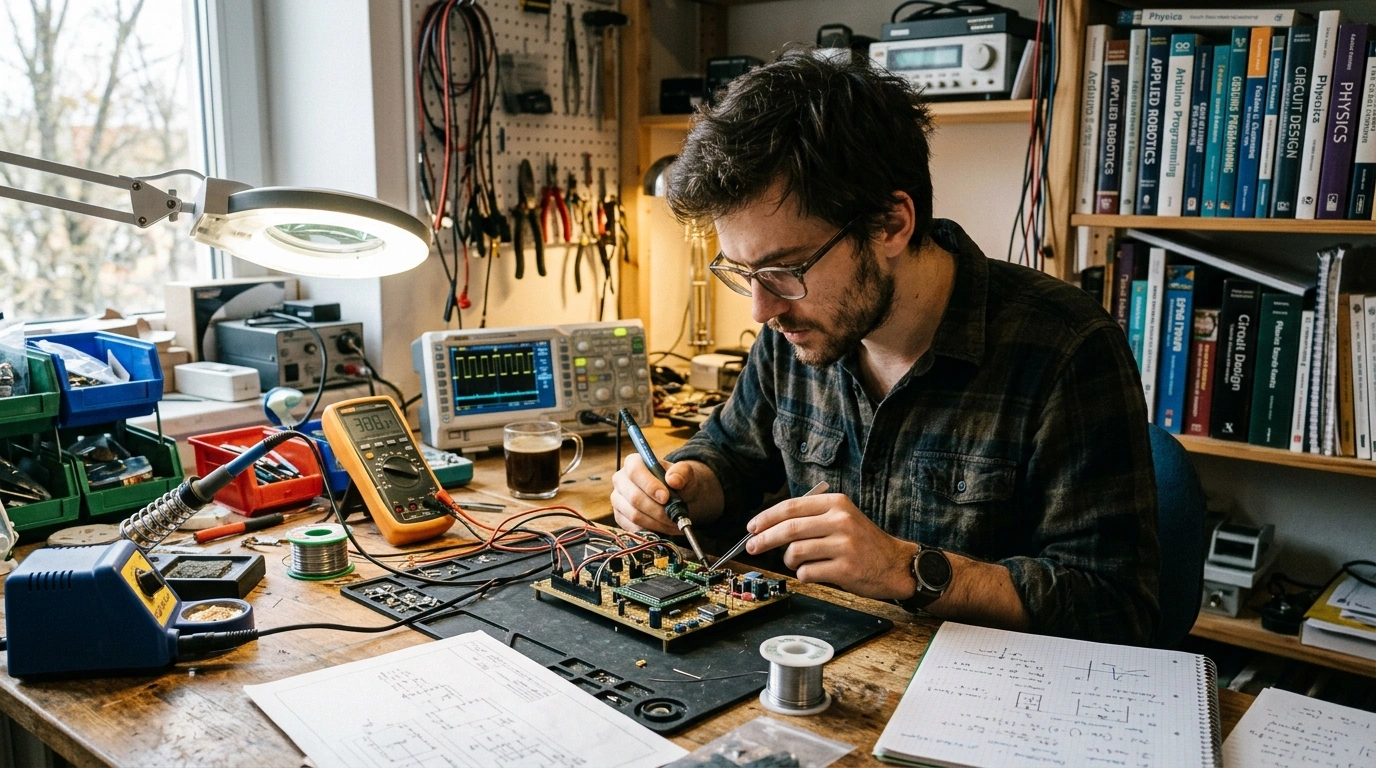
INTP at Work
INTPs may enjoy environments that allow them to:
- Investigate difficult problems
- Explore theories
- Develop new ideas
- Work independently
- Analyze systems
- Question assumptions
- Solve intellectually challenging problems
Potential areas may include research, software development, mathematics, science, philosophy, data analysis, engineering, or academic work.
Again, career choice depends on many factors beyond personality type.
Short History of INTP
INTP is another of the 16 MBTI personality types. The profile combines introversion, intuition, thinking, and perceiving preferences.
Its popularity has grown because the MBTI framework provides people with a simple vocabulary for discussing differences in communication, decision-making, and information processing.
Key Differences Between ISTP or INTP
The most important difference between ISTP or INTP is the contrast between Sensing (S) and Intuition (N).
- ISTPs generally focus more on concrete information.
- INTPs generally focus more on abstract concepts.
- ISTPs often prefer practical experimentation.
- INTPs often prefer theoretical exploration.
- ISTPs may ask, “How can I make this work?”
- INTPs may ask, “Why does this work?”
- ISTPs tend to notice immediate details.
- INTPs tend to notice patterns and possibilities.
- ISTPs may become bored with excessive theorizing.
- INTPs may become bored with repetitive practical tasks.
- Both are typically analytical and independent.
- Both can dislike unnecessary rules and rigid routines.
ISTP or INTP Comparison Table
| Feature | ISTP | INTP |
|---|---|---|
| Full type | Introverted, Sensing, Thinking, Perceiving | Introverted, Intuitive, Thinking, Perceiving |
| Main information preference | Concrete details | Abstract patterns |
| Thinking style | Practical and analytical | Theoretical and analytical |
| Typical question | “How does this work?” | “Why does this work?” |
| Learning preference | Hands-on experimentation | Conceptual exploration |
| Problem-solving | Immediate and practical | Analytical and theoretical |
| Attention | Present details | Possibilities and patterns |
| Communication | Often concise and direct | Often exploratory and detailed |
| Flexibility | High | High |
| Independence | High | High |
| Common strength | Troubleshooting | Conceptual analysis |
Real-Life Conversation Examples
Dialogue 1: Fixing a Computer
Alex: “My computer isn’t working.”
Sam: “I’ll check the cables, restart it, and test the hardware.”
Jordan: “First, I want to understand what’s causing the system failure.”
Alex: “We can figure that out after I get it running.”
🎯 Lesson: An ISTP may naturally focus on immediate troubleshooting, while an INTP may focus more on understanding the underlying system.
Dialogue 2: Learning Something New
Mia: “How do you want to learn this?”
Chris: “Give me the equipment. I’ll figure it out.”
Mia: “I’d rather read about how the whole system works first.”
Chris: “I’d rather experiment.”
🎯 Lesson: ISTPs often lean toward hands-on learning, while INTPs may prefer conceptual understanding.
Dialogue 3: A Strange Question
Tom: “What if humans lived on another planet?”
Jake: “What would we actually need to survive there?”
Tom: “I’m thinking about how society and technology might evolve.”
Jake: “I’d start with the practical problems.”
🎯 Lesson: INTPs may explore abstract possibilities, while ISTPs may naturally bring the discussion back to practical realities.
Dialogue 4: A Broken Device
Nina: “This device stopped working.”
Emma: “Let’s test each component.”
Nina: “I want to understand the design first.”
Emma: “We’ll understand it faster once we test it.”
🎯 Lesson: ISTPs often favor direct experimentation, whereas INTPs may be more interested in the underlying theory.
When to Use ISTP or INTP
Understanding ISTP or INTP isn’t about deciding which personality is better. The two types can be excellent at different things.
You May Relate More to ISTP If…
You often:
- Prefer doing something over discussing it
- Learn quickly through experience
- Notice practical details
- Enjoy troubleshooting
- Adapt easily when plans change
- Prefer concise explanations
- Like figuring things out independently
- Focus on what works in the real world
An ISTP might think:
“Let’s test it and see what happens.”
You May Relate More to INTP If…
You often:
- Love exploring theories
- Ask “why?” repeatedly
- Enjoy abstract subjects
- Connect ideas across different fields
- Question assumptions
- Spend a lot of time analyzing possibilities
- Enjoy intellectual puzzles
- Prefer understanding a system before changing it
An INTP might think:
“Let’s understand the entire system first.”
ISTP or INTP in Relationships
Both types may value independence and personal space.
An ISTP may show care through practical actions, problem-solving, or simply being present when needed.
An INTP may show care through conversation, sharing ideas, solving intellectual problems, or inviting someone into their inner world.
Neither style is inherently more caring. They simply may express interest differently.
ISTP or INTP at Work
An ISTP may thrive when a job involves real-time problem-solving, practical challenges, tools, systems, or hands-on experimentation.
An INTP may thrive when work involves complex ideas, research, theoretical problems, systems analysis, or invention.
There is substantial overlap, especially in fields such as engineering, technology, and programming.
A Simple Memory Trick
Remember the middle letters:
ISTP = Sensing → See what is happening.
INTP = Intuition → Notice what could be happening.
The S/N distinction is the key difference.
US vs UK Notes
There is no meaningful US-versus-UK difference in the definitions of ISTP or INTP. MBTI terminology is used internationally.
However, different cultures may influence how people express personality traits. A person’s behavior can also change depending on their environment, role, age, and circumstances.
One Important MBTI Reminder
MBTI is a personality framework, not a medical diagnosis or a definitive measure of intelligence, ability, or psychological health.
People are more complicated than four letters. If you are trying to determine whether you’re ISTP or INTP, consider your consistent preferences over time, rather than identifying with whichever description sounds flattering or familiar.