

What Is Kipling?
Rudyard Kipling (1865–1936) was an English writer and poet best known for works including The Jungle Book, Kim, Just So Stories, and poems such as “If—” and “Gunga Din.”
Meaning and Literary Identity
Kipling was born in Bombay, British India, and his early experiences in India strongly influenced his writing. He later worked as a journalist before establishing himself as a major literary figure.
His writing often combined storytelling, rhythm, vivid description, and observations about colonial life.
Kipling wrote for both adults and children, moving comfortably between poetry, short stories, novels, and children’s literature.
Kipling’s Writing Style
Kipling’s style is often:
- Direct and rhythmic
- Highly visual
- Story-driven
- Rich in dialogue
- Interested in travel and adventure
- Influenced by military language
- Focused on duty, courage, identity, and society
His poems frequently use strong rhythms and memorable phrases, making many of them particularly easy to quote or remember.
Famous Works by Kipling
Some of Kipling’s best-known works include:
- The Jungle Book
- The Second Jungle Book
- Kim
- Just So Stories
- Barrack-Room Ballads
- “If—”
- “Gunga Din”
- “The White Man’s Burden”
His children’s books remain especially influential, while his poetry is often studied in connection with British imperial history.
Historical Context
Kipling’s work was deeply connected to the British Empire. His writing sometimes celebrated imperial institutions and attitudes that are now viewed critically.
This historical context is essential when reading Kipling today. His literary skill and cultural influence can be studied alongside serious examination of the imperial ideas present in some of his work.
What Is Browning?
Robert Browning (1812–1889) was an English poet and playwright whose work became especially famous for its use of dramatic monologue.
He is widely regarded as one of the most important Victorian poets.
Meaning and Literary Identity
Browning’s poetry often places the reader inside a speaker’s mind. Instead of simply telling readers what a character thinks, Browning allows the character to reveal himself through speech.
The result can be fascinating because the speaker may unintentionally expose flaws, contradictions, selfishness, jealousy, or moral weaknesses.
Browning’s Writing Style
Browning is particularly associated with:
- Dramatic monologues
- Psychological complexity
- Unreliable speakers
- Moral questions
- Dense language
- Historical settings
- Philosophical ideas
- Complex characterization
His poems often require closer reading than Kipling’s more immediately accessible storytelling.
Famous Works by Browning
Important works include:
- “My Last Duchess”
- “Porphyria’s Lover”
- “The Pied Piper of Hamelin”
- The Ring and the Book
- “Fra Lippo Lippi”
- “Andrea del Sarto”
- “Rabbi Ben Ezra”
“My Last Duchess” is particularly famous because the Duke’s own words gradually reveal his controlling and disturbing personality.
Historical Context
Browning belonged to the Victorian literary world but developed a style that differed from many of his contemporaries.
He was deeply interested in Renaissance art, history, religion, philosophy, and human psychology. His poetry often turns historical or fictional figures into opportunities for examining universal human behavior.
Kipling or Browning: Key Differences
The biggest difference between Kipling or Browning is their approach to storytelling and the human experience.
- Kipling often emphasizes action, adventure, society, and physical environments.
- Browning often emphasizes psychology, personality, and moral complexity.
- Kipling is strongly associated with British India and the British Empire.
- Browning frequently explores European history and Renaissance settings.
- Kipling’s writing can be highly accessible and rhythmic.
- Browning’s poetry can be more psychologically and linguistically demanding.
- Kipling wrote extensively for children as well as adults.
- Browning is particularly famous for poetry aimed at adult readers.
- Kipling often creates memorable narratives.
- Browning often creates memorable speakers.
- Kipling frequently explores duty, courage, and social identity.
- Browning often explores jealousy, ambition, obsession, faith, and self-deception.
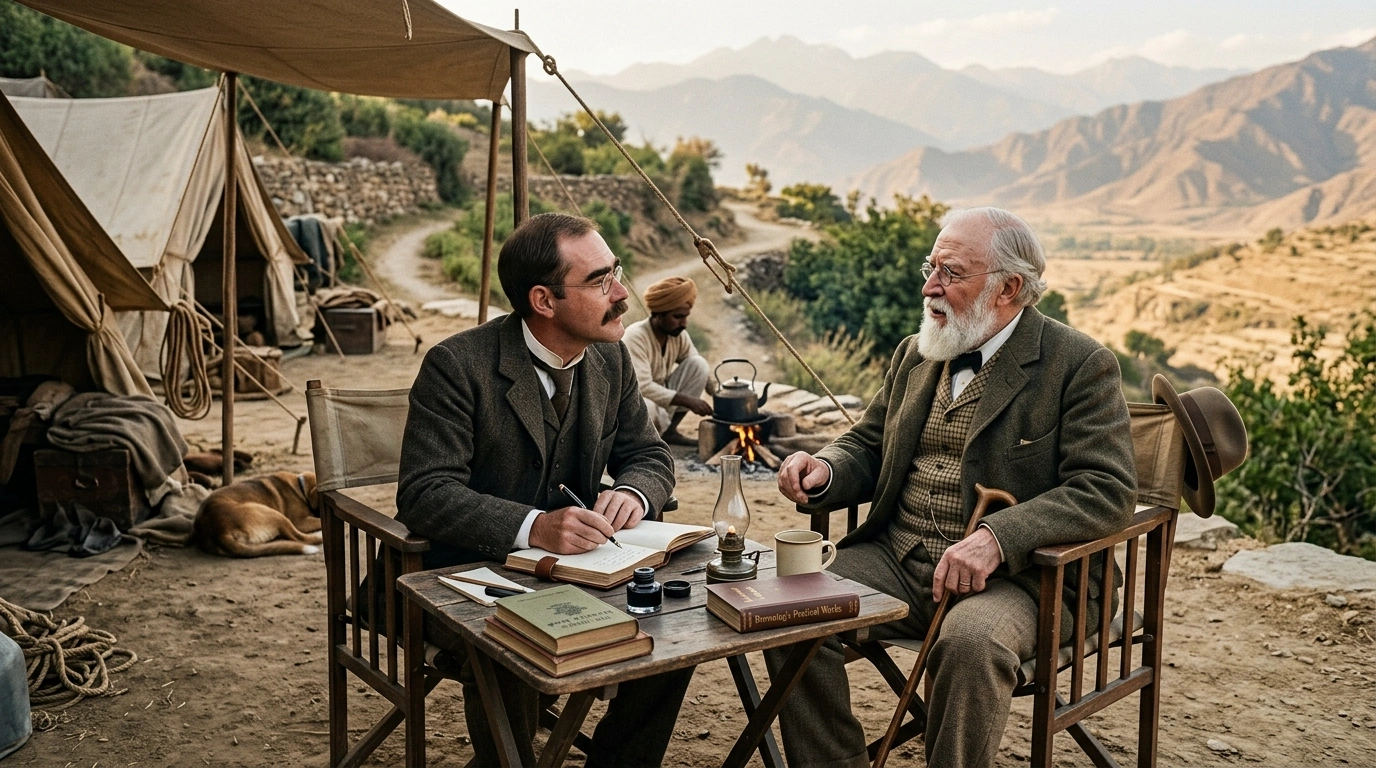
Kipling or Browning Comparison Table
| Feature | Rudyard Kipling | Robert Browning |
|---|---|---|
| Born | 1865 | 1812 |
| Died | 1936 | 1889 |
| Literary era | Victorian and early modern period | Victorian |
| Best known for | Poetry, stories, novels, children’s literature | Dramatic monologues and poetry |
| Famous work | The Jungle Book | “My Last Duchess” |
| Major strength | Narrative storytelling | Psychological characterization |
| Common themes | Empire, duty, courage, adventure | Psychology, morality, love, obsession |
| Style | Rhythmic and direct | Dramatic and complex |
| Audience | Children and adults | Primarily adult literary readers |
| Major setting influences | India, Britain, colonial world | Europe, historical and Renaissance settings |
Kipling’s Major Themes
Empire and Colonialism
One of the most important themes in Kipling’s work is the British Empire.
His writing reflects the attitudes of his historical period, including ideas about imperial responsibility and British power. Modern readers often examine these themes critically because some of his writing contains racial and colonial assumptions that are deeply connected to nineteenth-century imperialism.
Duty and Courage
Kipling frequently presents characters facing difficult circumstances where courage, discipline, loyalty, and responsibility matter.
His famous poem “If—” is a strong example of his interest in self-control, resilience, patience, and character.
Adventure and Identity
Kipling’s stories often place characters in unfamiliar environments and ask how they respond to danger, cultural differences, or difficult choices.
This is one reason his work remains popular in adventure and children’s literature.
Browning’s Major Themes
Psychology
Browning’s great strength is his interest in what happens inside the human mind.
His speakers can be intelligent, charming, frightening, arrogant, or deeply confused. Often, they reveal more about themselves than they intend.
Morality
Browning rarely gives readers a simple moral explanation. Instead, he allows characters to speak and encourages readers to judge their actions.
“My Last Duchess” is a classic example. The Duke appears controlled and sophisticated, but his own speech reveals disturbing attitudes toward power and relationships.
Love and Obsession
Browning frequently explores love in complicated forms.
His poems may portray passion, devotion, jealousy, possession, or psychological instability. This complexity makes his dramatic monologues especially useful for literary analysis.
Real-Life Conversation Examples
Conversation 1: Choosing a Poet
Alex: “Should I read Kipling or Browning first?”
Maya: “If you like stories and adventure, try Kipling.”
Alex: “And if I like psychology?”
Maya: “Then Browning is probably the better starting point.”
🎯 Lesson: Kipling is often more narrative-driven, while Browning is strongly focused on character psychology.
Conversation 2: “My Last Duchess”
Sam: “Why is ‘My Last Duchess’ so famous?”
Emma: “Because the Duke reveals his personality while talking about his former wife.”
Sam: “So the speaker tells on himself?”
Emma: “Exactly.”
🎯 Lesson: Browning uses dramatic monologue to reveal character indirectly.
Conversation 3: The Jungle Book
Ben: “Is Kipling mainly a poet?”
Lucy: “He’s a poet, but he’s also famous for novels and children’s stories.”
Ben: “Like The Jungle Book?”
Lucy: “Exactly.”
🎯 Lesson: Kipling’s literary reputation extends far beyond poetry.
Conversation 4: Historical Context
David: “Why do people discuss colonialism when studying Kipling?”
Lena: “Because the British Empire strongly shaped his life and writing.”
David: “So his historical context matters?”
Lena: “Very much.”
🎯 Lesson: Kipling’s work should be read alongside the imperial context in which it was produced.
When to Choose Kipling or Browning
The choice between Kipling or Browning depends largely on what you want from the reading experience.
Choose Kipling If You Enjoy:
- Adventure stories
- Vivid settings
- Strong rhythms
- Military themes
- Children’s literature
- British Indian history
- Straightforward storytelling
- Memorable inspirational poetry
Kipling is a particularly interesting choice if you want literature that combines storytelling with historical and cultural context.
Choose Browning If You Enjoy:
- Psychological characters
- Dramatic monologues
- Moral questions
- Unreliable narrators
- Complex relationships
- Historical settings
- Dense poetic language
- Character-driven literature
Browning is especially rewarding if you enjoy asking, “What does this character reveal about themselves without realizing it?”
Easy Memory Trick
Think:
Kipling = adventure and action.
Browning = psychology and dramatic voices.
This isn’t a complete description of either poet, but it provides a useful starting point.
Kipling or Browning: Who Was More Influential?
Both writers had enormous literary influence, but in different areas.
Kipling became one of the most widely read English-language writers of his generation. His children’s stories, adventure fiction, and poetry reached audiences around the world. He received the Nobel Prize in Literature in 1907.
Browning’s influence is particularly strong in poetry. His development of the dramatic monologue helped shape later approaches to poetic voice and characterization.
So the answer depends on what you mean by influence. Kipling had enormous popular and cultural reach, while Browning had a particularly important influence on the development of modern poetic characterization.