
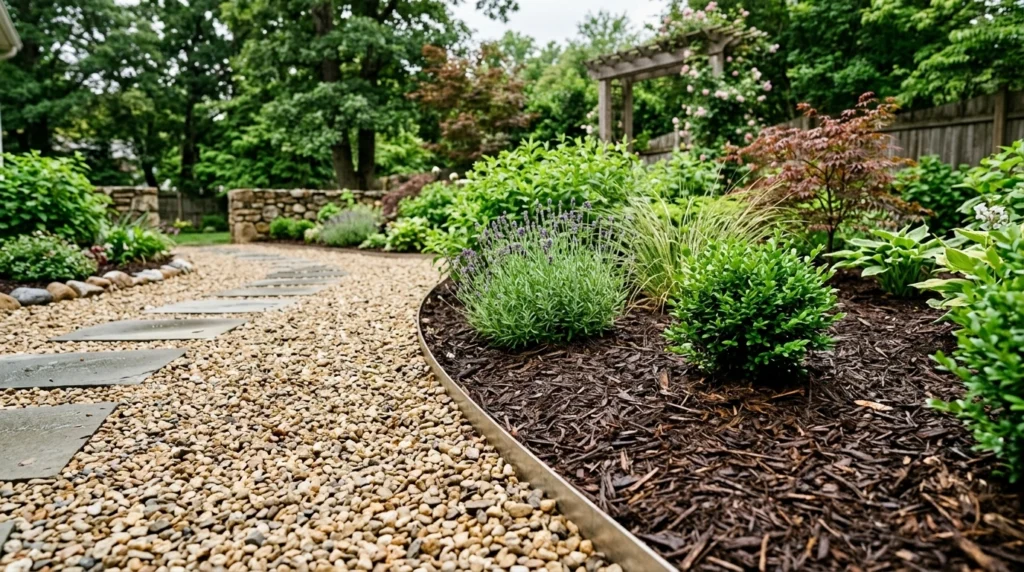
What Is Mulch?
Meaning and Usage
Mulch is a layer of material placed over the surface of soil. It can be made from organic materials such as:
- Wood chips
- Bark
- Shredded wood
- Straw
- Leaves
- Compost
There are also inorganic mulch materials, including certain landscape fabrics, stones, and other coverings.
For example:
- “We added mulch around the shrubs.”
- “The flower bed needs a fresh layer of mulch.”
- “Mulch helps protect the soil around the plants.”
How Mulch Works
Organic mulch gradually breaks down and becomes part of the soil’s organic matter. A suitable layer can help reduce evaporation, moderate soil temperature, and suppress some weed growth.
However, mulch is not permanent. As organic material decomposes, it generally needs to be replenished periodically.
Regional and Gardening Notes
Mulch is widely used in residential landscaping across the United States and other regions. The best type depends on local climate, plant requirements, moisture conditions, and the appearance you want.
A mulch that works well around one type of plant may not be ideal around another, so selecting the material matters.
What Is Gravel?
Meaning and Usage
Gravel is a collection of small pieces of rock or stone commonly used for landscaping, drainage, paths, driveways, and decorative ground cover.
Landscape gravel can come in different:
- Sizes
- Shapes
- Colors
- Rock types
- Textures
For example:
- “We used gravel around the garden beds.”
- “The gravel pathway drains well after rain.”
- “Decorative gravel gives the yard a clean look.”
How Gravel Works
Gravel does not decompose like organic mulch. It can provide a long-lasting ground-cover surface and allow water to move through spaces between the stones.
However, gravel can also shift, scatter, or become mixed with surrounding soil over time. Leaves and other organic debris can accumulate on its surface, which may eventually allow weeds to establish.
Regional Notes
Gravel is used in many climates, but it can be particularly useful in landscapes where drainage, durability, and reduced organic maintenance are priorities.
Its performance depends on the type of gravel, installation method, soil conditions, and intended use.
Key Differences Between Mulch or Gravel
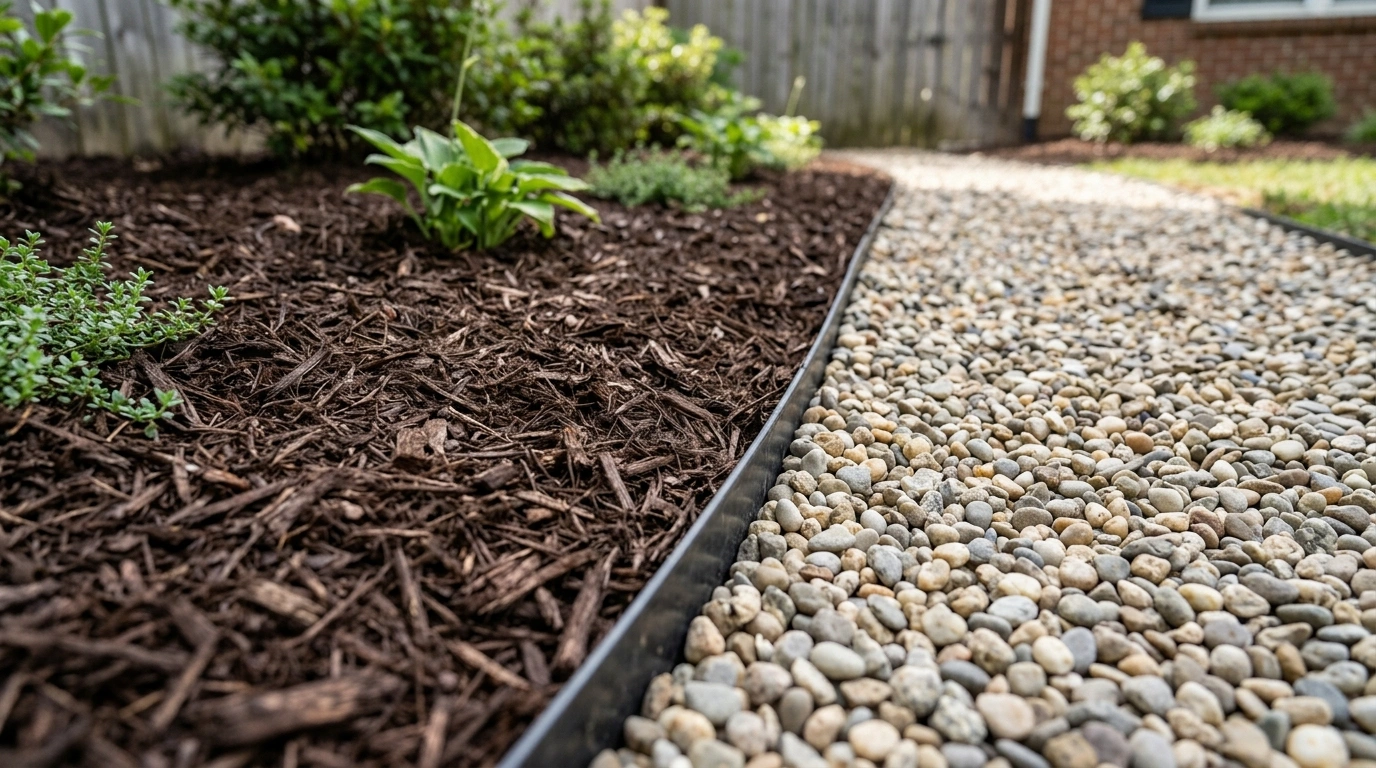
The biggest differences between mulch or gravel involve soil interaction, maintenance, durability, and plant suitability.
- Mulch is generally softer and more organic-looking.
- Gravel provides a harder, stone-based surface.
- Organic mulch gradually decomposes.
- Gravel generally lasts much longer.
- Mulch can help conserve soil moisture.
- Gravel can be useful where drainage is important.
- Mulch can moderate soil temperature.
- Dark-colored gravel may become hot in strong sunlight.
- Both can help reduce weed growth when installed properly.
- Neither completely eliminates weeds.
- Mulch generally needs periodic replacement.
- Gravel may require occasional raking, topping up, or repositioning.
- Mulch is often easier to work around plants.
- Gravel can be useful for pathways and decorative areas.
| Feature | Mulch | Gravel |
|---|---|---|
| Material | Often organic | Rock/mineral |
| Decomposes | Yes, if organic | No |
| Moisture conservation | Generally strong | Usually lower than mulch |
| Drainage | Depends on material and soil | Generally excellent through gaps |
| Soil temperature | Can moderate soil temperature | Can become hot depending on color and sun |
| Longevity | Usually shorter | Generally longer |
| Maintenance | Periodic replenishment | Occasional raking/replacement |
| Appearance | Natural and soft | Clean, decorative, structured |
| Plant beds | Excellent for many plants | Suitable for selected landscapes |
| Pathways | Limited depending on type | Very common |
| Weed suppression | Helpful | Helpful when properly installed |
| Soil improvement | Organic mulch can contribute | Does not add organic matter |
Real-Life Conversation Examples
Example 1: Flower Beds
Emma: “Should I use mulch or gravel around my flowers?”
Noah: “I’d consider the plants first. Mulch can be useful when moisture conservation and soil protection are priorities.”
Emma: “So gravel isn’t automatically better because it lasts longer?”
Noah: “Right.”
🎯 Lesson: Plant needs should come before durability when choosing garden ground cover.
Example 2: A Garden Path
Liam: “I want a simple pathway through the garden.”
Sara: “Gravel could be a practical choice, especially if you want a durable walking surface.”
🎯 Lesson: Gravel is often more suitable for pathways than loose organic mulch.
Example 3: Reducing Maintenance
Jack: “I don’t want to replace the ground cover every year.”
Mia: “Then gravel may require less frequent replacement, although it can still need maintenance.”
🎯 Lesson: Gravel generally lasts longer, but it is not completely maintenance-free.
Example 4: Hot Weather
Alex: “My garden gets intense afternoon sun.”
Ben: “Think about how the material will affect soil temperature and moisture before choosing.”
🎯 Lesson: Climate and plant requirements matter when selecting between mulch and gravel.
When to Use Mulch or Gravel
Choose Mulch for Plant Beds
Mulch is often a strong choice around trees, shrubs, and many garden plants when you want to:
- Conserve soil moisture
- Reduce evaporation
- Moderate soil temperature
- Suppress weeds
- Improve the appearance of planting beds
- Add organic matter when using suitable organic mulch
Organic mulch can be especially useful in gardens where maintaining healthy soil is a major goal.
Choose Gravel for Paths and Decorative Areas
Gravel can be a better option when you need:
- A durable ground cover
- A garden pathway
- A decorative rock garden
- Good surface drainage
- A lower-decomposition material
- A structured, modern landscape appearance
Gravel is also useful in landscapes where a stone-based aesthetic fits the overall design.
What About Cost?
The cost of mulch or gravel depends on the material, local prices, delivery fees, installation, and the size of the area.
Mulch may have a lower initial material cost in some locations, but organic mulch usually needs periodic replacement.
Gravel can cost more to install initially, particularly if substantial preparation or edging is required, but it generally does not need to be replaced as frequently.
For a fair comparison, calculate the total cost over several years, rather than looking only at the price per bag or cubic yard.
What About Weeds?
Both materials can help suppress weeds, but neither is a magic weed barrier.
A thick, properly installed mulch layer can reduce sunlight reaching weed seeds. Gravel can also discourage weeds when installed over an appropriately prepared surface.
However, weeds can eventually grow through gaps or develop in organic debris that accumulates on top of gravel.
Good site preparation and regular maintenance are important with either option.
What About Pets?
If pets frequently use the landscaped area, consider the size and shape of the gravel carefully. Some types of sharp or very large stone may be uncomfortable for animals to walk across.
Mulch can also be problematic if pets chew or ingest certain materials.
Always choose landscaping materials with the specific plants, animals, and uses in your yard in mind.
A Simple Memory Trick
Think:
Mulch = soil and plants.
Gravel = durability and drainage.
This isn’t an absolute rule, but it’s a useful starting point when deciding between mulch or gravel.