
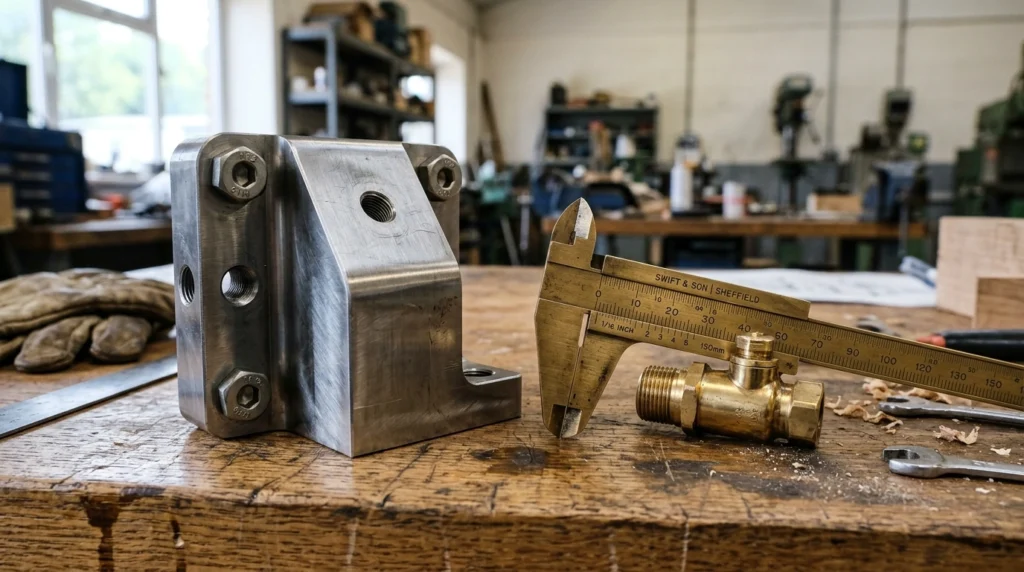
What Is Steel?
Steel is an alloy primarily made from iron and carbon. Other elements, such as chromium, nickel, manganese, or molybdenum, may be added to create different types of steel with specific properties.
Steel is one of the most widely used engineering materials in the world. It can be manufactured in many forms, including sheets, pipes, bars, beams, wires, plates, and specialized components.
What Is Steel Used For?
Steel is popular because it can provide an excellent combination of strength, durability, toughness, and affordability.
Common applications include:
- Buildings and bridges
- Cars and trucks
- Machinery
- Construction tools
- Kitchen appliances
- Pipes and tanks
- Structural beams
- Industrial equipment
- Screws, bolts, and fasteners
- Cutlery and surgical instruments
Not all steel behaves the same way. For example, stainless steel contains enough chromium to provide strong resistance to corrosion, while carbon steel generally offers high strength at a lower cost but may require protection against rust.
Steel Example Sentences
- The bridge uses steel beams to support its structure.
- This kitchen sink is made from stainless steel.
- The mechanic replaced the damaged steel component.
- Steel is commonly used in construction because of its strength.
A Short History of Steel
Humans have worked with iron for thousands of years, but modern steel production developed much later. The Bessemer process, introduced commercially in the 19th century, made it possible to produce large amounts of steel more efficiently.
That development helped transform construction, transportation, and manufacturing. Today, steel remains one of the fundamental materials of modern infrastructure.
What Is Brass?
Brass is an alloy primarily made from copper and zinc. The proportions of these elements can vary, which allows manufacturers to produce brass with different colors, strengths, and working characteristics.
Unlike ordinary steel, brass usually has a distinctive yellow-gold appearance. It is also relatively easy to machine and has good resistance to corrosion.
What Is Brass Used For?
Brass is especially useful when appearance, corrosion resistance, machinability, or electrical and acoustic properties matter.
Common applications include:
- Door handles
- Plumbing fittings
- Faucets
- Valves
- Musical instruments
- Decorative hardware
- Electrical components
- Locks
- Screws and fittings
- Certain automotive parts
Brass is particularly useful in plumbing because it can withstand exposure to water better than many ordinary steels.
Brass Example Sentences
- The old door has a beautiful brass handle.
- The plumber installed a brass fitting.
- Brass is commonly used to make trumpets and other instruments.
- The decorative hardware has a warm brass finish.
A Short History of Brass
Brass has been used for thousands of years. Ancient civilizations produced copper-zinc alloys long before modern metallurgy fully explained their composition.
Over time, brass became especially important for decorative objects, tools, weapons, coins, plumbing components, and musical instruments. Its golden appearance also made it popular for architectural and household details.
Steel vs Brass: Key Differences
When comparing steel vs brass, the biggest difference is their composition. Steel is primarily an iron-based alloy, while brass is primarily a copper-zinc alloy.
Here are the main differences:
- Composition: Steel is mainly iron and carbon; brass is mainly copper and zinc.
- Strength: Many steels are stronger than common brass alloys.
- Appearance: Steel typically has a silver-gray appearance, while brass usually has a yellow-gold appearance.
- Corrosion resistance: Brass generally resists corrosion well, while ordinary carbon steel can rust when exposed to moisture.
- Weight: Brass is generally denser than many common steels.
- Machinability: Brass is often easier to machine than many steels.
- Electrical conductivity: Brass generally conducts electricity better than ordinary steel, although copper is much better than brass.
- Cost: The price depends heavily on the grade and market, but brass can be more expensive than common carbon steel because it contains a significant amount of copper.
- Heat resistance: Steel is generally preferred for many high-temperature structural applications.
- Magnetism: Many steels are magnetic, while brass is generally nonmagnetic.
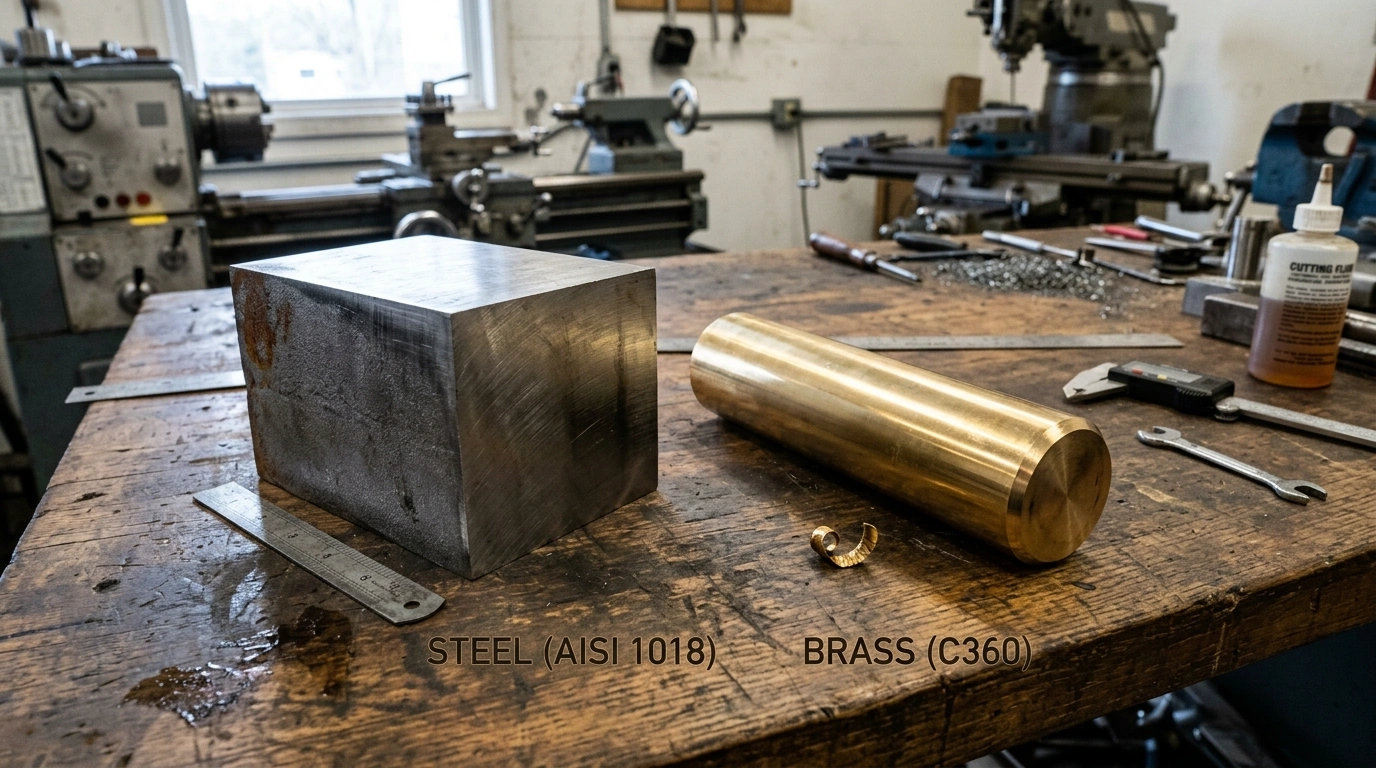
Steel vs Brass Comparison Table
| Feature | Steel | Brass |
|---|---|---|
| Main ingredients | Iron + carbon | Copper + zinc |
| Typical color | Silver-gray | Yellow-gold |
| Strength | Generally higher | Generally lower |
| Density | Generally lower than brass | Generally higher |
| Corrosion resistance | Varies; carbon steel can rust | Generally good |
| Machinability | Varies by grade | Generally excellent |
| Electrical conductivity | Relatively low | Better than steel |
| Magnetic properties | Many types are magnetic | Generally nonmagnetic |
| Appearance | Industrial and modern | Warm and decorative |
| Common uses | Construction, vehicles, machinery | Plumbing, hardware, instruments |
| Heat applications | Excellent for many applications | More limited |
| Recycling value | High | Often particularly valuable because of copper content |
Real-Life Conversation Examples
Sometimes the easiest way to understand steel vs brass is to see how the distinction works in everyday situations.
Dialogue 1: Choosing a Door Handle
Sam: I want a metal door handle that looks warm and traditional.
Alex: Then brass might be a better choice than steel.
Sam: Why?
Alex: Brass has that classic golden appearance and works well for decorative hardware.
🎯 Lesson: Choose brass when appearance and decorative appeal are important.
Dialogue 2: Building a Structure
Nora: Could we use brass beams for this building?
Mike: That wouldn’t usually be the practical choice. Structural steel is much better suited to that job.
Nora: Because it’s stronger?
Mike: Exactly. Steel is widely used for structural applications because of its strength and versatility.
🎯 Lesson: Steel is generally the better choice for structural strength.
Dialogue 3: Plumbing
Jake: Should I use ordinary steel for this plumbing fitting?
Chris: Brass would often be a better option, depending on the application.
Jake: Because it handles water well?
Chris: Yes. Brass is commonly used for plumbing fittings because of its corrosion resistance and machinability.
🎯 Lesson: Brass is commonly chosen for plumbing fittings and valves.
Dialogue 4: Musical Instruments
Ella: Why are some trumpets made from brass?
David: Brass is easy to shape and has useful acoustic properties.
Ella: So steel wouldn’t be the obvious choice?
David: Not for a traditional trumpet.
🎯 Lesson: Brass has properties that make it especially useful for many musical instruments.
When to Use Steel vs Brass
The best choice depends on the job rather than simply asking which metal is “better.”
Choose Steel When Strength Is the Priority
Steel is usually the stronger candidate when you need a material for:
- Structural supports
- Heavy machinery
- Vehicles
- Construction equipment
- High-load components
- Industrial applications
Different grades of steel can be engineered for specific levels of hardness, toughness, strength, and corrosion resistance.
Choose Brass When Corrosion Resistance Matters
Brass is often useful for components exposed to water or humid environments, especially:
- Faucets
- Valves
- Plumbing fittings
- Marine-related hardware
- Decorative fixtures
However, the exact brass alloy and environment matter. Brass is not automatically immune to corrosion.
Choose Brass for Appearance
If you want a warm, traditional, or decorative appearance, brass has a major advantage.
Its golden color makes it popular for:
- Cabinet hardware
- Door handles
- Light fixtures
- Decorative trim
- Furniture hardware
Steel can certainly look attractive, particularly stainless steel, but it gives a very different visual impression.
Choose Brass for Easy Machining
Brass is known for being relatively easy to machine. This makes it useful for producing precise components such as fittings, connectors, screws, valves, and small mechanical parts.
Some steel grades are also highly machinable, so the exact alloy should always be considered.
What About US vs UK Usage?
There is no major US-versus-UK spelling difference for steel or brass. Both words are spelled the same in American and British English.
The difference is about material selection, not regional vocabulary.
You can say:
- Steel pipe in American English
- Steel pipe in British English
- Brass fitting in American English
- Brass fitting in British English
The terminology remains essentially the same.
A Simple Memory Trick
Need a quick way to remember steel vs brass?
Think:
Steel = Strength
Brass = Beauty + Brass fittings
Steel is strongly associated with construction, machinery, vehicles, and structural applications.
Brass is easy to associate with golden-colored hardware, plumbing fittings, and musical instruments.
Another useful shortcut is:
Steel for strength, brass for fittings and finish.
This isn’t a rule for every engineering situation, but it’s a helpful starting point for everyday decisions.
Which Is More Durable: Steel or Brass?
There is no single answer because durability depends on the environment and the specific alloy.
Steel can offer exceptional strength and toughness, making it ideal for demanding mechanical and structural applications. However, ordinary carbon steel can corrode when exposed to moisture and oxygen.
Brass generally has good corrosion resistance and can remain useful for many years in suitable environments. However, brass is usually softer than structural steels, so it may not withstand the same loads or impacts.
In other words, steel often wins for mechanical strength, while brass can have an advantage in certain corrosive or decorative applications.
Which Is More Expensive: Steel or Brass?
The answer depends on the grade, quantity, manufacturing process, and current metal prices.
Common carbon steel is often relatively economical because steel is produced on a massive scale. Brass contains copper, which can make it more expensive than basic steel.
However, comparing the raw price alone can be misleading. A material that costs more per kilogram may still be the better choice if it lasts longer, is easier to machine, or reduces maintenance costs.
For a real project, compare the total cost, including manufacturing, installation, maintenance, and expected service life.