
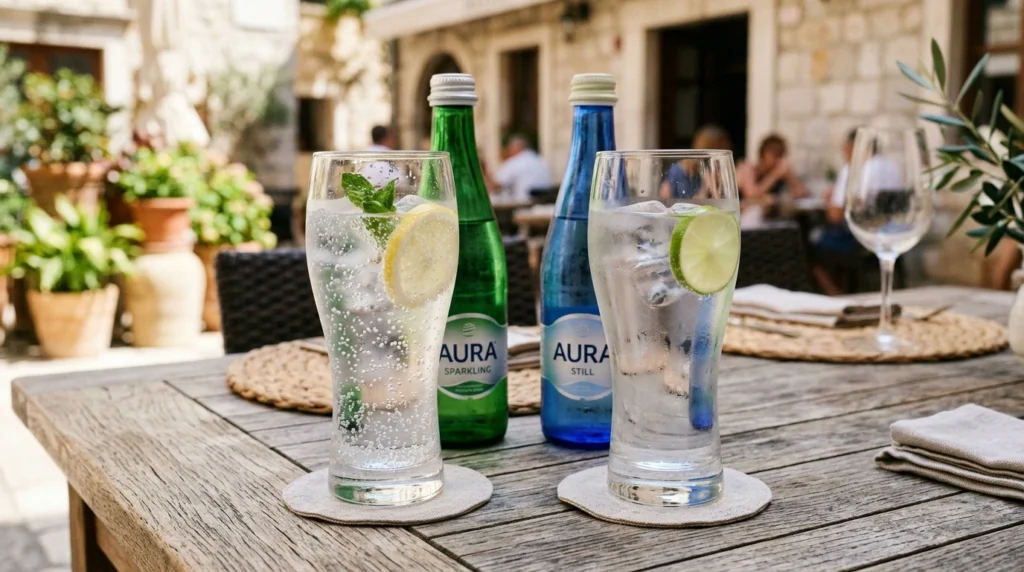
What Is Still Water?
Still water is water without carbonation or noticeable fizz. It is the traditional form of drinking water most people consume every day.
Meaning and Usage
The word still means that the water is not sparkling or carbonated. It can describe tap water, filtered water, spring water, mineral water, or bottled water, depending on the source and processing.
When someone asks whether you want still or sparkling, choosing still means you want ordinary non-carbonated water.
What Does Still Water Taste Like?
Still water generally has a smooth and neutral texture because there are no bubbles. Its exact taste can vary depending on its mineral content and source.
For example, mineral-rich water may have a slightly distinctive taste, while purified water can taste very clean and neutral.
Example Sentences
- “I’ll have still water, please.”
- “She prefers still water with dinner.”
- “The hotel provides both still and sparkling water.”
- “Still water doesn’t have carbonation.”
Common Uses
Still water is commonly used for:
- Everyday hydration
- Cooking
- Making tea and coffee
- Taking medications
- Serving with meals
- Drinking during exercise
It is also the easiest choice when you simply want water without bubbles.
Regional and Restaurant Usage
The term still water is especially common in restaurants and hospitality settings. In many English-speaking countries, staff may ask customers whether they prefer still or sparkling water.
In casual conversation, people may simply say water when they mean still water.
What Is Sparkling Water?
Sparkling water is water containing dissolved carbon dioxide, which creates bubbles and a fizzy sensation.
Meaning and Usage
Sparkling water can be naturally carbonated from a mineral spring or artificially carbonated by adding carbon dioxide.
The term can cover several types of carbonated water, although product labels may use more specific names such as carbonated water, seltzer, or sparkling mineral water.
What Does Sparkling Water Taste Like?
Sparkling water has a bubbly, slightly acidic taste because dissolved carbon dioxide forms carbonic acid in the water.
The carbonation creates a tingling sensation on the tongue, which is why some people find sparkling water more refreshing than still water.
Some sparkling waters also contain naturally occurring or added minerals, which can affect their flavor.
Example Sentences
- “I’ll have sparkling water with lemon.”
- “He prefers sparkling water to still water.”
- “The sparkling water has a strong fizz.”
- “Sparkling water can be naturally or artificially carbonated.”
Common Uses
Sparkling water is often enjoyed:
- With meals
- As a refreshing non-alcoholic drink
- With lemon or lime
- As a mixer in beverages
- As an alternative to sugary soft drinks
It can also add texture to mocktails and other drinks.
Still or Sparkling: Key Differences
The main difference between still or sparkling water is carbonation.
- Still water has no carbonation.
- Sparkling water contains dissolved carbon dioxide.
- Still water has a smooth texture.
- Sparkling water has bubbles and a fizzy mouthfeel.
- Sparkling water is generally more acidic than still water because of dissolved carbon dioxide.
- Still water is usually preferred when a neutral taste is desired.
- Sparkling water can feel more refreshing or satisfying to people who enjoy carbonation.
- Both can contribute to hydration.
- Sparkling water may be naturally or artificially carbonated.
- Still water is generally more versatile for cooking and drinking medications.
Still or Sparkling Comparison Table
| Feature | Still Water | Sparkling Water |
|---|---|---|
| Carbonation | None | Present |
| Bubbles | No | Yes |
| Texture | Smooth | Fizzy |
| Taste | Usually neutral | Crisp, sometimes slightly acidic |
| Hydration | Yes | Yes |
| Common use | Everyday drinking | Meals and refreshing drinks |
| Naturally occurring? | Yes | Sometimes |
| Artificially carbonated? | No | Often |
| Suitable for cooking | Excellent | Limited |
| Restaurant wording | “Still” | “Sparkling” |
Still or Sparkling for Hydration
Both still or sparkling water can help meet your daily fluid needs.
The presence of carbonation does not automatically make sparkling water a poor source of hydration. For many people, sparkling water can be a useful alternative when they want something more interesting than plain water.
Which One Is Better?
There is no universal winner.
If you enjoy bubbles and sparkling water encourages you to drink more water, it can be a practical choice.
If carbonation makes you feel uncomfortable or you simply prefer a smooth drink, still water may be better for you.
The most important factor is choosing a beverage that fits your needs and helps you maintain adequate fluid intake.
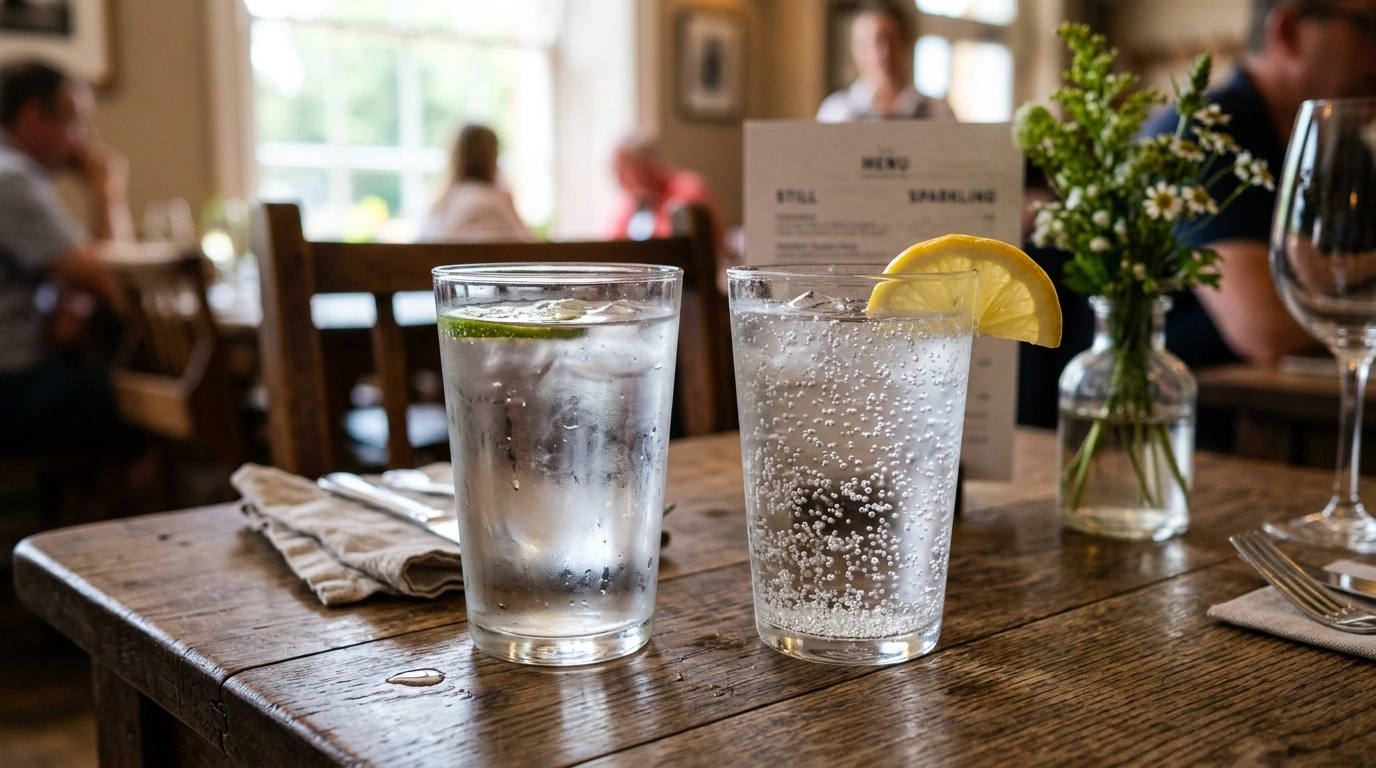
Still or Sparkling for Digestion
This is another area where people often wonder whether still or sparkling is better.
Some people find carbonated water comfortable and refreshing after meals, while others experience bloating, belching, or abdominal discomfort after drinking fizzy beverages.
Carbonation can increase the amount of gas in the digestive tract, so people who are sensitive to fizzy drinks may prefer still water.
There is no need to assume that sparkling water is automatically bad for digestion. Individual tolerance matters.
A Simple Rule
If carbonation makes you feel bloated, choose still water.
If you enjoy sparkling water and it does not cause discomfort, there is generally no reason to avoid it solely because it is carbonated.
Still or Sparkling With Meals
Restaurants often offer both options because they create different dining experiences.
Still Water
Still water works well when you want:
- A neutral drink
- Something that does not compete with food flavors
- A simple everyday beverage
Sparkling Water
Sparkling water can work well when you want:
- A more refreshing sensation
- A bubbly drink without sugar
- Something that feels more special with a meal
- A crisp accompaniment to food
Sparkling water is also commonly served with lemon, lime, or other garnishes.
Still or Sparkling and Dental Health
Carbonated water is generally more acidic than still water because carbon dioxide dissolves in water and forms carbonic acid.
However, plain sparkling water without added sugar is very different from sugary carbonated soft drinks. Sugary and acidic beverages can be particularly problematic for teeth because they combine acidity with fermentable sugars.
If you regularly drink flavored sparkling water, check the ingredient label. Added sugars and acids can change its impact on dental health.
Practical Tip
If you are concerned about your teeth, plain sparkling water is generally a better choice than sugary fizzy drinks. Drinking water normally rather than constantly sipping acidic beverages throughout the day can also reduce prolonged acid exposure.
Still or Sparkling: Which One Is Better for Everyday Use?
For everyday use, the answer depends largely on preference.
Choose Still Water If:
- You dislike carbonation.
- You want a neutral taste.
- You are taking medication.
- You need water for cooking.
- Fizzy drinks make you uncomfortable.
- You want the simplest form of drinking water.
Choose Sparkling Water If:
- You enjoy carbonation.
- You want a fizzy alternative to soda.
- You like bubbles with meals.
- You prefer a more distinctive drinking experience.
- You want a non-sugary beverage with more texture.
Easy Memory Trick
Remember:
Still = smooth.
Sparkling = bubbles.
If the water is calm and non-fizzy, it is still.
If it bubbles and tingles, it is sparkling.
Different Types of Sparkling Water
Not every carbonated water product is identical.
Sparkling Mineral Water
This comes from a mineral-water source and contains naturally occurring minerals. Some varieties are naturally carbonated, while others may have carbonation added or restored.
Seltzer
Seltzer is generally plain carbonated water without the mineral profile associated with sparkling mineral water.
Club Soda
Club soda is carbonated water that commonly contains added mineral salts. Its flavor can therefore differ from ordinary sparkling water.
Tonic Water
Tonic water is different again. It is a carbonated beverage that traditionally contains quinine and is often sweetened. It should not be treated as interchangeable with plain sparkling water.
Real-Life Conversation Examples
Conversation 1: At a Restaurant
Waiter: “Would you like still or sparkling water?”
Customer: “Still, please.”
Waiter: “Of course.”
🎯 Lesson: Still water means non-carbonated water.
Conversation 2: Choosing a Fizzy Drink
Alex: “I want something fizzy, but I don’t want soda.”
Maya: “Try sparkling water.”
Alex: “So it has bubbles but no need for sugar?”
Maya: “Exactly.”
🎯 Lesson: Plain sparkling water can provide carbonation without being a sugary soft drink.
Conversation 3: After Dinner
Sam: “Sparkling water makes me feel bloated.”
Ella: “Then still water might be more comfortable for you.”
🎯 Lesson: Personal tolerance can determine whether still or sparkling water feels better.
Conversation 4: Buying Bottled Water
Ben: “Why does this bottle say ‘still’?”
Lucy: “It means the water isn’t carbonated.”
Ben: “So the sparkling version would have bubbles?”
Lucy: “Right.”
🎯 Lesson: Still and sparkling describe whether the water contains carbonation.
When to Use Still or Sparkling
The choice between still or sparkling is mostly about preference, situation, and tolerance.
Use “Still” When:
You want to describe water that is not carbonated.
“Could I have still water?”
Use “Sparkling” When:
You want to describe water that contains carbonation.
“We ordered sparkling water with dinner.”
The terms are especially useful in restaurants, hotels, travel situations, and when shopping for bottled water.
US vs. UK Notes
Still water and sparkling water are widely understood in both American and British English.
In the United States, you may also hear carbonated water, seltzer, or club soda, depending on the product.
In the UK and many European countries, still or sparkling is a very familiar restaurant distinction.
The exact meaning of related terms can vary by product and region, so labels are useful when you want to know precisely what has been added.