
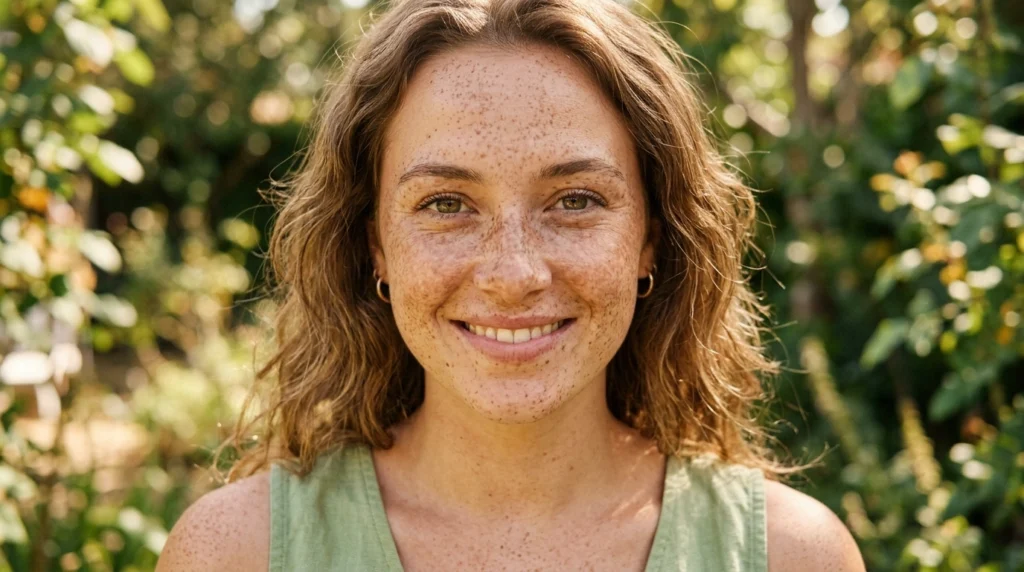
What Are Sunspots?
Sunspots are flat, usually harmless areas of increased pigmentation that develop on skin with significant cumulative sun exposure. They are commonly called solar lentigines, and you may also hear terms such as age spots or liver spots.
Despite the nickname “age spots,” they aren’t caused simply by getting older. Long-term UV exposure is an important factor.
What Do Sunspots Look Like?
Sunspots are commonly:
- Flat rather than raised
- Tan, brown, or darker brown
- Round, oval, or irregularly shaped
- Larger than typical freckles
- Fairly well defined
- Persistent throughout the year
They often appear on areas that receive repeated sun exposure, including:
- Face
- Hands
- Forearms
- Shoulders
- Upper chest
Why Do Sunspots Develop?
Repeated UV exposure can stimulate changes in pigment-producing cells and contribute to localized areas of increased pigmentation.
This is why sunspots tend to become more common with cumulative sun exposure.
A person who has spent many years outdoors without consistent sun protection may develop more solar lentigines than someone with less cumulative UV exposure.
Example of a Sunspot
Imagine someone in their 50s notices several flat brown spots on the backs of their hands. The spots remain visible throughout the year and don’t fade much during winter.
That pattern can be consistent with sunspots, although only a clinician can determine what a particular skin lesion actually is.
A Short History of the Term
The medical term solar lentigo comes from Latin terminology associated with sun-related pigmentation. The plural is solar lentigines.
The everyday terms sunspot and age spot are commonly used to describe these persistent areas of pigmentation.
What Are Freckles?
Freckles are small, flat areas of increased pigmentation that are often influenced by genetics and sun exposure.
A common type is called an ephelis. Freckles are especially common in people with certain inherited pigmentation traits and may become more visible after spending time in the sun.
What Do Freckles Look Like?
Freckles are typically:
- Small
- Flat
- Light brown to darker brown
- Scattered across sun-exposed skin
- More noticeable after sun exposure
- Often less visible during periods of limited sun exposure
They commonly appear on:
- Nose
- Cheeks
- Face
- Shoulders
- Arms
Some people have only a few freckles, while others have many.
Why Do Freckles Develop?
Freckles are strongly influenced by genetics. A well-known example involves variants in the MC1R gene, which can influence pigmentation and are associated with freckling.
UV exposure can make freckles darker and more noticeable.
Unlike a sunspot, a freckle isn’t necessarily a sign that a particular patch of skin has accumulated years of sun damage. Freckling can occur in children and young adults as well.
Example of Freckles
Consider someone who develops numerous tiny brown spots across their nose and cheeks during summer. During winter, those spots become much lighter.
That pattern is typical of freckles, although skin changes should still be evaluated if they appear unusual.
A Short History of the Term
The word freckle has Old English and Germanic roots and has been used for centuries to describe small spots or marks on the skin.
The medical term ephelis refers to a common type of freckle that becomes more apparent with sun exposure.
Key Differences Between Sunspots or Freckles
When comparing sunspots or freckles, several visual clues can help distinguish their typical patterns.
- Size: Freckles are usually smaller; sunspots tend to be larger.
- Age: Freckles can appear early in life; sunspots are more commonly seen after years of cumulative UV exposure.
- Genetics: Freckles have a strong genetic component.
- Sun exposure: Both can become more noticeable with sunlight.
- Persistence: Freckles may fade during periods of lower sun exposure; sunspots typically persist.
- Color: Both can range from light brown to darker brown.
- Location: Both commonly occur on sun-exposed areas.
- Number: Freckles often appear in clusters or many small spots.
- Medical terminology: Sunspots are commonly called solar lentigines; freckles are often called ephelides.
- Diagnosis: Appearance alone cannot reliably identify every pigmented skin lesion.
Sunspots or Freckles Comparison Table
| Feature | Sunspots | Freckles |
|---|---|---|
| Medical term | Solar lentigines | Ephelides |
| Typical size | Usually larger | Usually smaller |
| Main influences | Cumulative UV exposure and age | Genetics and UV exposure |
| Common age of appearance | More common with increasing age | Can appear in childhood |
| Color | Tan to brown | Light brown to brown |
| Usually flat? | Yes | Yes |
| Seasonal fading | Usually minimal | Often more noticeable |
| Common locations | Hands, face, arms, shoulders | Face, nose, shoulders, arms |
| Usually appear in clusters? | Can | Often |
| Related to sun exposure? | Strongly | Yes |
| Automatically dangerous? | No | No |
Real-Life Conversation Examples
Dialogue 1: The Summer Spots
Sarah: “These tiny spots on my nose get darker every summer. Are they sunspots?”
Emma: “They could be freckles. Freckles often become more noticeable after sun exposure.”
Sarah: “So they aren’t necessarily sunspots?”
Emma: “Right. Size, history, and appearance all matter.”
🎯 Lesson: Small spots that become more noticeable with sunlight are often consistent with freckles.
Dialogue 2: The Hand Spot
Mike: “I’ve got a flat brown spot on the back of my hand that never really fades.”
James: “Sunspots can have that pattern.”
Mike: “So it’s definitely a sunspot?”
James: “Not necessarily. A clinician should evaluate any spot you’re concerned about.”
🎯 Lesson: Persistent pigmentation can be consistent with a sunspot, but appearance alone isn’t a diagnosis.
Dialogue 3: The Age Question
Nina: “Can children get sunspots?”
Alex: “Freckles can definitely appear in childhood. Solar lentigines are more associated with cumulative sun exposure and increasing age.”
Nina: “That helps.”
🎯 Lesson: Age and history can provide useful clues when distinguishing freckles from sunspots.
Dialogue 4: The Changing Spot
Tom: “This brown spot has changed shape recently.”
Lisa: “You should have it checked rather than assuming it’s just a freckle.”
Tom: “Even if I’ve always had freckles?”
Lisa: “Yes. A changing skin lesion deserves professional attention.”
🎯 Lesson: Changes in a pigmented spot should be evaluated, regardless of whether you normally have freckles.
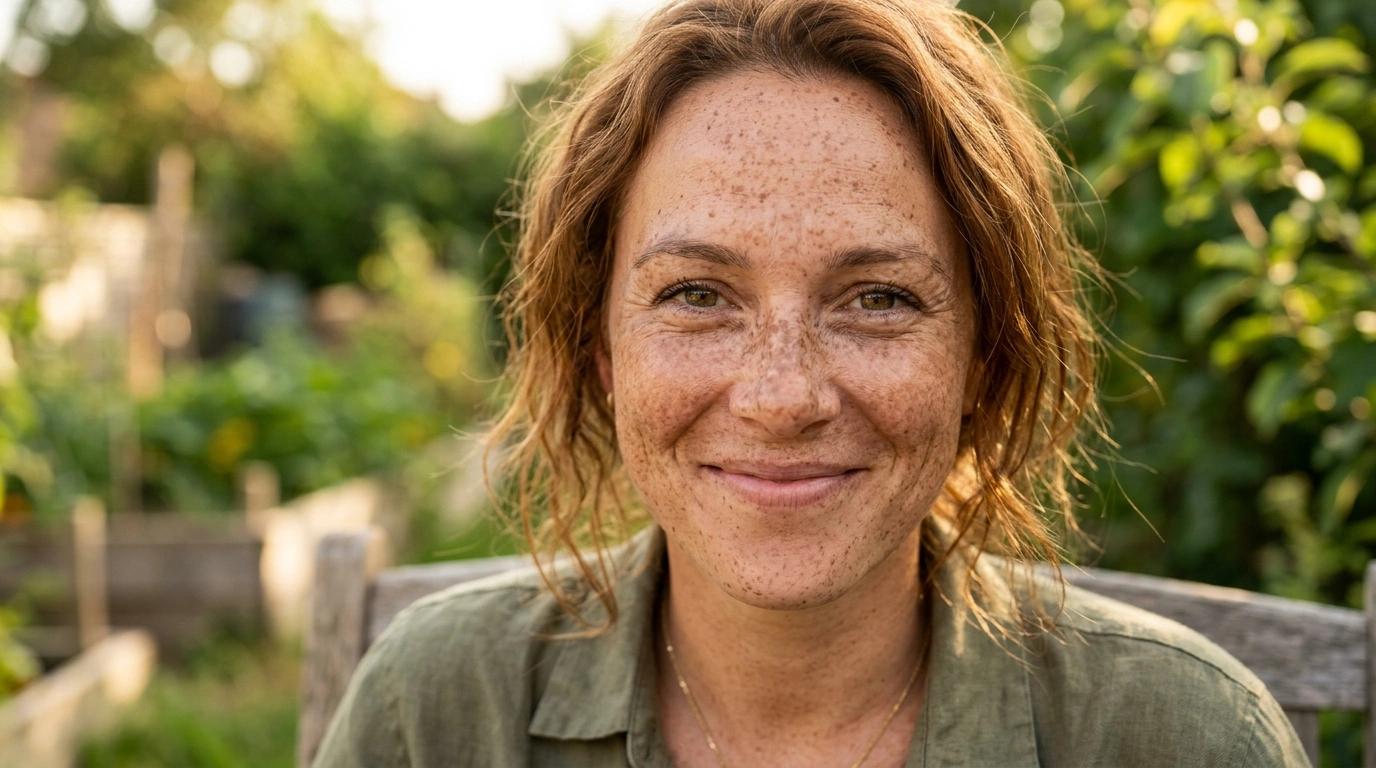
When to Use Sunspots or Freckles
Knowing the typical difference between sunspots or freckles can help you describe what you’re seeing, but it shouldn’t replace a medical examination when a lesion looks unusual.
Think “Freckles” When Spots Are Small and Seasonal
Freckles are more likely when spots:
- Are very small
- Appear in groups
- Have been present since childhood or youth
- Become darker in summer
- Become less noticeable with reduced sun exposure
- Occur in someone with a family tendency toward freckling
Think “Sunspots” When Spots Are Larger and Persistent
Sunspots may be more likely when spots:
- Are flat and clearly defined
- Are larger than typical freckles
- Appear after years of sun exposure
- Remain visible throughout the year
- Occur on the hands, face, shoulders, or forearms
- Become more numerous over time
These are general patterns, not diagnostic rules.
A Simple Memory Trick
Use this:
Freckles = small, often seasonal.
Sunspots = larger, usually persistent.
Both can become darker after sun exposure, so don’t use sunlight response alone to identify a spot.
What About Sun Protection?
Whether you have freckles, sunspots, or neither, protecting your skin from excessive UV exposure is important.
Helpful measures include:
- Using broad-spectrum sunscreen
- Wearing protective clothing
- Seeking shade
- Wearing a wide-brimmed hat
- Avoiding unnecessary intense sun exposure
Sun protection can help reduce additional UV-related pigmentation and lower the risk of UV-related skin damage.
When Should You Get a Spot Checked?
Most freckles and solar lentigines are benign. However, you shouldn’t automatically assume every brown mark is harmless.
Have a healthcare professional assess a spot if it is:
- New and unusual
- Changing in size, shape, or color
- Asymmetrical
- Developing an irregular border
- Very different from your other spots
- Bleeding
- Crusting
- Persistently itching or painful
- Rapidly changing
A useful rule is “different or changing deserves attention.”
US vs UK Notes
The terms sunspots, age spots, and liver spots are commonly used in everyday English. In medical settings, solar lentigo or solar lentigines may be used.
In both American and British English, freckles is the standard everyday term.