
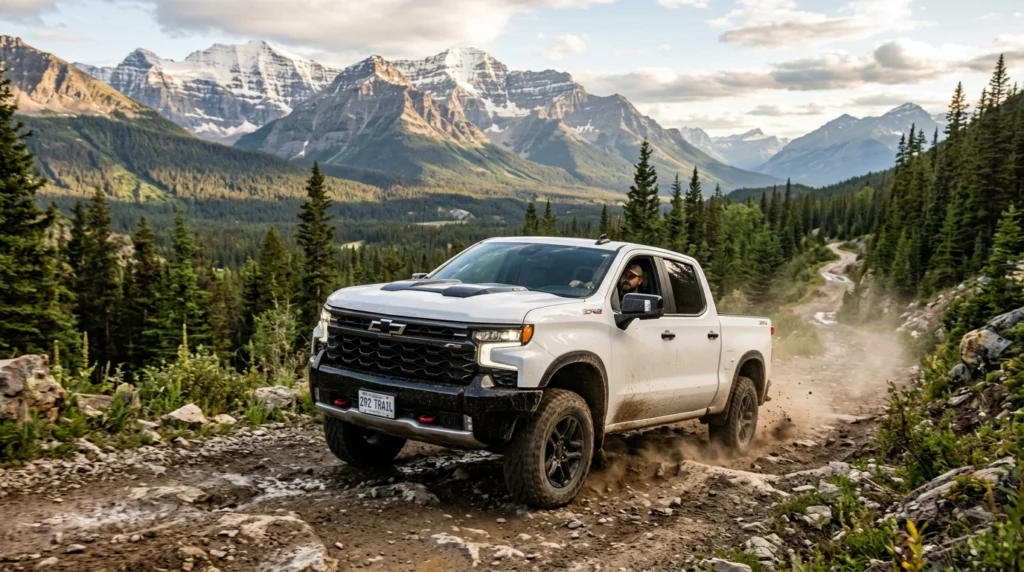
What Is the Tundra?
Meaning and Usage
The Toyota Tundra is a full-size pickup truck designed for personal transportation, hauling, towing, work, and recreational use. It competes directly with other large pickups in the North American market.
The current generation uses a twin-turbocharged V6-based powertrain family, with hybrid technology available in certain configurations. Toyota also offers different cab, bed, drivetrain, and trim combinations.
For example:
- “The Tundra is a comfortable truck for daily driving.”
- “We use our Tundra for towing.”
- “The Tundra has enough room for the whole family.”
Design and Usage
The Tundra has a traditional full-size pickup shape with a large grille, substantial body, and multiple bed configurations.
Its available configurations can make it suitable for:
- Daily commuting
- Construction and work
- Recreational towing
- Camping
- Off-road driving
- Family transportation
The exact capabilities vary according to the engine, drivetrain, cab, bed, and trim selected.
A Short History Note
Toyota introduced the Tundra for the North American market in the late 1990s. It was Toyota’s first full-size pickup designed specifically to compete with established American full-size trucks.
Over several generations, the Tundra grew in size, capability, technology, and configuration variety.
What Is the Silverado?
Meaning and Usage
The Chevrolet Silverado 1500 is a full-size light-duty pickup truck produced by Chevrolet. It is part of one of the longest-running pickup traditions in the American automotive market.
The Silverado 1500 is offered with multiple powertrains, cab styles, bed lengths, and trim levels. Depending on configuration, it can serve as a basic work truck, family vehicle, towing machine, or off-road pickup.
For example:
- “The Silverado has a large cargo bed.”
- “They bought a Silverado for their business.”
- “The Silverado is comfortable enough for long road trips.”
Design and Configuration
One of the Silverado’s major strengths is its wide range of configurations. Buyers can select different cab and bed combinations and choose among multiple powertrain options depending on the model year and market.
The Silverado lineup also includes specialized trims designed around different priorities, including work, luxury, off-road driving, and towing.
Regional Notes
The Silverado is especially prominent in the United States and Canada, although Chevrolet sells pickup trucks in numerous international markets.
Exact specifications can vary considerably between countries, so comparisons should always use the local model and model year.
Key Differences Between Tundra or Silverado
The most important differences between Tundra or Silverado involve powertrain choices, configurations, technology, and the way each truck is positioned.
- The Tundra is Toyota’s full-size pickup.
- The Silverado 1500 is Chevrolet’s light-duty full-size pickup.
- The Tundra uses a turbocharged V6-based powertrain family in its current generation.
- The Tundra offers a hybrid powertrain in selected configurations.
- Silverado buyers can choose from several powertrain types depending on model year.
- Both trucks offer four-wheel-drive configurations.
- Both are available in multiple cab and bed combinations.
- Exact towing and payload figures depend heavily on configuration.
- Both offer work-oriented and upscale trims.
- The Silverado generally offers a particularly broad range of configurations.
- The Tundra emphasizes Toyota’s hybrid technology in selected versions.
| Feature | Toyota Tundra | Chevrolet Silverado 1500 |
|---|---|---|
| Vehicle type | Full-size pickup | Full-size light-duty pickup |
| Manufacturer | Toyota | Chevrolet |
| Current powertrain approach | Turbocharged V6 family, with hybrid option | Multiple engine options depending on model year |
| 4WD availability | Yes | Yes |
| Cab choices | Multiple configurations | Multiple configurations |
| Bed choices | Multiple configurations | Multiple configurations |
| Work-focused trims | Yes | Yes |
| Off-road options | Yes | Yes |
| Luxury-oriented options | Yes | Yes |
| Hybrid availability | Yes, selected versions | Varies by model year |
| Best comparison method | Match exact configuration | Match exact configuration |
Real-Life Conversation Examples
Example 1: Daily Driving
Emma: “I’m thinking about a Tundra or Silverado for everyday driving.”
Noah: “Then I’d compare ride comfort, fuel economy, parking dimensions, cabin features, and the specific engine.”
Emma: “So towing capacity isn’t the only thing to consider?”
Noah: “Exactly.”
🎯 Lesson: Daily drivers should compare comfort, efficiency, size, and equipment rather than focusing only on maximum capability.
Example 2: Towing
Liam: “I need a truck for towing a trailer.”
Sara: “Then the exact configuration matters a lot. Engine, cab, bed, drivetrain, and equipment can all affect the rating.”
🎯 Lesson: Never assume every Tundra or Silverado has the same towing capacity.
Example 3: Work Use
Jack: “I need a truck for my business.”
Mia: “Compare payload, bed dimensions, available work trims, and the equipment you actually need.”
🎯 Lesson: For work use, payload and configuration can matter as much as engine power.
Example 4: Family Use
Alex: “We want a pickup that can also carry the family.”
Ben: “Then compare the rear-seat space, cabin storage, safety features, ride quality, and available crew-cab configurations.”
🎯 Lesson: A family truck should be evaluated as both a pickup and a passenger vehicle.
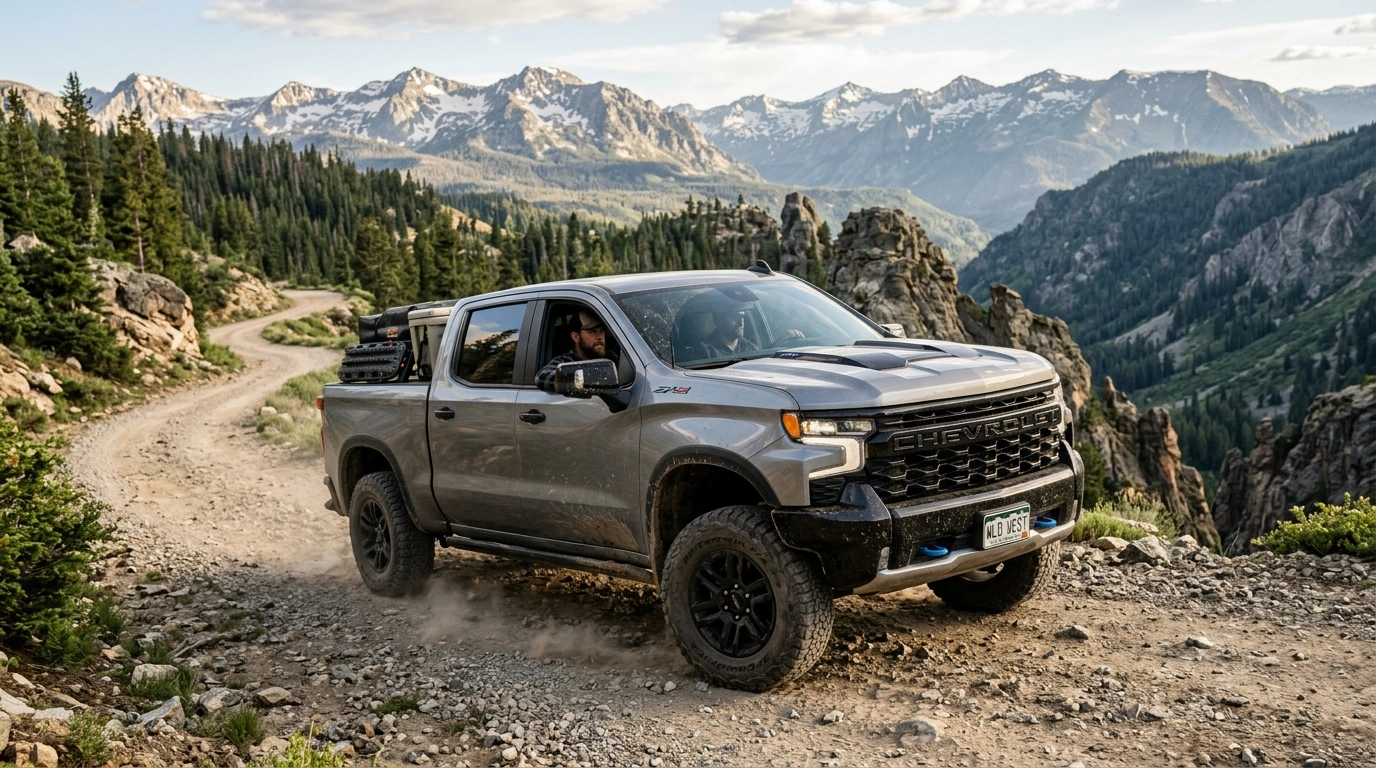
When to Use Tundra or Silverado
Choose the Tundra If You Prefer Toyota’s Approach
The Tundra may appeal to drivers who want:
- Toyota’s full-size pickup design
- An available hybrid powertrain
- A modern turbocharged powertrain
- A variety of configurations
- Off-road-oriented options
- A truck suitable for both work and daily use
Toyota’s reputation and dealership network may also influence the decision, although ownership experiences can vary.
Consider the Silverado for Configuration Variety
The Silverado 1500 may make sense if you value:
- A broad range of powertrains
- Numerous cab and bed combinations
- Work-oriented configurations
- Towing-focused options
- Off-road variants
- Upscale trims
- Strong availability in the North American truck market
The right Silverado depends heavily on the specific configuration.
What About Towing?
This is one area where you should avoid comparing the Tundra or Silverado only by their headline maximum numbers.
Maximum towing ratings are achieved only by particular configurations under specified conditions. A truck’s actual rating can change depending on:
- Engine
- Cab
- Bed length
- Drivetrain
- Axle configuration
- Equipment
- Trailer setup
- Model year
If towing is your main reason for buying, identify your trailer’s loaded weight first and then compare manufacturer ratings for the exact trucks you’re considering.
What About Fuel Economy?
Fuel economy varies substantially across both truck lineups. Engine choice, drivetrain, body configuration, tires, payload, driving conditions, and towing can all affect real-world consumption.
The Tundra’s hybrid option can be particularly interesting for buyers who want electrification without giving up the basic pickup format.
A Simple Memory Trick
Think of the comparison this way:
Tundra = Toyota’s full-size pickup.
Silverado = Chevrolet’s full-size pickup.
From there, compare the specific trims and configurations rather than assuming one model is automatically superior.
US vs. Other Markets
The Tundra and Silverado are particularly important in North America, but equipment and powertrain availability can differ elsewhere.
If you’re shopping outside the United States or Canada, check your local specifications carefully. A truck sold in another market may have different engines, dimensions, trims, or equipment.