
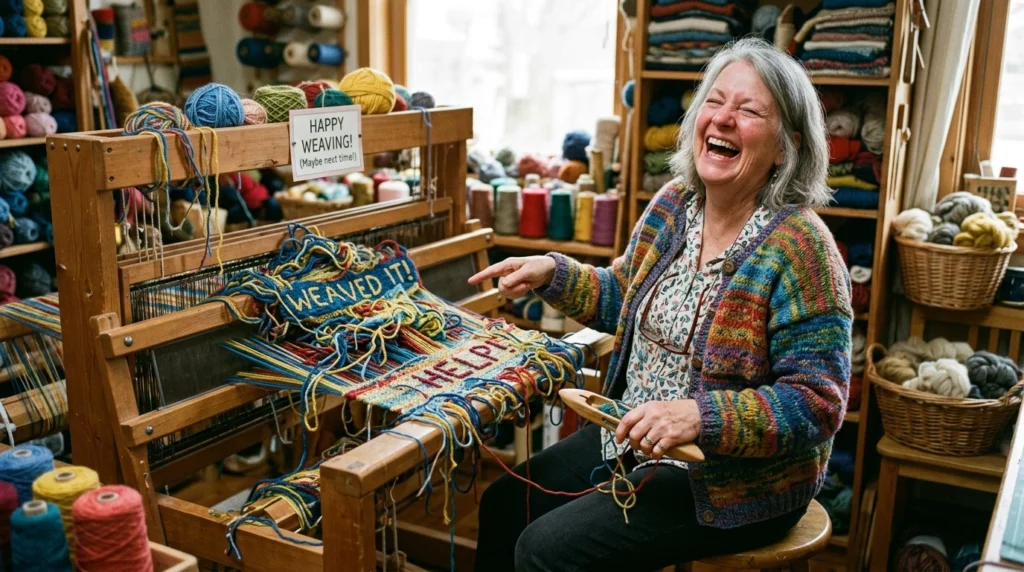
What Is “Weaved”?
Weaved is the past tense and past participle of weave when the word describes moving from side to side through or around things.
For example:
“The driver weaved through traffic.”
“She weaved between the tables.”
“The cyclist weaved around the parked cars.”
“He weaved his way through the crowd.”
In these examples, the word does not describe making fabric. Instead, it describes a person’s or object’s zigzagging movement.
Grammar and Usage
Weaved is a regular past-tense form:
weave → weaved
It is particularly common when weave has the meaning of moving through obstacles or a crowded area.
For example:
“The runner weaved through the crowd.”
Here, weaved sounds natural because the runner is moving around people.
Short History and Usage Note
The verb weave has been used in English for centuries. Its original and most familiar meaning relates to interlacing threads to create cloth. Over time, the idea of moving in an interlacing or winding pattern developed into another meaning: moving through a group of people or obstacles.
That second meaning is where weaved became common.
What Is “Wove”?
Wove is the traditional simple past tense of weave when weave means to interlace threads, fibers, or materials to create fabric or another woven structure.
Examples include:
“She wove a beautiful basket.”
“They wove the fabric by hand.”
“The artist wove colorful threads into the design.”
“The workers wove the cloth on traditional looms.”
In these sentences, wove refers to the physical process of interlacing materials.
Grammar and Usage
The traditional irregular verb pattern is:
weave → wove → woven
For example:
Present: “They weave the fabric.”
Past: “They wove the fabric.”
Past participle: “They have woven the fabric.”
This is an important distinction. Wove is the simple past form, while woven is normally the past participle.
Regional Notes
The use of wove for fabric-making is standard in both American and British English.
For the movement meaning, weaved is also widely understood in both varieties.
Therefore, the difference is primarily about meaning, not a major US-versus-UK spelling difference.
Key Differences Between Weaved and Wove
The main difference between weaved or wove is the meaning of the verb weave in the sentence.
Wove is traditionally used when weaving fabric, threads, or materials.
Weaved is commonly used when describing movement through or around obstacles.
Wove is an irregular past-tense form.
Weaved follows the regular -ed pattern.
The past participle associated with fabric-making is woven, not wove.
Both forms can be grammatically correct when used with the appropriate meaning.
There is no major US-versus-UK distinction controlling these two forms.
Comparison Table
| Feature | Weaved | Wove |
|---|---|---|
| Base verb | Weave | Weave |
| Past tense | Weaved | Wove |
| Main meaning | Moved through/around things | Interlaced threads or materials |
| Verb type | Regular form | Irregular form |
| Fabric-making | Usually not preferred | Correct |
| Movement | Correct | Usually not preferred |
| Past participle | Weaved can occur with movement meaning | Woven for traditional weaving |
| Example | “He weaved through traffic.” | “She wove the fabric.” |
Real-Life Conversation Examples
Dialogue 1: Making Fabric
Emma: “How should I describe what the artisan did?”
Jack: “Say, ‘She wove the fabric by hand.'”
Emma: “So not ‘she weaved the fabric’?”
Jack: “Use wove for traditional fabric weaving.”
🎯 Lesson: Use wove when describing the interlacing of threads or materials.
Dialogue 2: Moving Through Traffic
Alex: “The driver weaved through traffic.”
Sam: “That sounds right.”
Alex: “Because he was moving between the cars?”
Sam: “Exactly.”
🎯 Lesson: Use weaved when weave describes winding or zigzag movement.
Dialogue 3: A Crowd
Mia: “Why was the cyclist so difficult to follow?”
Noah: “He weaved through the crowd.”
Mia: “So he kept moving around people?”
Noah: “Yes.”
🎯 Lesson: Weaved is natural when describing movement through people or obstacles.
Dialogue 4: Handmade Clothing
Lily: “The designer wove gold thread into the fabric.”
Sara: “That sounds beautiful.”
Lily: “The pattern was made by hand.”
🎯 Lesson: Use wove when someone interlaces thread into fabric.

When to Use Weaved or Wove
The easiest way to choose between weaved or wove is to ask yourself what the subject is doing.
Use “Wove” for Fabric or Materials
Choose wove when someone physically interlaces threads, fibers, strands, or similar materials.
Examples:
“She wove the threads together.”
“The craftsman wove a basket.”
“They wove the fabric by hand.”
Memory trick:
Wove = woven things.
If you can imagine a loom, threads, or fabric, wove is usually the right choice.
Use “Weaved” for Movement
Choose weaved when someone or something moves around obstacles or through a group.
Examples:
“The car weaved through traffic.”
“He weaved between the chairs.”
“The player weaved through the defenders.”
Memory trick:
Weaved = winding movement.
If you can imagine someone moving left and right through obstacles, weaved is usually appropriate.
What About “Woven”?
Don’t confuse wove with woven.
Wove = simple past
“She wove the basket yesterday.”
Woven = past participle
“She has woven several baskets.”
This distinction is important for perfect tenses and passive constructions.
US vs. UK Notes
American and British English generally follow the same distinction between wove and weaved.
For fabric-making:
weave → wove → woven
For movement:
weave → weaved → weaved
The exact usage can vary slightly depending on the sentence, but the meaning-based distinction is the most useful rule for everyday writing.
Fun Facts or History
1. “Weave” Has More Than One Meaning
The connection between fabric-making and winding movement is not accidental. Both meanings involve the idea of moving or interlacing in a back-and-forth or winding pattern.
2. “Woven” Is Still the Standard Past Participle for Fabric
Although wove and weaved are both past-tense forms in different contexts, woven remains the familiar past participle for traditional weaving.
For example:
“The fabric was carefully woven by hand.”